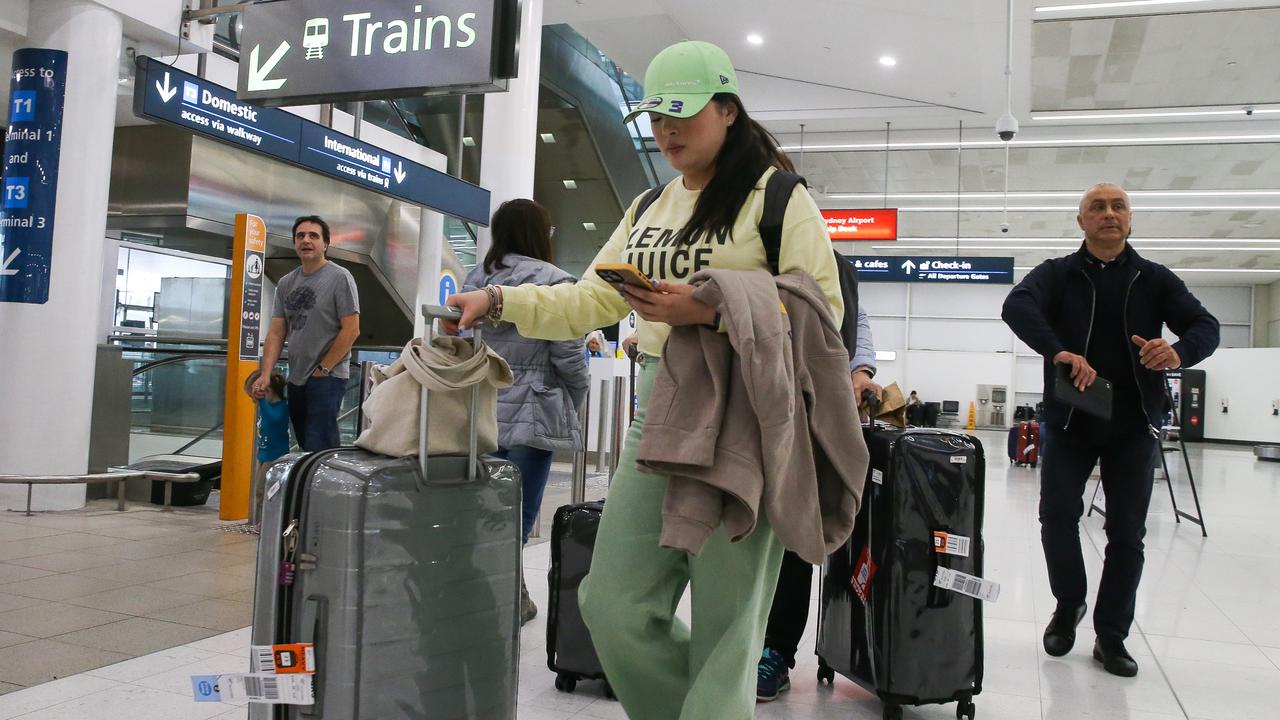
Australia is set to revolutionize its international arrival process, phasing out long-used paper passenger declaration cards in favor of a fully digital system designed to modernize processing at the country’s busiest ports of entry. The shift will require all incoming passengers – both returning Australian citizens and international tourists – to complete a single digital form that combines mandatory customs declarations, contact details, and travel history before arriving at Australian borders.
The transition has already been in a testing phase since October 2024, with more than 450,000 passengers on Qantas international flights arriving at Sydney, Melbourne, and Brisbane airports participating in the trial. Government officials describe early results as “significantly successful” based on feedback from participants and airport staff. The rollout will proceed in stages: by the end of 2026, the digital system will expand to Qantas flights arriving at Perth and Adelaide airports, followed by full deployment across all Australian international airports and seaports within 12 to 18 months after that. Initially, the digital form will be hosted on a dedicated public webpage, with future in-app functionality planned through co-design with travel and border industry partners.
The four-year rollout of the scheme is backed by a $56.1 million federal government investment, which will also fund upgrades to airport and cruise ship departure processes in preparation for the projected surge in international travelers ahead of the 2032 Brisbane Olympic and Paralympic Games.
Tourism Minister Don Farrell framed the shift as a major win for Australia’s $100 billion tourism sector. “Making arrivals simpler and quicker means visitors can spend less time filling out forms and more time enjoying everything Australia has to offer,” Farrell said. “This is a win for tourists and a win for our tourism operators, helping make Australia an even easier and more welcoming place to visit.”
Beyond convenience, federal ministers from multiple portfolios highlighted the broader public good and security benefits of the digital overhaul. Home Affairs Minister Tony Burke called the border modernization “essential to Australia’s prosperity and national security.” He noted that the new system will integrate seamlessly into modern digital life, giving all travelers a more seamless arrival experience.
Agriculture Minister Julie Collins added that the digital system will strengthen Australia’s world-leading biosecurity framework, a top government priority for protecting domestic industries and natural ecosystems. The system will allow border officials to collect complete passenger and travel information before any vessel or plane reaches Australian shores, enabling faster, more targeted risk assessments. “Australia’s strong biosecurity system protects our farmers, environment, food security and economy, and modernizing our border is an important part of maintaining that protection,” Collins said, noting the government has already invested more than $2 billion in additional biosecurity resources since 2022.
Officials also outlined broader functional advantages of the digital system: it will cut down on time-consuming manual processing for border staff, improve the accuracy of collected data for risk assessments, allow for rapid updates to entry requirements in response to global public health or security events, and enable pre-arrival processing that reduces wait times after passengers land. The shift marks the biggest change to Australia’s international arrival process in decades, aligning the country’s border infrastructure with digital systems already adopted by many other developed nations.