Two months after gunmen stormed three schools in Nigeria’s southwestern Oyo State and seized 44 pupils and staff, Nigeria’s military has announced the successful rescue of all captives, alongside the arrest of multiple suspects linked to the mass abduction. The operation, however, came at a cost: several military personnel lost their lives during the month-long mission that spanned across security and local enforcement agencies.
The abductions, carried out on May 15, targeted three educational institutions in Osiire district: Baptist Nursery and Primary School, LA Primary School, and Community Grammar School. While official confirmation of captives’ ages has not been released, most pupils at these types of Nigerian schools range between 2 and 18 years old. The incident sparked national outrage not only for its large scale, but also because it occurred in the southwest, a region predominantly made up of Christian communities where mass school abductions are far less common than in Nigeria’s mostly Muslim northern regions, where such attacks have long plagued communities.
In a formal statement released Friday evening, Army spokesman Danjuma Jonah Danjuma confirmed that all freed abductees are currently receiving medical care at an undisclosed medical facility, and will be reunited with their families once they are cleared for discharge. While relatives and educators have expressed relief that the long hostage crisis has concluded, many families described the 60-day wait as an agonizing, harrowing experience that has left lasting trauma. Even with the rescue confirmed, families are still in a holding pattern, waiting for the chance to hug their loved ones for the first time in two months.
Prof Wole Alamu, whose wife Rachael Folawe Alamu — headteacher of Community Grammar School — was among those abducted, told the BBC that his family endured particular distress after abductors released videos showing his wife and other captives. “It was a harrowing experience… but we thank God that it ended well,” Alamu said. “We are happy that they are out and we are grateful to everybody who has contributed in one way or the other for the release.”
Hassan Ajibola, head of the Oyo State Teachers’ Union, told the BBC he felt “happy and elated” at the news of the rescue, but used the moment to pressure authorities to finally deliver on a 10-year-old national security pledge. Over a decade ago, following the infamous 2014 Chibok schoolgirls abduction that drew global attention, Nigeria launched the Safe School Initiative to protect educational institutions. Ajibola called on officials to fully implement the initiative’s outlined security measures, which include deploying armed security personnel to schools, installing CCTV surveillance, erecting perimeter fencing around school grounds, conducting regular patrols, and enlisting local security groups to reinforce understaffed high-risk areas. “I am very much convinced that should that program be fully implemented and as initiated, our schools will be very, very secured,” he said.
Longstanding concerns about the failure to roll out the Safe School Initiative have intensified amid a recent resurgence of mass school kidnappings across Nigeria. Lawmakers and human rights groups have repeatedly called for a full audit of how public funds allocated for the program have been spent, citing ongoing gaps in school security that have left thousands of children vulnerable.
The joint rescue operation brought together military units, national police, intelligence services, and local vigilante groups, according to military officials. Security forces were able to map out the abductors’ network, dismantle their support infrastructure including informant networks and hidden camps, and clear out sections of the Old Oyo National Park forest, a large, hard-to-access wilderness that has become a common hideout for criminal gangs and extremist groups. The military confirmed multiple suspect arrests but has not released details on how many attackers remain at large, nor the exact number of service members killed in the mission. Officials note additional security operations to clear criminal hideouts are already planned.
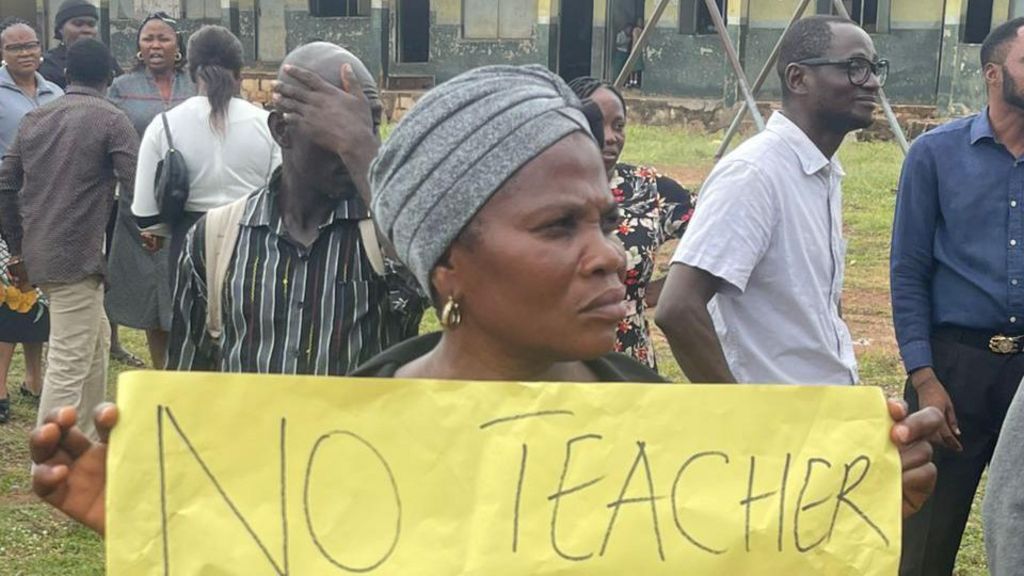
The crisis has amplified conversations about national insecurity, a top campaign issue ahead of Nigeria’s 2025 general election. While the federal and state governments have pledged to boost security around schools and at-risk communities, critics argue these incremental steps are insufficient to curb the growing wave of kidnappings for ransom that have devastated communities across the country. Recent protests in Oyo State have centered on demands for better protection for education workers, with one prominent protest banner reading, “No teacher should die at work.”