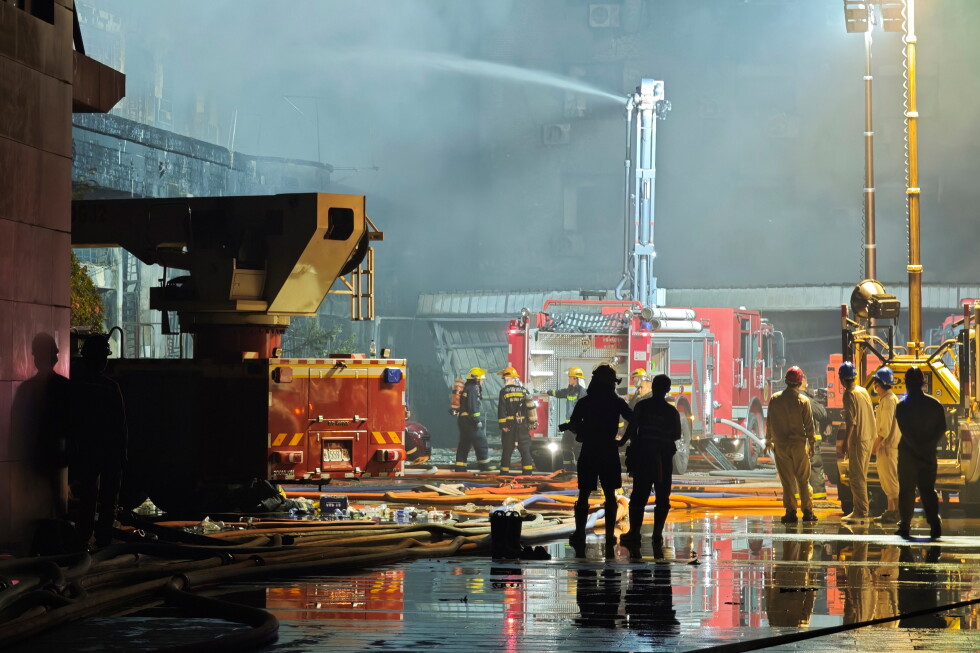
JINJIANG, FUJIAN – A devastating industrial fire that swept through a mid-sized shoe factory in China’s iconic sports footwear manufacturing hub of Jinjiang has claimed 28 lives, triggering a formal investigation into workplace safety failures and reigniting longstanding public concern over persistent lax standards in the country’s manufacturing sector.
The blaze broke out Thursday afternoon on the ground floor of the five-story Fujian Huitung factory building, a facility that houses both production workshops and raw material storage, according to official reports from China’s state-run broadcaster CCTV. At the time of ignition, 239 people – 237 on-site workers and two visiting guests – were inside the facility. First responders pulled 213 people to safety, but two of those rescued later succumbed to burn and smoke inhalation injuries at local hospitals. The remaining 26 people initially reported unaccounted for were later confirmed dead by Sunday morning.
Footage broadcast on local Chinese media captured chaotic scenes during the height of the emergency: dozens of workers trapped on the building’s roof, surrounded by plumes of thick black toxic smoke pouring from upper-floor windows, while water streams from fire department hoses failed to reach the entrenched flames on the upper levels. Fire department officials told CCTV that piles of highly flammable shoe sole materials illegally stored along the building’s stairwells created two critical barriers: they blocked escape routes for workers trapped on upper floors, and slowed firefighters’ progress as they attempted to reach and extinguish the fire. In total, more than 500 emergency personnel and 35 fire trucks were deployed to the scene, and it took nearly four hours to fully extinguish the open flames.
Fujian Huiteng, the facility’s operating company, produces footwear for both domestic Chinese and international consumer brands, according to public product listings on major import and e-commerce platforms. By Friday, authorities had arrested the factory’s owner and all senior management, and frozen all of the company’s financial accounts as part of the ongoing investigation. Chinese President Xi Jinping has called for a full, transparent probe of the disaster, and confirmed that all parties found responsible for safety failures will face strict legal accountability.
Jinjiang, the city where the factory is located, is widely known as China’s “shoe capital.” The region is home to thousands of footwear manufacturers, producing more than 1 billion athletic shoes annually – roughly one-fifth of the country’s total athletic footwear output, according to industry and state media reports. The region’s rise from a cluster of small, informal workshops to a global export manufacturing hub has been framed by the Chinese government as the “Jinjiang Experience,” a national model for successful industrial development that President Xi has repeatedly cited in policy speeches.
This fatal blaze is far from an isolated incident: workplace safety remains a longstanding systemic challenge across China’s industrial sector. Just months earlier in May, an explosion at a fireworks manufacturing plant in Changsha, Hunan, killed 37 people, and earlier in 2024, a fire at a under-construction refrigeration facility in Jiangxi’s Xinyu killed 39 people, making the Fujian factory fire one of the deadliest industrial accidents in China in recent years. National official data from 2025 shows that 18,261 people died across 19,900 reported workplace accidents, a slight decline from 2024’s total, but still a staggering toll that underscores the gap between national safety regulations and on-the-ground enforcement. Chinese authorities have repeatedly mandated that all private and state-owned businesses conduct regular screenings for workplace hazards, but enforcement remains inconsistent, particularly among small and mid-sized manufacturing firms.