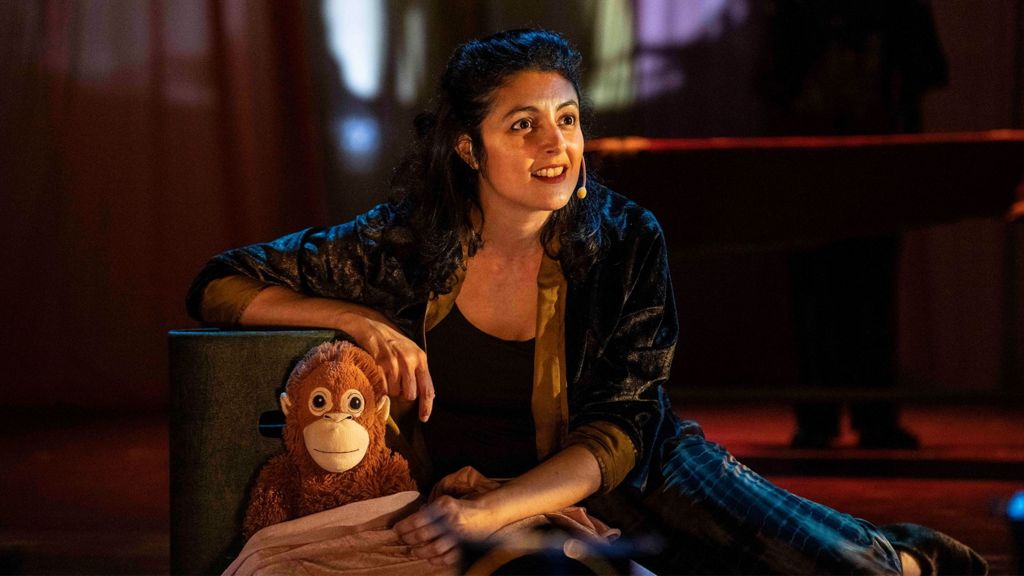
For generations, motherhood in India has been framed as a sacred, universally joyful milestone—an ultimate goal that every woman is expected to embrace without complaint. But what if the messy, painful, and unspoken parts of this life-altering experience matter just as much as the warm, fuzzy moments we celebrate? That is the question at the heart of *Belly of the Beast*, a provocative new stage production from Aadyam Theatre that is already turning heads and sparking long-overdue conversations across the country.
Adapted from Bollywood actor Kalki Koechlin’s 2021 memoir *The Elephant in the Womb*—written just months after Koechlin gave birth, during the isolation of the COVID-19 pandemic—the production pulls no punches in its exploration of the full spectrum of motherhood. Co-created by Koechlin and award-winning theatre director Sheena Khalid, the play weaves together the overlapping stories of five women navigating different phases of maternal experience: from early pregnancy and traumatic labor to the overwhelming grind of caring for newborns and young children. It does not shy away from the hardest parts of the journey, either, addressing topics that have long been pushed to the margins of public discourse: pregnancy loss, abortion, and the crippling weight of postpartum depression.
Koechlin, who drew directly from her own battle with postpartum depression while writing her book, explains that the project grew out of a gap she saw in India’s cultural conversation around motherhood. “Women are rarely allowed to express the dark feelings—the difficulties they face, the hormonal changes they go through, the loss of identity or postpartum depression,” she shared in an interview. “The conversation everywhere is all about the gift of motherhood, how beautiful it is, how blessed we are to be mothers. But that life-giving process is so transformational that there is a certain part of you that is also grieving, losing the identity you had before.” As a society, she argues, mothers’ unrelenting labor is largely taken for granted; acknowledging how draining and isolating the work can be is seen as taboo, for fear that if women spoke openly about their struggles, the entire unbalanced social structure of unpaid carework would collapse.
Official government data underscores the systemic weight of the expectations the play critiques. Recent figures reported by the *Times of India* show that 69% of women in urban India are locked out of the formal labor force due to unpaid childcare and housework, compared to just 1% of men. For women who do pursue careers, the pressure to be a “supermom”—excelled both at work and as the primary caregiver, running every aspect of the household without complaint—leaves little room for error or vulnerability. Koechlin notes that much of this pressure is internalized, bred from generations of social expectation that women must be perfect mothers above all else. *Belly of the Beast* aims to challenge that narrative, encouraging women to share the load and accept that it is okay to not be perfect, or okay at all.
One of the play’s most resonant storylines centers on the stigma surrounding miscarriage in India, a topic that remains deeply shrouded in shame even today. Women who lose a pregnancy not only grieve their loss—they also face unfair judgment, awkward silences, and pressure to pretend they are fine. The role of the woman navigating miscarriage is played by Shruti Vyas, who drew from her own personal experience to develop the character. “There is some pain that might not be visible from the outside, but that doesn’t mean that you’re not experiencing it,” Vyas explains. She recalls that after her own miscarriage, the most common reaction she received was, “But you’re looking fine.” The play’s core message around this issue—that it is okay to not be fine—landed powerfully with audiences at the play’s recent Delhi premiere, where audience members openly affirmed the line in a spontaneous show of solidarity.
To keep the heavy subject matter from feeling overwhelming for audiences, Khalid intentionally wove moments of humor and levity throughout the 130-minute production. “We are talking about some very heavy things such as miscarriages and there are moments where we’re talking about personal experiences,” Khalid says. “We felt there needed to be a sense of relief and levity for the audience, so we can ease in and out of it. Otherwise, it’s a lot.” That balance paid off: when the final curtain fell on the Delhi premiere, the entire cast and crew received a standing ovation from the moved crowd.
What makes *Belly of the Beast* more than just a play is its commitment to reflecting the universal reality of most Indian women, for whom unpaid childcare remains a default, unrecognized full-time responsibility. One quiet, widely relatable scene illustrates this perfectly: when a husband returns home from work, tired but ready to talk about his day, he asks his wife how hers went. She pauses, then only mumbles, “I just looked after the baby.” It is a small moment that cuts to the core of the play’s mission: to give voice to the millions of mothers whose experiences have long been erased or silenced by social expectation.