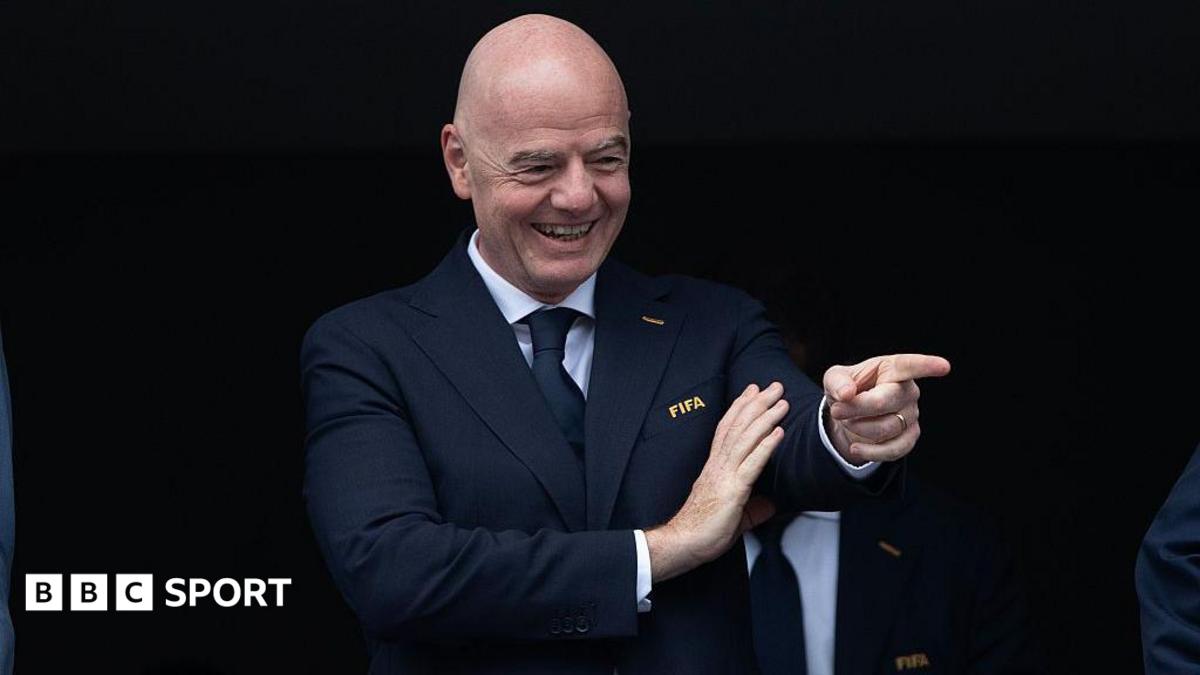
The 2026 FIFA World Cup co-hosted by the United States has been overshadowed by an unprecedented disciplinary decision that has sparked allegations of political interference, reignited long-simmering criticism of Gianni Infantino’s 10-year tenure as FIFA president, and thrown the governing body’s commitment to its own rules into question.
The controversy centers on Folarin Balogun, the United States men’s national team star who has netted three goals to carry the co-hosts into the Round of 16 against Belgium. After receiving a red card in the team’s final group stage match against Bosnia-Herzegovina, standard FIFA tournament regulations explicitly prohibit appeals against straight red card suspensions, which would have ruled Balogun out of the decisive knockout tie. In a move never before seen in World Cup history, FIFA opted to overturn the suspension, clearing the star striker to play.
More than 24 hours after the decision was finalized, FIFA released an 871-word statement that offered no clear explanation for the extraordinary reversal. The missing context was quickly filled by one of the most powerful figures in global politics: U.S. President Donald Trump confirmed publicly that he personally intervened with Infantino to push for a review of the suspension. “I’m the one that got them to do it,” Trump stated, though he pushed back against claims he directly ordered Infantino to scrap the ban, saying he only requested a formal review.
The revelation of presidential intervention has sent shockwaves through the global football community. In the U.S., public debate has framed the ruling as a correction of an unfair outcome, arguing that Balogun’s ejection from the group stage match already served as sufficient punishment – a view Trump explicitly echoed. But across the sport, critics warn the decision sets a dangerous precedent that undermines the core integrity of football governance. Infantino has repeatedly rejected claims of political meddling, insisting FIFA’s independent disciplinary committee made the final call without outside pressure. Yet the appearance of favoritism is unavoidable: the ruling benefits the tournament co-host, led by a sitting president who has publicly described Infantino as a close personal friend. For many observers, the overturned suspension felt indistinguishable from a political pardon, not a neutral disciplinary ruling.
Former Liverpool manager Jurgen Klopp summed up the widespread anger: “If Donald Trump and Gianni Infantino really sorted this out between themselves, it is madness; it calls everything into question.” Sepp Blatter, Infantino’s disgraced predecessor who was forced to resign in 2016 amid a sweeping corruption scandal, even took the unusual step of condemning the move, writing on social media: “Football must never become a playground for political power.”
UEFA, European football’s governing body, has issued an official rebuke calling the decision “unprecedented, incomprehensible and unjustifiable” and accusing FIFA of having “crossed a red line” – the latest flashpoint in a growing rift between the two bodies. Friction between UEFA and Infantino dates back years: in May 2025, UEFA president Aleksander Ceferin led a walkout of European delegates at the FIFA Congress after Infantino arrived more than two hours late following a diplomatic tour of the Middle East alongside Trump. The European body has also openly criticized FIFA’s inflated World Cup ticket prices, contrasting them with the much lower pricing planned for Euro 2028, and recently highlighted its support for Somali referee Omar Artan – who was denied entry to the U.S. for the tournament by American immigration officials – by inviting him to officiate the 2026 UEFA Super Cup. When asked about Artan’s situation earlier this year, Infantino drew widespread condemnation for his dismissive response, telling reporters to “chill, relax.”
The Balogun controversy is far from an isolated incident during Infantino’s tenure, which has grown increasingly polarizing since he took office in 2016. Critics have pointed to a long string of contentious decisions: the creation of the FIFA Peace Prize, which was awarded to Trump during the World Cup draw, has sparked accusations that Infantino violated FIFA’s rules on political neutrality. Human rights campaign group FairSquare filed an ethics complaint over the award last December, and when no action was taken, 50 Members of the European Parliament submitted a second open letter demanding an investigation – a request that has also gone unanswered. FIFA has been criticized for the controversial 2030 and 2034 World Cup hosting allocation, which handed the 2034 tournament to Saudi Arabia without competitive bidding following a decision to split the 2030 edition across three continents, drawing criticism over the kingdom’s well-documented human rights concerns. Even the expanded Club World Cup, a flagship Infantino initiative, has been condemned by global player union FIFPRO as being created “without dialogue, sensitivity, and respect” for athlete welfare. The recent last-minute fiasco over a planned kick-off time change for the England-Mexico Round of 16 tie, which saw FIFA reverse course after five hours of confusion while pretending the initial change never happened, has further underscored claims of a lack of transparency and organizational competence within FIFA.
For many, the Balogun decision feels like the latest in a pattern of unaccountable decision-making that has eroded trust in FIFA’s leadership. With Infantino up for re-election next year, many have wondered if this latest controversy could finally threaten his grip on the presidency. But a closer look at the political math within FIFA makes an upset extremely unlikely.
Infantino’s support base stems from his signature FIFA Forward programme, which directs billions in funding to football development projects in smaller and lower-income member associations, and the expanded 48-team World Cup format that added 16 new qualification spots – 13 of which went to confederations outside of Europe’s wealthy football ecosystem. While the expanded format has drawn criticism, it has given long-underrepresented nations such as Cape Verde, Curacao, Jordan and Uzbekistan their first-ever shots at World Cup qualification, turning Infantino into a popular figure among the vast majority of FIFA’s 211 member associations, each of which holds one vote in presidential elections.
To win re-election, a candidate needs 106 votes. Already, the 10 member nations of CONMEBOL (South America) have pledged their full support. The 54 members of the Confederation of African Football (CAF) have followed with a unanimous endorsement, and the 47 members of the Asian Football Confederation (AFC) have also backed Infantino. Combined, those pledges add up to 111 votes – enough to secure re-election even before counting support from other confederations.
UEFA, which represents European football, may be openly opposed to Infantino’s leadership, but European football is financially self-sustaining, while most of the rest of the global game depends on the revenue FIFA generates from tournaments like the World Cup – revenue that funds the development projects that have cemented Infantino’s support. Even with the firestorm over the Balogun decision, Infantino’s path to a fourth term as FIFA president remains unobstructed, leaving critics to question what the controversy means for the future of football governance.