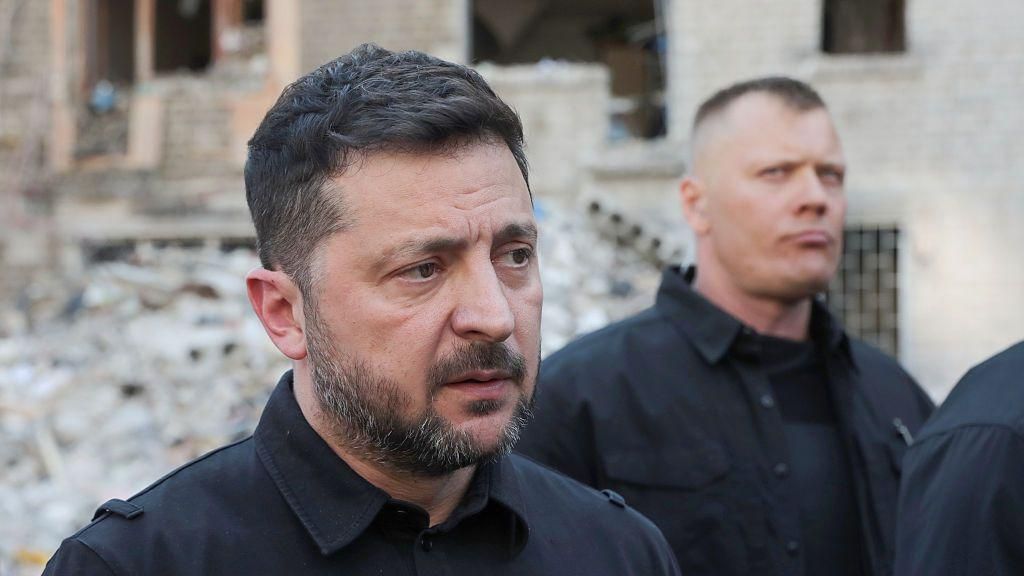
As a new wave of devastating Russian ballistic missile attacks has left dozens of Ukrainian civilians dead and key infrastructure damaged, Ukrainian President Volodymyr Zelensky is heading to a NATO gathering in Ankara, Turkey, with a clear and urgent priority: convincing Western allies to deliver the large-scale air defense systems Kyiv desperately needs to fend off Moscow’s escalating aerial campaign.
Zelensky’s appeal carries unprecedented urgency, coming just days after Russia launched two separate missile barrages on Kyiv that struck residential apartment blocks, claimed more than 50 civilian lives, and laid bare critical gaps in Ukraine’s current air defense network. During the most recent Monday attack, Ukrainian air defenses successfully intercepted nearly all incoming Russian drones, but failed to shoot down a single ballistic missile — a failure that exposes the dangerous shortage of U.S.-made Patriot interceptor missiles, the primary system capable of countering the high-speed weapons that travel at thousands of kilometers per hour.
In a blunt, frustrated video address delivered on the eve of the summit, Zelensky condemned the slow pace of military production, calling it “absurd” that output has not been scaled up to meet the clear need to protect Ukrainian civilians from what he terms “ballistic terror.” He has repeatedly called on European NATO members to release their stockpiled Patriot missiles, arguing that stockpiling weapons while Ukrainian civilians die serves no strategic purpose. “Russia is placing its bets on ballistic weapons, and those who want peace must place their bets on protection against ballistic attacks,” Zelensky stated, laying out his core argument for allied leaders in Ankara.
Beyond the urgent push for air defense, the Ankara summit will also give Zelensky a high-stakes opportunity to meet with former U.S. President Donald Trump, where he will make the case that Russia’s brutal current aerial offensive is actually a sign of weakness, not strength. Zelensky will argue that mounting Ukrainian long-range drone strikes on Russian military and energy targets have severely strained Moscow’s capabilities, opening a narrow window of opportunity to pressure Russian President Vladimir Putin into negotiations for a “dignified” peace that preserves Ukraine’s sovereignty.
Over recent weeks, Ukraine has ramped up its deep-strike drone campaign, hitting targets hundreds of kilometers inside Russian territory with growing frequency and accuracy. Strikes have taken out key oil refineries across Russia, from western regions to as far east as Omsk in Siberia, 2,500 kilometers from the Ukrainian border, triggering widespread fuel shortages that have seen Russians queuing for hours to buy gasoline and even fighting over limited allocations. Drone strikes have also hit Moscow and St. Petersburg ahead of major Russian political events, and daily attacks on Russian-held Crimea have disrupted military logistics, energy infrastructure, and civilian supply chains, prompting local authorities to declare a state of emergency over widespread power, fuel, and food shortages. One local Crimean resident described the situation as “catastrophic,” comparing current conditions to the economic chaos that followed the collapse of the Soviet Union in the 1990s — a direct rebuke of Putin’s core political claim that he pulled Russia out of post-Soviet chaos and restored national stability.
NATO Secretary General Mark Rutte has already echoed Zelensky’s call, urging alliance member states to “pull their weight” and deliver the military assistance Ukraine needs to defend its sovereignty. Rutte noted that Ukraine has already shifted the battlefield dynamic, stalling Russian ground advances in eastern Ukraine and gaining a critical upper hand through its deep-strike drone campaign.
Despite this momentum, critical challenges remain. Patriot defense systems and interceptor missiles are in short supply globally, and it remains unclear how many additional systems Ukraine can secure even after Zelensky’s push. To address long-term gaps, Zelensky has also raised the possibility of Ukraine producing its own domestic equivalent of the Patriot system with NATO support.
Moscow has framed Ukraine’s deep strikes as “terrorist” attacks, echoing the same language Russia has used for years to justify its own strikes on Ukrainian civilian infrastructure, including widespread winter attacks on power generation facilities that left millions without heat. For Zelensky, however, the drone campaign is a deliberate “influence campaign” designed to erode Russian public and political support for the war and force Putin to the negotiating table on terms acceptable to Kyiv — terms that do not include surrendering the entire eastern Donbas region, as Moscow continues to demand.
Trump, who spoke with Putin for 90 minutes by phone earlier this week to hear the Russian leader’s perspective on the conflict, has recently signaled cautious support for Ukraine, adding uncertainty to the outcome of the upcoming meeting. For Kyiv, the summit comes as a critical moment: Ukrainian leaders aim to end the war before another harsh winter sets in, whether through continued military pressure or diplomatic negotiations. But Zelensky will make clear that to secure that outcome, Ukraine first needs the air defense capabilities to protect its people and cities from Russia’s intensifying missile terror.