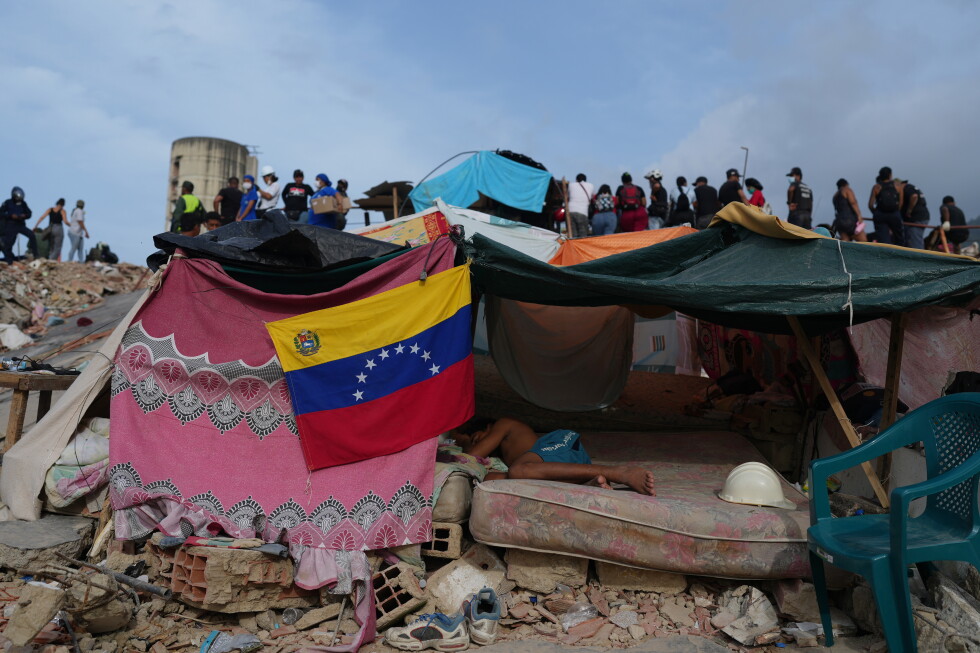
Along Venezuela’s sun-dappled Caribbean coastline, Caraballeda long stood as a rare experiment in cross-class coexistence. Wealthy yacht owners with marina-access apartments and working-class public housing residents shared the same curving waterfront street, both waking every morning to sweeping views of powdery white sand and clear turquoise waters. This intentional integration, designed by successive Venezuelan governments to break down socioeconomic segregation, became a testament to the country’s long-running housing policies—until a devastating earthquake struck on June 24. In seconds, violent shaking reduced dozens of buildings to rubble, killing hundreds of residents mid-holiday or rest, and leaving thousands of survivors facing an uncertain future.
The official death toll from the disaster has now climbed above 3,500, with roughly 17,000 people left homeless in a country already grappling with years of economic collapse. For these survivors, the path to secure housing runs through the same Venezuelan government that has faced widespread condemnation for its botched disaster response and decades of politicizing access to homes. Even amid the national crisis, housing has remained a defining aspiration for Venezuelan people stretching back more than half a century. When an oil boom in the late 20th century flooded state coffers, the government funded large public housing complexes, wealthy Venezuelans bought multiple vacation properties, and low-income families built informal brick-and-cement homes called ranchos. Even after Venezuela’s economy collapsed in 2013, most citizens still retained some form of shelter—whether through state handouts from the socialist government, deeply discounted purchases from families fleeing the country, informal stacked ranchos, or occupation of abandoned properties.
Most public housing units built by the ruling socialist party, which has held power for 27 years and is currently led by acting President Delcy Rodríguez, do not grant residents formal property deeds. Still, for many low-income families, these assigned homes offered a stability they had never known. Carlos Ortega, a local resident, lost 11 of his relatives when the public housing tower where they lived collapsed. The family had received the apartments more than a decade earlier, after a previous mudslide left them homeless. “It was their home, their house. It was an immense joy when they were assigned these houses here,” Ortega explained. “Imagine, they were given a home after losing everything, but now they’ve lost everything, even their lives.” Only one of Ortega’s siblings survived the collapse; his son, who worked at a nearby convenience store when the quake hit, remains missing more than a week after the disaster. As Ortega sifts through rubble looking for any trace of his family, a short distance away rescuers work through the wreckage of an upscale apartment building adjacent to a yacht club, where a military general’s wife waits for news of her husband and children.
The policy of integrating low-income public housing into wealthy coastal neighborhoods predates Hugo Chávez’s 1999 rise to the presidency, but Chávez’s socialist movement expanded the strategy to gain political advantage, explained Ronal Rodríguez, a researcher at the Venezuela Observatory of Colombia’s Universidad del Rosario. Building public housing in opposition-leaning wealthy neighborhoods diversified the local voter base, helping the ruling party maintain political control. But the signature Grand Housing Mission launched under Chávez, continued by former president Nicolás Maduro until his ouster by U.S. military intervention in January, carried a critical catch: no residents receive formal property ownership. “What Chavismo tries to do is maintain political dependence,” Rodríguez said. “That is, if at any point you turn against me and stop supporting me, then I’ll take away the roof I’ve given you.” This political arrangement leaves survivors particularly vulnerable now, as many have openly criticized the government’s slow and inadequate search-and-rescue response to the earthquake.
To date, the Rodríguez administration has not released any timeline for long-term housing reconstruction or support for displaced survivors. Satellite analysis conducted by Microsoft’s AI for Good Lab estimates that at least 10,000 structures—roughly one-third of all buildings in Catia La Mar, a coastal city west of Caraballeda in La Guaira state—sustained damage. Decades of substandard construction, aging infrastructure and hazardous coastal geography left the entire region disproportionately exposed to damage from strong seismic activity.
Today, thousands of survivors are living in makeshift tent camps set up in public parks and private parking lots across the affected region, each grappling with their own loss and uncertainty. In a Catia La Mar pharmacy parking lot, 68-year-old Benito Mantilla lives in a small tent after his privately owned home was destroyed. His wife fled to the Dominican Republic for safety, but Mantilla stayed to salvage what he can and look for work in Caracas, 40 minutes away; the earthquake also destroyed the car repair shop he co-owned with his brother. Not far from Mantilla’s tent, a woman whose daughter is a local ruling party organizer holds out hope the government will quickly assign her a new home. For 44-year-old Caryudedi González, who bought her working-class home at age 21 after years of hard work, the goal is not a new handout—she just wants to rebuild the half of her property that slid into a nearby ravine. “In many countries, it’s very difficult to own a home, and here, we work so hard to have what’s ours,” González said.