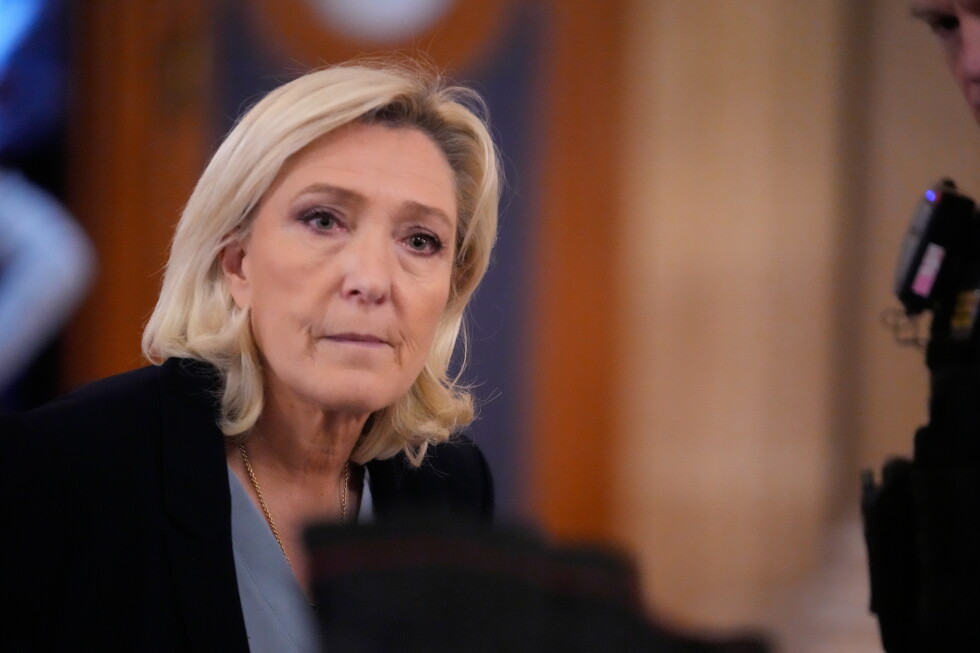
On Tuesday, a Paris appeals court prepared to deliver a landmark ruling that will determine the political future of French far-right leader Marine Le Pen, a decision carrying sweeping implications for the 2027 French presidential election and the broader political landscape of the European Union.
The 57-year-old leader of the National Rally (RN), one of France’s most consequential major political forces, is challenging a March 2025 lower court conviction. The original ruling found Le Pen and multiple other RN officials guilty of misappropriating European Parliament funds between 2004 and 2016, when the party used money earmarked for EU parliamentary assistants to pay internal party staff. The lower court issued a suspended prison sentence and imposed a five-year ban on holding elected public office, a penalty that would bar Le Pen from running in the 2027 contest.
The verdict is scheduled to begin reading at 1:30 p.m. local time, with legal observers noting it could take several hours to complete. Outgoing French President Emmanuel Macron is constitutionally prohibited from seeking a third consecutive term, opening an open race for the Elysee Palace that would be dramatically reshaped if Le Pen, the RN’s most popular and recognizable figure, is forced out of contention.
Le Pen has consistently denied all wrongdoing and has publicly expressed her intention to mount a fourth presidential bid in 2027. Should the appeals court uphold the five-year ban, her decades-long political career – which pulled the National Rally from the far-right fringe to the center of French electoral politics – would effectively be sidelined. A ruling upholding the ban would also shake EU politics by removing one of the bloc’s most vocal and influential critics from mainstream electoral competition.
If Le Pen is barred from running, her 30-year-old protégé Jordan Bardella, the current president of the anti-immigration, EU-skeptic National Rally, is lined up to take her place as the party’s presidential nominee. Political analysts have already noted Bardella is ideologically aligned but not an identical political copy of Le Pen, meaning his candidacy would shift the party’s campaign dynamic.
Multiple alternative outcomes remain on the table. The court could uphold Le Pen’s conviction but reduce the public office ban to two years or less, a timeline that would see the penalty expire before the first round of the 2027 presidential election scheduled for April 2027. The court could also choose to impose no ban at all. Even if the ban is shortened, Le Pen has signaled she may still opt out of the race if other judicial restrictions – including a unsuspended prison sentence, electronic monitoring, or other limits that impede free campaigning – are put in place. In a recent interview last week, she clarified: “If I’m allowed to be a candidate but am effectively prevented from campaigning freely, then you understand that wouldn’t be possible.”
Prosecutors have urged the appeals court to issue a four-year prison sentence, three of which would be suspended, alongside retaining the original five-year ban on holding elected office. Prosecutors have alleged Le Pen led an organized “system” designed to “siphon off” EU public funds for the benefit of the National Rally. While prosecutors did not request that the ban take immediate effect – as the lower court ruled – the appeals court retains the authority to order immediate implementation of the penalty.
Even if the ruling goes against Le Pen, she retains the right to appeal the verdict to France’s highest court, the Court of Cassation. It remains uncertain whether the high court would agree to suspend the sentence while the final appeal is processed, though the Court of Cassation has previously confirmed that if it accepts the case, it will aim to issue a final ruling ahead of the 2027 presidential election.