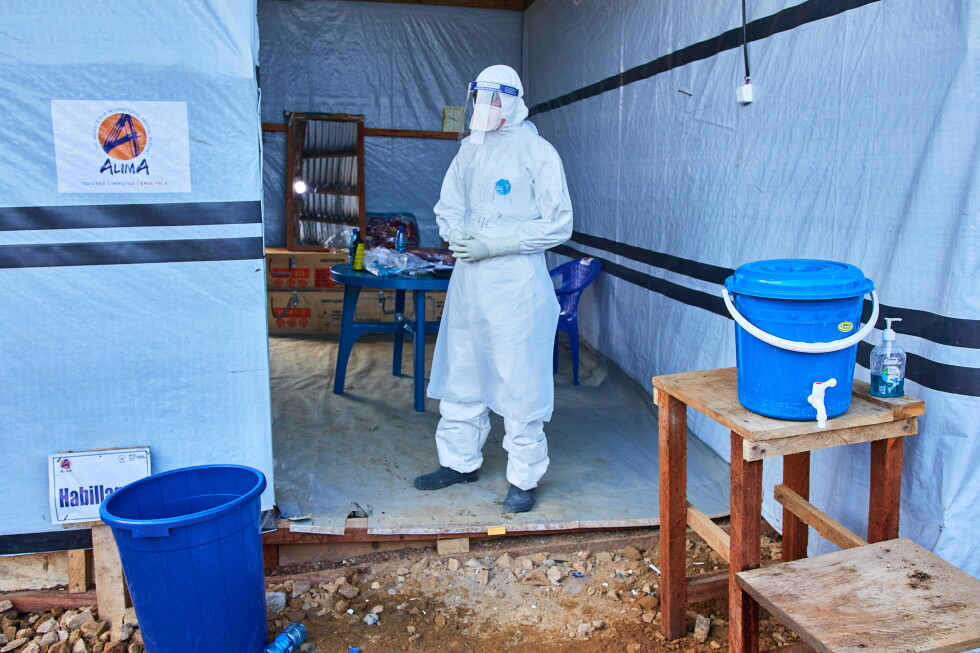
A rapidly spreading Ebola outbreak in the Democratic Republic of the Congo has crossed a grim threshold, with official data confirming more than 500 fatalities from over 1,500 confirmed infections, even as the response effort faces a fresh crisis: frontline workers battling the outbreak have threatened to suspend work over unmet pay and unsafe working conditions.
Congo’s Ministry of Health released the updated statistics in a Sunday night briefing, reporting that since the outbreak was first declared on May 15, a total of 1,561 confirmed cases have been documented, with 506 people succumbing to the virus. Current data shows the virus’ transmission continues to outpace the ability of response teams to contain it, according to the official update.
The strike threat was issued Sunday by frontline teams deployed in Ituri province, the geographic epicenter of the current outbreak. Workers gave authorities a 24-hour deadline to address their grievances, warning that work would stop if demands were not met. The vast majority of these frontline staff are local health professionals, who have worked for months with minimal rest while navigating two extraordinary additional challenges: violent attacks from hostile local communities, and deep-rooted public skepticism about the existence of the virus.
A copy of the workers’ formal notice to the national government, obtained by the Associated Press, details multiple long-running grievances. Workers both inside hospital facilities and out in the community conducting contact tracing and testing report they have not received earned hazard benefits since the outbreak was declared, and still lack sufficient basic supplies to carry out their high-risk work. Additional complaints include chronically low base salaries, disrespectful treatment from elite response teams deployed from the capital Kinshasa, a pattern of bringing in outside labor from other provinces instead of prioritizing hiring of local Ituri workers, and persistent shortages of adequate personal protective equipment and other critical medical gear.
The timing of the strike threat has amplified concerns among public health officials, as it comes just days after enrollment opened for experimental clinical trials for Ebola treatments in the region. A work stoppage would not only derail the trial process, but also significantly slow broader efforts to curb transmission of the virus, which has already spread beyond Ituri to two additional eastern provinces: North Kivu and South Kivu.
Response efforts have been complicated from the start by key biological characteristics of the current outbreak: this event is caused by the Bundibugyo strain of Ebola, for which there are no currently approved vaccines or specific antiviral treatments. By contrast, Congo’s 16 previous Ebola outbreaks were almost all caused by the more common Zaire strain, for which an effective, widely deployed vaccine already exists.
Public health officials also still face major gaps in basic investigation of the outbreak: investigators have not yet identified patient zero, the initial case that sparked the current transmission chain, and are still working to trace tens of thousands of potential contacts who may have been exposed to infected people, a core step to stopping further spread. The World Health Organization has already warned that the first month of this outbreak was the worst on record for early Ebola spread in Congo.