Since dissolving the United States’ longstanding foreign aid body, the U.S. Agency for International Development (USAID), last year, the Trump administration has rolled out a new approach to global health assistance, pushing direct bilateral agreements with individual nations across Africa, Latin America and the Caribbean. While the administration frames the strategy as a fix for the inefficiencies and dependency created by traditional aid models, it has sparked sharp pushback from multiple African governments over its transactional terms, threats to national sovereignty, and ties to U.S. strategic and commercial priorities.
The framework was launched in December 2023 with a landmark $2.5 billion health partnership with Kenya, where the U.S. pledged $1.6 billion in funding over five years, and the Kenyan government committed $850 million of its own funds. Speaking at the signing, U.S. Secretary of State Marco Rubio hailed Kenya as an ideal first partner and expressed optimism that up to 50 nations would join the initiative. The deal survived a high-profile court challenge from Kenyan activists concerned about patient privacy and finally won cabinet approval last month, but it set the tone for widespread controversy that would follow.
Under the new strategy, the U.S. has walked away from the multilateral global health system anchored by the World Health Organization (WHO), withdrawing from the body earlier this year over claims the organization mismanaged the COVID-19 pandemic, lacked transparency, and gave other nations an unfair funding advantage at U.S. expense. Unlike previous aid models that channeled most funding through non-governmental organizations, the new framework centers direct partnerships with national governments, requiring them to increase domestic health spending to build self-sustaining health systems. The administration argues this cuts wasteful overhead, eliminates donor-led dependency, and empowers local leaders to shape their own health outcomes.
“Our aid to those countries will not just be dollars distributed to an NGO who then will go into the country and impose programmes,” Rubio told a congressional committee last month. “Not only are we treating the acute situations on the ground of people that are sick, we are helping them build the capacity and the capability to do this for themselves.”
Critics point out that the restructuring of U.S. aid has already created immediate gaps in frontline health response. Most notably, the current Ebola outbreak in the Democratic Republic of the Congo (DRC) — one of the first African nations to sign on to the new framework — has exposed severe disruptions from USAID cuts. Amadou Bocoum, country director for the humanitarian organization Care in the DRC, told reporters his team was forced to lay off 36 workers, a third of his staff, including specialists focused on Ebola prevention and community outreach. When the new outbreak emerged, prepositioned emergency supplies were gone, and understaffing delayed the response by 10 critical days. Jeremy Konyndyk, who led USAID’s response to the 2014 West African Ebola epidemic, noted that the dismantling of longstanding U.S.-funded health programs left critical gaps in outbreak detection, arguing the previous network would have caught the spread of the virus far earlier. The Trump administration disputes these claims, pointing to its $270 million donation for the outbreak response and saying the new structure is more aligned with U.S. priorities and more effective.
By mid-May, 32 countries across the Americas, Caribbean and Africa had signed the proposed health memoranda of understanding, but at least three African nations — Ghana, Zimbabwe and Zambia — have openly rejected the deals, citing a range of sovereignty and economic concerns. In Zambia, the government pushed back against U.S. attempts to tie health aid to a separate critical minerals agreement that would grant Washington preferential access to the country’s natural resources. Zambian Foreign Minister Mulambo Haimbe said his government wanted to negotiate the two deals separately on their own merits, rather than accepting them as a bundled package. A State Department spokesperson did not explicitly confirm the linkage but affirmed the administration’s “America First” approach, noting U.S. foreign assistance is “strategic capital” designed to advance American interests, and that recipient nations are expected to prioritize U.S. strategic and commercial goals.
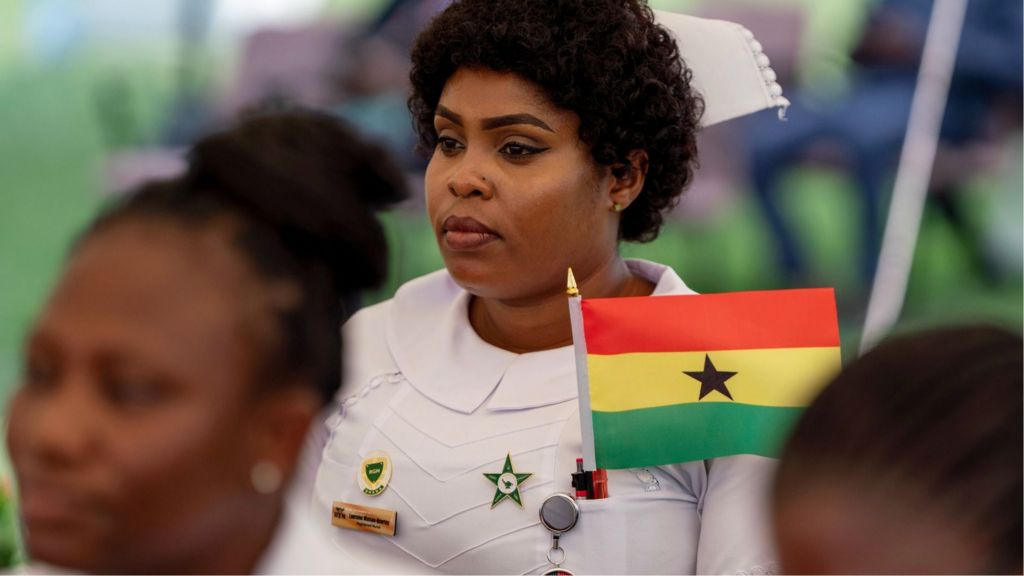
The most widespread point of contention across countries that rejected the deals is data and biosecurity sovereignty. Ghana rejected a proposed $109 million bilateral health deal in April specifically over data protection concerns. Arnold Kavaarpuo, executive director of Ghana’s Data Protection Commission, said the deal required Ghana to share a broad scope of domestic health data, including patient information and disease-causing pathogen samples, with U.S. authorities, with no reciprocal protections for Ghanaian data or guarantees that Ghana would retain control over the information once it left the country. Zimbabwe similarly rejected a deal over data access concerns, noting that the agreement did not guarantee that local populations would get access to drugs or vaccines developed from their country’s pathogen samples — pointing to the existing, equitable data sharing framework already in place through the WHO.
The U.S. maintains that the data it requests is the same aggregated, de-identified data that has been used for global infectious disease research for decades through previous programs like USAID and PEPFAR, and that sharing is critical to advancing global scientific progress. But global health governance experts say the context of the data requests has changed dramatically. Nelson Aghogho Evaborhene, a PhD fellow at Denmark’s Roskilde University, noted that while past data sharing relationships were unequal, they could be framed to domestic populations as altruistic efforts to improve public health. Today, he argues, the arrangement is clearly a transactional form of leverage that prioritizes U.S. interests.
Many African nations also draw lessons from the COVID-19 pandemic, when African countries held large amounts of valuable pathogen data but were left struggling to access vaccines developed from that data. More than 50 African civil society groups have signed an open letter warning that the new U.S. terms do not align with African national or regional interests, a position echoed by South Africa’s government. South Africa has already seen the U.S. withdraw all funding for its national HIV/AIDS programs over what Washington called Pretoria’s failure to meet unconnected policy requests, including a debunked claim that the country is carrying out a “white genocide” against the Afrikaner community. “Frankly speaking, no nation on Earth that respects itself should accede to [these requests],” South African Health Minister Dr Aaron Motsoaledi told the BBC, noting the U.S. seeks permanent access to local pathogen genome data in exchange for just five years of funding.
Public health experts warn that the shift to a purely bilateral approach to global health ignores the transnational nature of pandemic and disease response. “Global health, by definition, is transnational, crosses borders, does not concern just one country,” said Dr. Kevin DeCock, a former director at the U.S. Centers for Disease Control who spent decades leading infectious disease response efforts. “Global health problems require global approaches, and no country can go it alone.”
A small number of policy analysts argue the new strategy deserves a chance to prove its effectiveness. Writing for the conservative American Enterprise Institute, analysts Brett Schaefer and Roger Bate acknowledged the risks of walking away from the multilateral system, particularly the withdrawal from WHO, but argued the shift is not the end of U.S. global health leadership. Instead, they frame it as a test of whether conditional, results-driven bilateral partnerships deliver better outcomes than reliance on a multilateral institution that has repeatedly failed to reform itself.
Months after the first deal was signed in Kenya, adoption of the new framework across Africa remains patchy and deeply divisive. While Tanzania has recently joined the partnership, the growing number of African nations rejecting the terms leaves the future of the Trump administration’s reshaping of global health aid far from certain.