LONDON – In a coordinated show of diplomatic and military posture against Russia, the United Kingdom announced two major moves on Monday: fresh sanctions targeting Russian individuals and institutions linked to chemical weapons development, and sharp condemnation of what officials call unsafe, unprofessional Russian air activity near a British NATO carrier strike group in the Arctic region.
The UK Foreign Office confirmed that seven individuals and two state-run Russian scientific research institutes have been added to the country’s sanctions list over their proven connection to the development of toxins used in two high-profile poisonings linked to Russia. These are the 2018 Novichok nerve agent attack on former Russian intelligence officer Sergei Skripal in the English city of Salisbury, and the 2024 poisoning of opposition figure Alexei Navalny with epibatidine toxin while he was held in a Russian Arctic penal colony.
The 2018 Salisbury attack left Skripal and his daughter Yulia in critical condition, and resulted in the death of Dawn Sturgess, a local British woman who came into contact with the discarded nerve agent months after the initial assault. The two sanctioned institutes are SC Signal, a Russian state scientific research body, and GNIII VM, the State Scientific Research and Testing Institute for Military Medicine, alongside a number of senior Russian officials and weapons scientists who oversaw the programs.
Foreign Secretary Yvette Cooper emphasized the severity of Russia’s actions in a public statement, describing the repeated use of prohibited chemical weapons as a “sickening violation of international law” that poses an immediate, direct threat to global security standards.
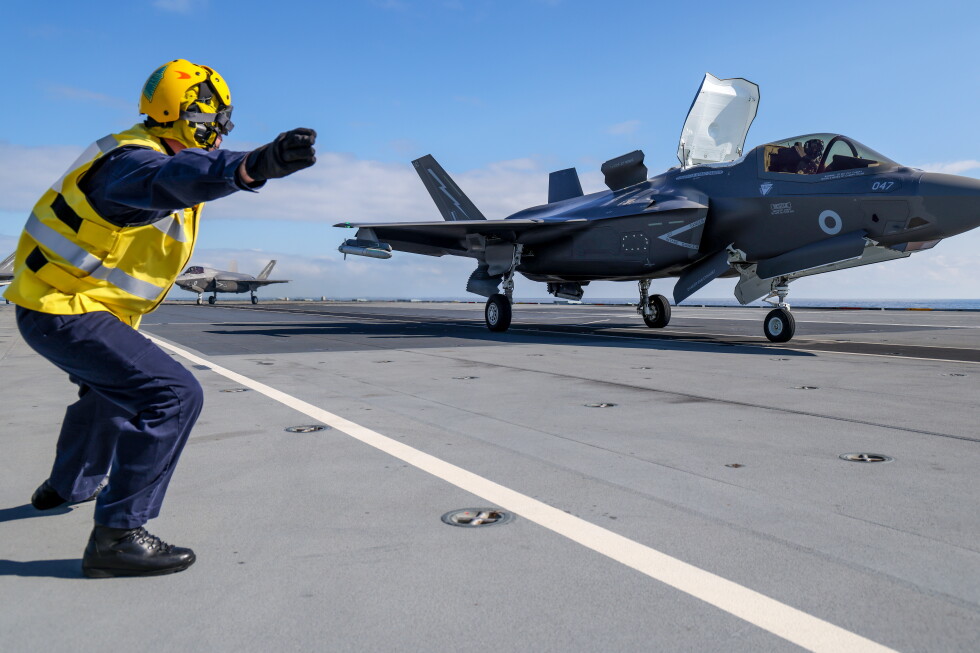
Parallel to the sanctions announcement, the UK Ministry of Defense publicly detailed a recent confrontation between British and Russian military assets in the Norwegian Sea, part of growing tensions around NATO military operations in the strategically sensitive Arctic. UK F-35 stealth fighter jets, deployed from the aircraft carrier HMS Prince of Wales, were scrambled to intercept a Russian Bear-F maritime patrol aircraft that violated safe operating protocols near the British carrier strike group.
According to defense officials, the encounter took place last Thursday, when the Russian patrol aircraft flew at low altitude at an unnecessarily close distance to HMS Prince of Wales and deployed a large number of sonobuoys – floating acoustic devices designed to detect submarines and surface vessels – directly in the area of the strike group. The British aircraft intercepted and escorted the Russian plane until it departed the area, the ministry confirmed.
HMS Prince of Wales and its accompanying Royal Navy vessels are currently deployed in the Arctic as part of routine NATO collective defense operations. Defense officials stressed that the Russian aircraft’s behavior was clearly unsafe and unprofessional, marking the latest in a series of escalatory military moves by Russia near NATO allied territory in the High North.