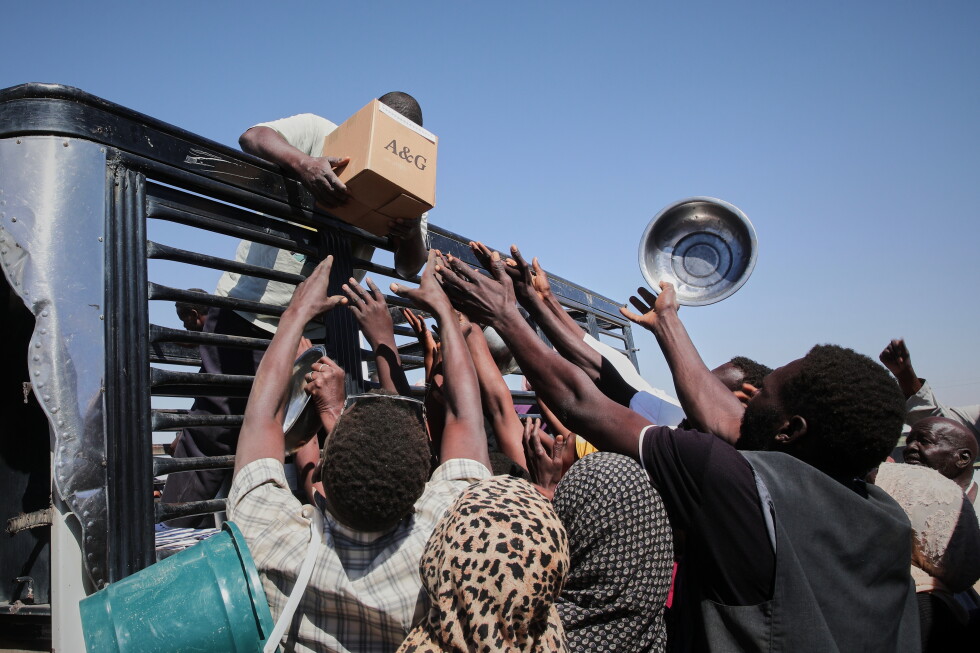
GENEVA — The United Nations’ top human rights official has issued an urgent “red alert” warning the global community of a looming humanitarian catastrophe in and around the strategic central Sudanese city of el-Obeid, where fighting between Sudan’s national army and the rival Rapid Support Forces (RSF) has pushed half a million trapped civilians to the brink of mass atrocity crimes.
Addressing the UN Human Rights Council in Geneva Friday, UN High Commissioner for Human Rights Volker Türk emphasized that warning signs of an unfolding human rights disaster in el-Obeid are unambiguous. His urgent call to action came as the 47-member UN human rights body convened an emergency debate to address rising diplomatic and advocacy group concerns over a potential new wave of civilian harm in Sudan’s 2-year-long civil conflict.
“This is not a drill. It is a red alert that needs to land on the desks of heads of state and government around the world,” Türk stressed. He added that global leaders must prioritize urgent diplomatic action in the coming weeks, stepping up engagement to prevent mass atrocities across el-Obeid and other at-risk regions of Kordofan.
Türk detailed the catastrophic conditions facing el-Obeid’s civilian population, who have endured 18 months of siege-like conditions amid relentless drone strikes as the two warring factions battle for control of key territory surrounding the city. In February 2025, Sudan’s national military broke an RSF siege of el-Obeid that had stood for more than a year, but the paramilitary group has since launched repeated multi-pronged offensives to reimpose the blockade. Recent RSF attacks on critical infrastructure have left residents facing catastrophic shortages of food, clean water, fuel, medical care and public transportation, according to updates from Türk’s office.
The UN Human Rights Council was weighing a draft resolution put forward by Britain, Germany, Ireland, the Netherlands and Norway during the urgent debate. The draft singles out the RSF and its affiliated forces for condemnation over escalating violence in and around el-Obeid, calls for expanded financial and logistical support for neighboring nations hosting Sudanese refugees, and denounces all forms of external interference in the Sudanese conflict, among other provisions.
Sudan’s civil war first erupted in April 2023, rooted in decades of festering tensions between the country’s formal military leadership and the RSF paramilitary group. The conflict has already left at least 59,000 people dead, displaced more than 13 million Sudanese from their homes, and pushed vast swathes of the country into catastrophic famine conditions. UN data estimates that more than 30 million Sudanese currently require life-saving humanitarian assistance to survive.