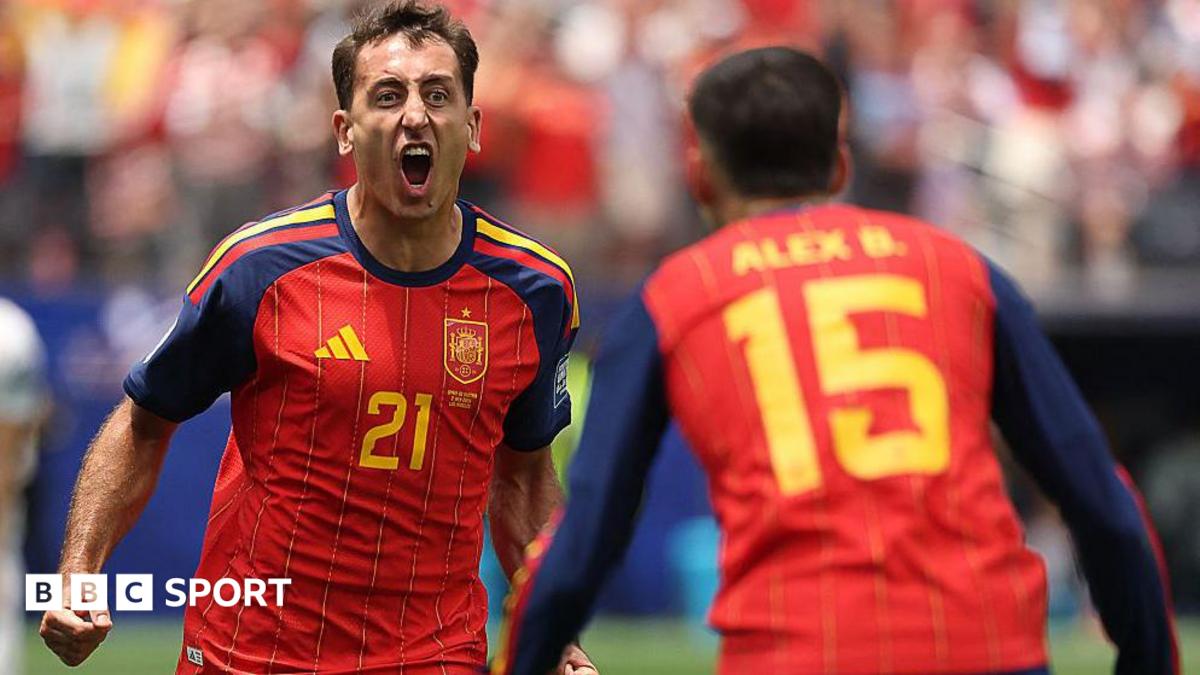
As the world’s attention fixated on teen sensation Lamine Yamal ahead of Spain’s 2026 FIFA World Cup round-of-32 clash against Austria at Los Angeles Stadium, it was an unsung veteran of the squad who stole the show to secure the European champions’ place in the last 16. While fans packed the stands with Yamal’s name on the back of their match shirts, and cameras followed the 18-year-old Barcelona star everywhere from his team bus arrival to pre-match warmups, it was 29-year-old Mikel Oyarzabal who delivered a masterclass in finishing, scoring two unanswered goals to anchor a comfortable 3-0 victory over Austria.
This result marks Spain’s first knockout stage win at a men’s World Cup in 16 years, a milestone that cements La Roja’s status as one of the tournament’s leading title contenders. For Oyarzabal, the moment is the culmination of a long, hard-fought road back to top-level competition. A product of Real Sociedad’s youth academy who has never played for another top-flight club, the striker missed the 2022 Qatar World Cup after suffering a ruptured anterior cruciate ligament in his left knee. Four years on, he has entered the peak of his career, bringing blistering scoring form to his long-awaited World Cup debut.
Going into the Austria clash, Oyarzabal had already notched 12 goals in 12 international appearances, and his double on Thursday extended that incredible run to 17 goals in his last 16 starts for Spain, bringing his total tournament tally to four. Since the start of 2025, only Norwegian superstar Erling Haaland has scored more international goals among all European players than Oyarzabal. He also made history with his performance, becoming the first Spanish player to net twice in a World Cup knockout match since Emilio Butragueno did so against Denmark in the 1986 tournament’s round of 16.
Many football pundits have highlighted that Oyarzabal’s understated profile allows him to exploit the space created by defenders’ focus on Yamal. Speaking to BBC Radio 5 Live, prominent Spanish football analyst Guillem Balague called Oyarzabal the side’s “invisible match-winner”, noting that the striker has a historic track record of scoring in major finals. “He is one of the most intelligent players we have, and our most decisive player at this tournament, no doubt,” Balague added. Former Spain defender Cesar Azpilicueta echoed that sentiment, telling BBC One that Oyarzabal has solved longstanding questions about La Roja’s centre-forward position, after transitioning from a wide right role to a central starting spot. Former Germany midfielder Thomas Hitzlsperger also pointed to the dynamic between Yamal and Oyarzabal: “When you have someone in your team like Lamine Yamal who attracts so much attention, you know you will get more space. Oyarzabal uses that space, gets the ball, and scores goals.”
Off the pitch, Oyarzabal credits his innate goalscoring instinct to his early childhood playing hockey, a sport that taught him to shake off missed chances and keep hunting for more. “I always had this voice in my head, ‘It doesn’t matter if you missed one – there will be more,’” he explained. “I could smell goals, and that voice was always in my head.” Playing as a central striker fits that mentality perfectly, he added: “If you play higher up the pitch, and especially if you’re a striker like myself, it all comes down to a few moments. We often have to smell where the ball might drop or where you have to stand to have a chance at goal.”
This victory extends Spain’s incredible unbeaten run to 34 matches, just one game short of the national team’s all-time record. La Roja got off to a slow start in the tournament with an unexpected goalless draw against first-time qualifiers Cape Verde, but have grown in strength with each match, now scoring eight goals across four games without conceding a single goal. They will next face a tough last-16 test against either Portugal or Croatia, and pundits warn that the side has not even hit top gear yet. Former England striker Dion Dublin told BBC Radio 5 Live: “They were comfortable playing in third or fourth gear against Austria because they knew the opposition didn’t have anything to offer. When they are playing against France or Portugal, whoever it may be, they will just up their game again. I think they have a lot more to offer which is a frightening thing for the rest of the teams in the competition.”