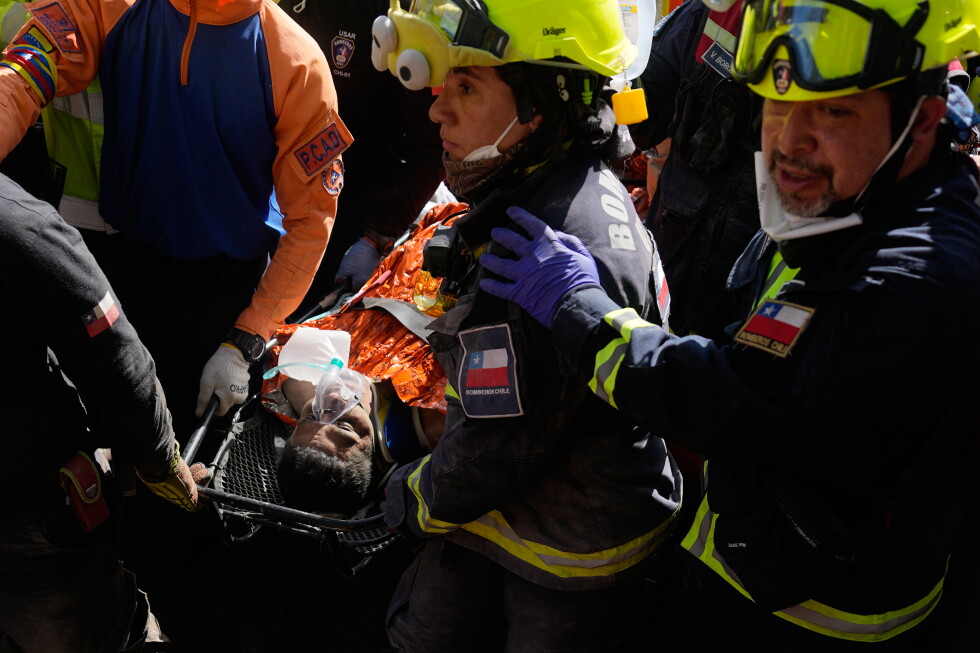
CATIA LA MAR, Venezuela – One week after a pair of devastating earthquakes ripped through Venezuela’s northern coastal region, the acrid stench of smoldering wreckage and decomposing human remains hangs heavy over the flattened neighborhoods of La Guaira state, where international rescue teams continue to cling to faint hopes of pulling more survivors from tons of concrete and rubble.
On Thursday morning, that faint hope became a rare moment of joy cutting through the pervasive despair that has shrouded the hard-hit port city of Catia La Mar. After 100 consecutive hours of painstaking excavation by search-and-rescue teams from across the Americas, crews pulled 43-year-old Hernán Alberto Gil Flores alive from the collapsed ruins of a local shopping mall, where he had been trapped for nearly eight full days. Rescuers say a narrow, stable air pocket kept Gil Flores alive, and he was able to stay hydrated and nourished using supplies that teams lowered through gaps in the rubble before reaching him. As he was carried out on a stretcher and loaded into an awaiting ambulance, crowds of onlookers who had gathered at the site burst into cheers, marking one of the few unqualified victories for rescue teams amid a relentless, devastating recovery effort.
The miracle rescue comes against a backdrop of staggering loss that has left the country reeling. As of Wednesday, Venezuelan government figures put the confirmed death toll at 2,295, with more than 11,000 people injured by the quakes. Thousands more remain unaccounted for, as desperate family members sift through wreckage searching for any sign of missing loved ones. Tens of thousands of displaced residents are now living in overcrowded emergency shelters or sleeping in the open air along the coast, a reality that has medical professionals sounding the alarm over a looming secondary public health crisis. With Venezuela’s already teetering national healthcare system stretched beyond its breaking point, untreated injuries and the spread of infectious disease threaten to push the death toll even higher in the coming weeks.
Beyond the human catastrophe, the disaster has amplified already fierce political pressure on interim Venezuelan President Delcy Rodríguez, whose government is facing widespread backlash from Venezuelans over what critics call an inadequate, under-resourced official response to the quakes. On the ground, civilian volunteer teams and international rescue efforts have outpaced official government action, drawing sharp condemnation from citizens grappling with the aftermath.
The criticism comes at a pivotal political moment for Rodríguez: her 180-day mandate as acting president was set to expire at the end of Thursday, leaving the country’s interim leadership status unclear amid a lack of transparency from government officials. Rodríguez, who previously served as vice president to Nicolás Maduro before Maduro was ousted by U.S.-backed opposition in January, has held the interim presidency with formal backing from the Trump administration. Under Venezuela’s constitution, an interim vice presidential appointment can only extend 90 days before requiring an additional 90-day extension from the National Assembly, which is controlled by Rodríguez’s party. If the seat is declared permanently vacant, the assembly has the authority to call a snap national election.
Despite growing domestic discontent over the disaster response, the Trump administration reaffirmed its full support for Rodríguez’s government on Wednesday. U.S. officials confirmed that roughly 900 American military personnel are currently deployed in Venezuela to support rescue and humanitarian relief operations. John M. Barrett, U.S. chargé d’affaires to Venezuela, pushed back against claims that Rodríguez’s administration had politicized disaster response efforts during a press call with reporters. “The U.S. response does require a high level of coordination with local authorities to be successful,” Barrett said. “And what I can say with confidence is that the local authorities have fully complied with our requests and have accelerated this massive humanitarian response.”
Gen. Francis Donovan, head of U.S. Southern Command, added that decades of systemic underinvestment in Venezuelan public infrastructure and social services had created pre-existing conditions that made responding to a disaster of this scale far more difficult for any sitting government. “It is a big problem for any leader to deal with a challenge of this magnitude,” Donovan noted.
Janetsky reported from Mexico City. Associated Press journalist Ben Finley contributed reporting from Washington D.C.