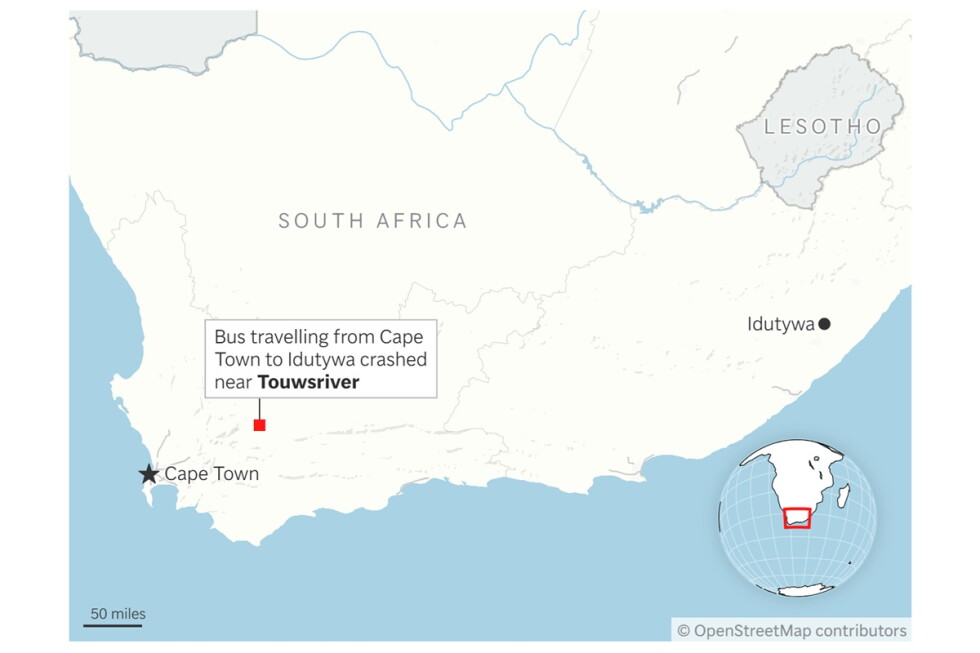
JOHANNESBURG – A devastating early-morning road accident has left 16 people dead and 20 more wounded after a passenger bus bound for South Africa’s Eastern Cape province overturned on Thursday, marking the second deadly bus crash in the country in just seven days. The vehicle was carrying 78 travelers when it departed Cape Town, a major coastal hub in Western Cape, en route to the small town of Idutywa in Eastern Cape. Simon Zwane, spokesperson for South Africa’s Road Traffic Management Corporation (RTMC), outlined the early sequence of events leading to the tragedy: the bus driver reportedly swerved to avoid a head-on collision with an oncoming delivery van, which caused the driver to lose full control of the bus before it rolled over. Initial preliminary assessments placed the death toll at nine, but on-site investigations completed by emergency responders later updated the fatality count to 16, confirming the full scale of the disaster. All 20 injured passengers have been transferred to a public hospital in Worcester, a town located roughly 120 kilometers, or 75 miles, northeast of Cape Town, for urgent medical care. Notably, 43 uninjured passengers on board declined any medical evaluation or treatment after the crash. Zwane confirmed that a full joint probe into the root causes of the accident is currently underway, led by both the RTMC and the South African Police Service to rule out any additional contributing factors beyond the initial account of the collision avoidance maneuver. This latest tragedy comes on the heels of another fatal bus crash just one day prior, on Wednesday, when a bus carrying Malawian travelers to the Beitbridge border crossing in Limpopo province overturned, killing the bus driver. In the wake of back-to-back deadly incidents, road safety authorities have issued urgent warnings to all motorists across South Africa to exercise extreme caution during the country’s winter months. Winter weather conditions frequently create hazardous driving conditions across South African road networks, with thick fog, agricultural smoke, hidden black ice on pavement, and severely reduced visibility significantly raising crash risks for passenger and commercial vehicles alike.