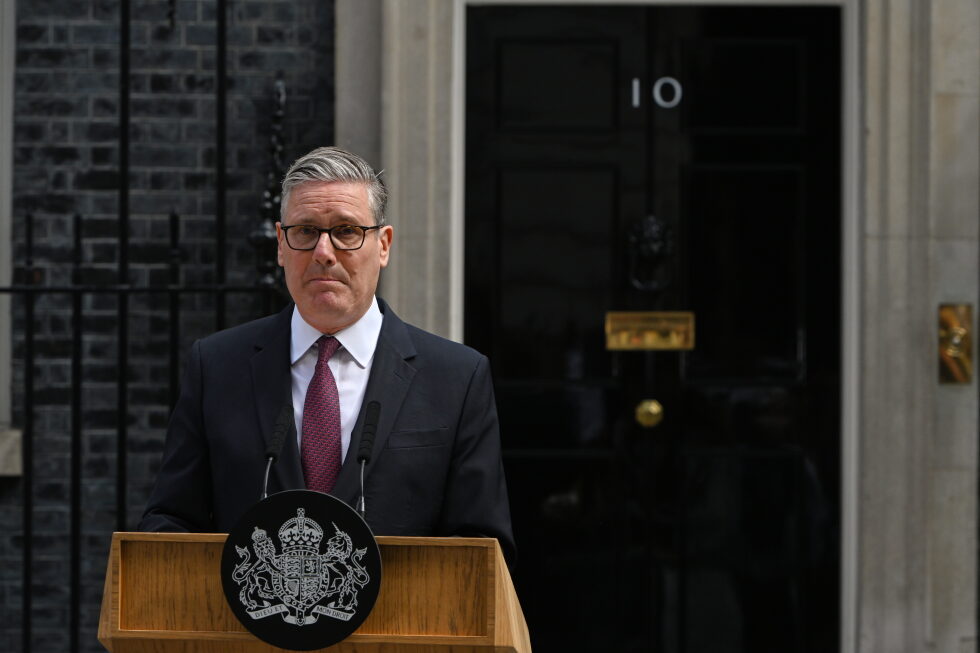
LONDON — Eight decades after Britain’s state-sanctioned system of separating unmarried mothers from their newborn children began, and nearly 50 years after the practice ended, the UK government will issue a long-awaited formal apology to survivors this Thursday. The historic statement, scheduled for delivery in the House of Commons by Prime Minister Keir Starmer, comes in the final weeks of his current premiership and marks the first national acknowledgment of the British state’s direct role in widespread forced adoption schemes.
For much of the 20th century, rigid social mores, influential religious doctrine, and official government policy combined to stigmatize unwed pregnancy across the United Kingdom. Unmarried pregnant women were frequently hidden away in segregated institutions, pressured, deceived, or coerced into surrendering their infants for adoption by married couples, with the state endorsing and overseeing the practice until it was phased out in the 1970s. Official estimates place the number of babies separated from their unmarried mothers at 185,000 between 1949 and 1976 across England and Wales alone.
Survivor advocates have waged a decades-long campaign to secure official recognition that these women did not voluntarily give up their children, but were systematically stripped of parental choice. For many survivors, the apology represents a long-fought opportunity to overturn decades of stigma and blame. Ann Keen, a former UK health minister who was 17 when her child was taken for adoption in 1966, told the BBC she anticipates the apology will bring long-delayed release from the shame wrongfully imposed on her and other survivors. “We need this apology, because we have always been accused of giving up our babies, and we didn’t give them up,” Keen said. “We’ve now got the opportunity to really put this wrong right.”
Calls for a national state apology date back at least to 2022, when Parliament’s Joint Committee on Human Rights explicitly recommended the UK government acknowledge the “pain and suffering caused by public institutions and state employees that railroaded mothers into unwanted adoptions.” The devolved governments of Scotland and Wales issued their own formal apologies in 2023, but the incumbent Conservative UK government at the time refused to issue a national apology. The move by Starmer’s Labour government also comes two weeks after the Church of England, which ran many of the maternity homes where unwed women were detained, issued its own formal apology for its role in the practice. Archbishop of Canterbury Sarah Mullally recently expressed profound regret for the “pain, trauma and stigma experienced — and still carried — by many people because of historical adoption practices in homes affiliated to the Church of England.”
The UK’s reckoning with this dark chapter of social policy places it alongside a growing number of high-income countries confronting similar historical injustices. Australia became one of the first nations to issue a national apology in 2013, when then-Prime Minister Julia Gillard delivered a landmark address acknowledging the “lifelong legacy of pain and suffering” caused by decades of state-mandated forced adoption. In Ireland, a years-long reckoning with Catholic Church-run mother-and-baby homes — where tens of thousands of unmarried women were confined in dehumanizing conditions — culminated in a 2021 public inquiry that found 9,000 children died in just 18 monitored institutions across the 20th century. Irish Prime Minister Micheál Martin subsequently issued a formal apology for the “profound and generational wrong” inflicted on affected mothers and children.