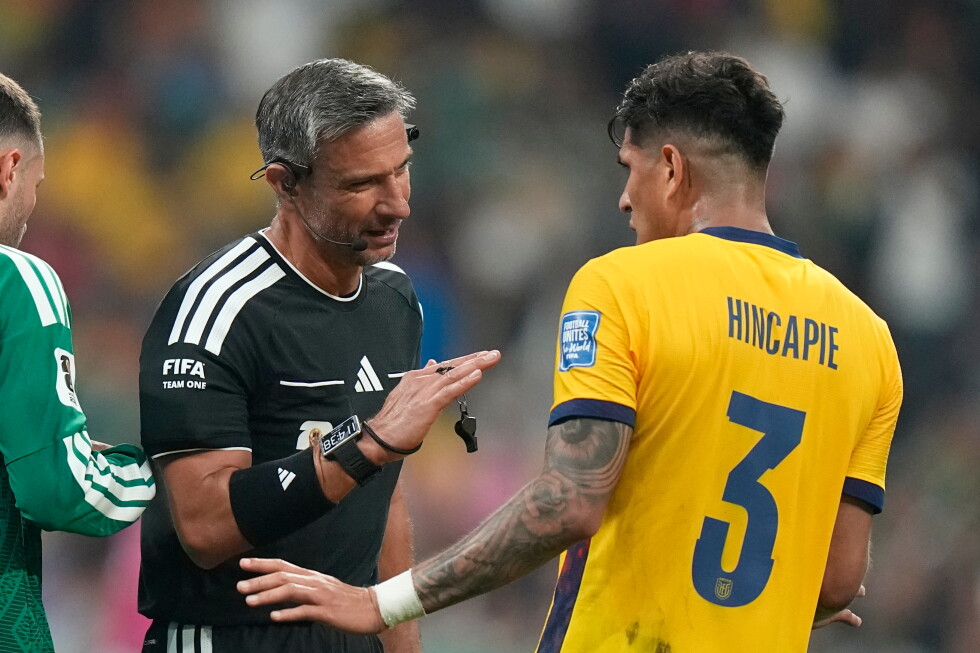
MEXICO CITY – The 202X World Cup has marked another chapter in the enforcement of FIFA’s controversial new conduct rule, with Ecuador defender Piero Hincapié becoming the second player to receive a straight red card for breaching the regulation. The rule, introduced this tournament to crack down on hidden verbal abuse between players, mandates an automatic sending off for athletes who cover their mouths during heated confrontations with opponents.
Hincapié’s dismissal came in the 95th minute of a tightly contested round of 32 knockout clash on Tuesday, where Ecuador ultimately fell 2-0 to host nation Mexico. The red card was issued immediately after the defender engaged in a tense verbal back-and-forth with Mexican striker Santi Giménez, during which Hincapié covered his mouth – a move that directly triggered the new regulation.
FIFA rolled out the new rule ahead of the tournament with a clear purpose: to eliminate the longstanding loophole that allowed players to hurl insulting or abusive language at rivals without being caught by match officials or broadcast microphones. By mandating a sending off for any mouth covering during confrontational exchanges, governing body officials hope to deter unsportsmanlike verbal conduct and improve transparency in on-pitch behavior.
Hincapié is not the first athlete to fall foul of the new regulation. Paraguayan playmaker Miguel Almirón claimed that unwanted distinction last week, when he was sent off during a group stage fixture against Turkey. Almirón’s dismissal sparked widespread debate across global football circles about the rigidity and fairness of the new rule, with pundits split on whether the punishment fits the offense.
For Hincapié and Ecuador, the red card carries immediate consequences. Ecuador’s exit from the knockout round means their World Cup campaign has already come to a close, but the suspension handed down alongside the red card will extend to the South American side’s next official international match in future FIFA competitions.
This report was contributed by Jack Little, a student journalist at the University of Georgia’s Carmical Sports Media Institute.