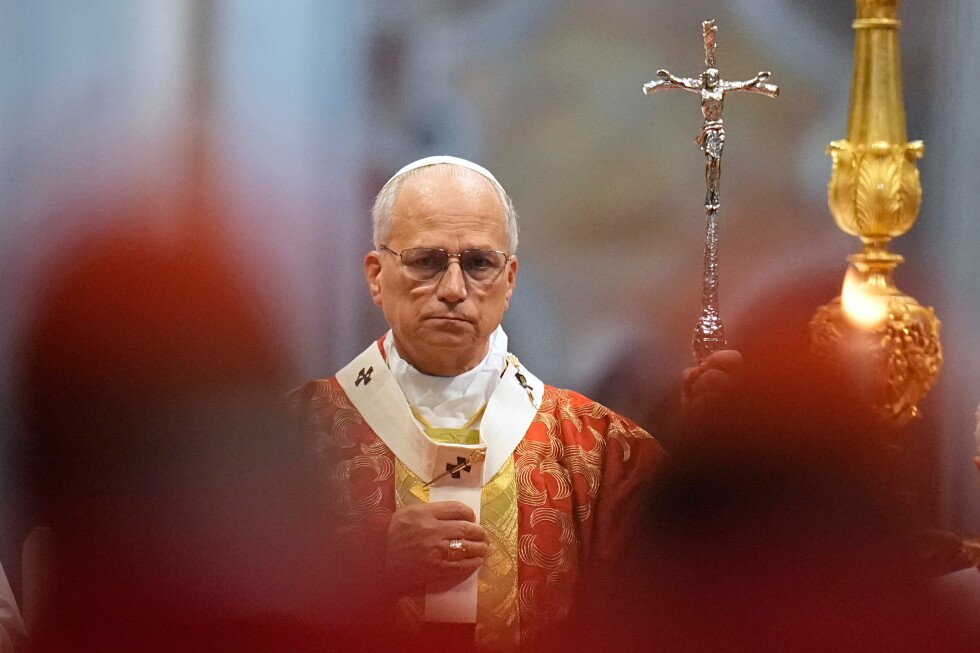
The ultratraditionalist Catholic breakaway group the Society of St. Pius X (SSPX) is moving forward with a controversial plan to consecrate four new bishops without required papal approval, a direct act of defiance against Pope Leo XIV that church law defines as a schismatic rupture of Catholic unity, triggering automatic excommunication for all clergy involved in the ceremony.
This unauthorized ordination represents the first significant test of authority for Pope Leo, who has centered his early papacy on repairing long-running divisions between the Holy See and traditionalist factions—tensions that deepened significantly over the course of Pope Francis’s pontificate. To understand the current standoff, it is necessary to trace the SSPX’s decades-long history of dissent from official church teaching.
Founded explicitly to oppose the modernizing reforms of the Second Vatican Council, the 1960s ecumenical council that transformed Catholic life—revising the church’s relations with other faith communities including Judaism and Protestant Christianity, and allowing the celebration of Mass in local vernacular languages instead of the traditional Latin—SSPX has remained outside formal Vatican structures since the 1970s. In 1975, Vatican officials suspended SSPX founder Archbishop Marcel Lefebvre from priestly ministry and formally suppressed the society. The first major schism occurred in 1988, when Lefebvre consecrated four additional bishops without papal consent, leading the Holy See to immediately issue excommunications for all involved; to this day, the group holds no official legal status within the global Catholic Church.
Despite this break from communion, the SSPX has grown steadily into a tangible alternative structure for ultratraditional Catholics, according to the group’s own internal statistics. Today it counts 2 active bishops, 751 priests, 264 seminarians across five formation houses, 145 religious brothers, 88 lay oblates, and 250 religious sisters, with members representing 50 nationalities worldwide.
Under Catholic canon law, any act of consecrating a bishop without explicit papal approval triggers automatic excommunication for both the ordaining clergy and the individuals receiving ordination. Unlike formal penalties that require a public Vatican declaration, this penalty takes effect immediately the moment the consecration is completed. Canon law experts note that while the penalty is automatic, the Holy See will almost certainly issue a public response to the high-profile act of defiance to affirm its authority.
Father Robert Gahl, a moral theology scholar at the Catholic University of America, explained that excommunication is the harshest penalty available under canon law, but it is framed as a “medicinal” measure rather than a permanent punishment. “The medicine may be bitter tasting, meaning that there’s a harsh feature of it because it’s a penalty, but it’s meant to bring about a change in the one who receives it,” Gahl noted. Crucially, the penalty does not invalidate the ordination itself: SSPX bishops and priests are considered validly ordained but minister illicitly, outside of church approval. While Pope Leo could extend excommunication to lay attendees of the ceremony, most church observers do not expect him to take that step.
The current rift comes after decades of shifting outreach and tension between successive popes and the SSPX. Pope Benedict XVI, who made reconciliation with the breakaway group a core priority of his papacy, extended two major concessions to draw the SSPX back into full communion: in 2007, he relaxed longstanding restrictions on celebration of the traditional Latin Mass across the global church, and in 2009 he lifted the 1988 excommunications of the four SSPX bishops. That gesture quickly turned into a major diplomatic scandal, however, when it was revealed that one of the bishops, Richard Williamson, was an open Holocaust denier. Williamson had repeated his denial of Nazi gas chamber killings in a Swiss television interview just days before Benedict’s decree was made public. The pope later acknowledged that a basic online search would have revealed Williamson’s extreme views. Williamson was ultimately expelled from the SSPX in 2012 for insubordination after he refused to recognize the group’s leadership and called for its superior to step down; he died in 2025.
Pope Francis, despite a general distrust of traditionalist factions and a broader crackdown on the spread of the traditional Latin Mass, which he framed as a source of division in the church, extended key concessions of his own to the SSPX. In 2015, as part of his Jubilee of Mercy initiative, he issued a decree allowing Catholics to receive valid sacramental absolution from SSPX priests, a gesture he later extended indefinitely. He also granted SSPX priests permission to officiate valid Catholic marriages. Analysts note that in response to the new unauthorized consecrations, Pope Leo could choose to revoke these concessions as part of the Vatican’s official response.
Within global Catholicism, the SSPX is just one fringe traditionalist faction outside of communion with Rome; many other traditionalist Catholics remain in full communion with the Holy See. As part of his early push for church unity, Pope Leo already signaled his outreach to mainstream traditionalists by allowing a prominent American cardinal to celebrate the traditional Latin Mass in St. Peter’s Basilica during his first year in office.
This reporting is part of the Associated Press’ religion coverage, produced in collaboration with The Conversation US and supported by funding from Lilly Endowment Inc. The AP holds sole editorial responsibility for the content.