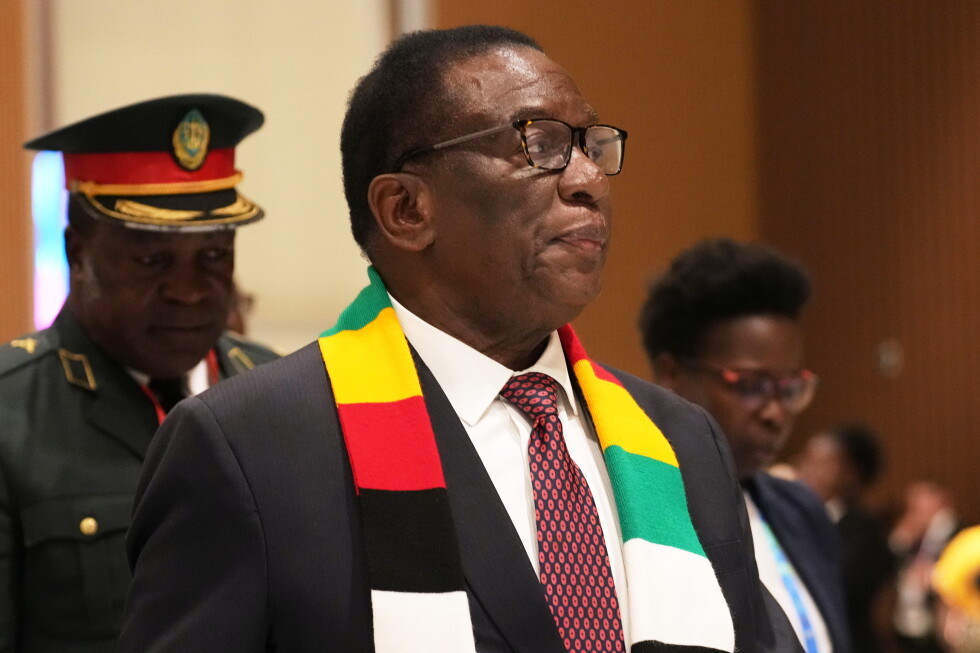
In a move that spotlights a growing, widely debated trend across the African continent, Zimbabwe’s National Assembly has passed sweeping constitutional amendments that will defer national presidential elections by two years and extend the current tenure of 83-year-old President Emmerson Mnangagwa from five years to seven. The vote, which passed by an overwhelming margin, pushes the 2028 scheduled election to 2030, adding two extra years to Mnangagwa’s time in office. The legislation also includes a controversial provision to shift presidential selection from a direct popular vote to a vote by sitting lawmakers, and it now moves to the Senate for final approval, where a majority in favor is widely expected.
This development is far from an isolated incident. It underscores the enduring grip of aging political leadership across Africa, a region that holds the distinction of being the world’s youngest continent by population but counts seven of the globe’s 10 oldest national leaders among its ranks. Latest data from the United Nations confirms that Africa’s median population age is just 20, with more than 60% of all residents under the age of 30. Yet a 2025 Pew Research Center analysis finds that seven of the 16 world leaders older than 80-year-old former U.S. President Donald Trump are based on the African continent.
Mnangagwa first took power in 2017, following a military-backed ouster of former long-time ruler Robert Mugabe, who left office at 93 as the world’s oldest serving head of state at the time. Today, he is part of a cohort of elderly African leaders who have held power for decades, many of whom have altered constitutional rules to extend their tenures. At 93, Cameroon’s Paul Biya is the oldest sitting head of state in the world, having held office since 1982 – a full year after Ronald Reagan first became U.S. president, with seven U.S. presidents having held office since Biya took power. Roughly 70% of Cameroon’s population is under the age of 35. In neighboring Equatorial Guinea, 84-year-old Teodoro Obiang Nguema Mbasogo has ruled for 47 years as Africa’s longest-serving leader, and has already positioned his son to succeed him as vice president. Ivory Coast’s 84-year-old Alassane Ouattara was sworn in for a fourth term in December 2025, following an election marked by low voter turnout and widespread civil unrest. Malawi voted 85-year-old Peter Mutharika, who previously held office from 2014 to 2020, back into the presidency in 2024. In Uganda, 81-year-old Yoweri Museveni – a long-time U.S. security ally who has faced repeated accusations of authoritarianism from critics – was sworn in for a seventh consecutive term in May 2025, pushing his total rule to 40 years. Like Mnangagwa, all of these leaders have amended or eliminated constitutional term limits to remain in power.
Blessing Vava, director of the Johannesburg-based Southern Africa Coalition for Democracy and Accountability and a researcher focused on democratic governance, notes that Zimbabwe’s constitutional changes are just one example of a continental pattern. “The population in Africa is getting younger, but the average age of presidents is rising, and tenures are getting longer,” Vava explained. “Zimbabwe is not an exception. It’s the continental norm. Zimbabwe is just one data point in a much broader story of constitutional erosion for political survival.” Vava added that the disconnect between the continent’s young population and aging ruling elite creates a dangerous imbalance: “So you get 25-year-olds making up the majority of a country’s population, but 75-year-olds decide the candidate or rule. Youth are mobilized for votes and not for power.”
The Africa Center for Strategic Studies, a U.S.-based think tank focused on the region, highlights the stark divides that define African leadership tenure today. Out of the continent’s 54 sovereign nations, roughly 20 actively enforce constitutional term limits, the organization reports. Others, however, have abolished term limits entirely, found loopholes to bypass them, or operate under military regimes that have suspended constitutional rule entirely, clearing the way for long-serving leaders to entrench their power.
Even as the aging elite retains control in many nations, the past few years have seen the emergence of a new cohort of younger leaders across parts of the continent. In Senegal’s 2024 election, 44-year-old Bassirou Diomaye Faye won the presidency, becoming one of the youngest elected leaders in African history. Ethiopia’s Prime Minister Abiy Ahmed, 49, has held office since 2018. In other cases, younger leaders have risen to power via military takeovers: 42-year-old Mahamat Idriss Deby seized control of Chad in 2021 after his father, former long-time ruler Idriss Deby, was killed while fighting rebel forces, and won a formal presidential election in 2024. In Burkina Faso, 38-year-old army captain Ibrahim Traoré took power in a 2022 coup, making him the youngest sitting leader on the continent. Military coups have also brought younger leaders to power in Mali and Guinea in recent years.
Even with these emerging shifts, analysts maintain that the vast majority of African political systems remain dominated by long-ruling, aging elites, leaving young, democratically inclined leaders with very limited pathways to seize power through electoral processes.