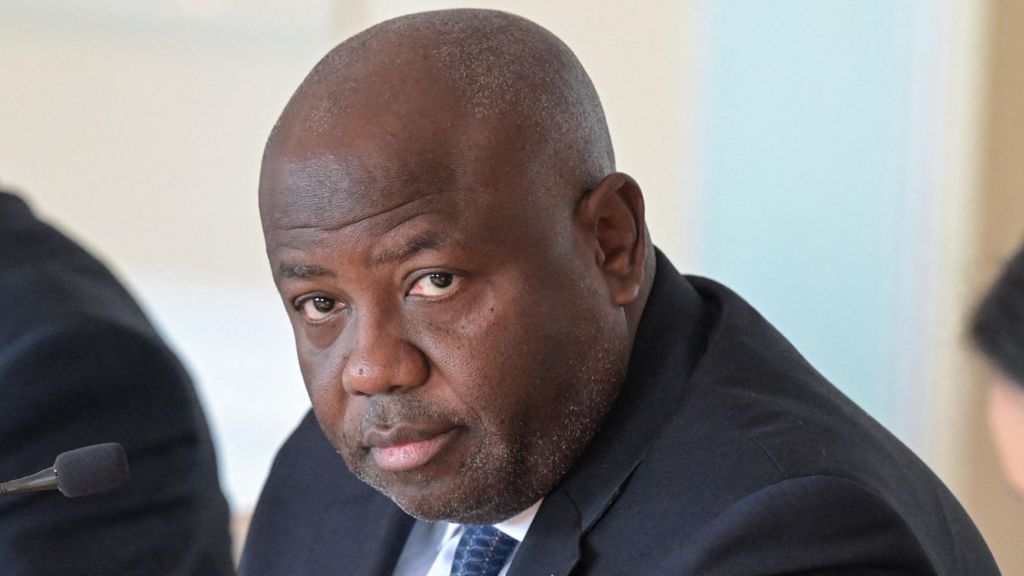
The entire cabinet of Equatorial Guinea has stepped down after the government was formally accused of failing to meet its policy targets, enabling systemic corruption, and stalling long-planned economic diversification efforts, according to Vice-President Teodoro Nguema Obiang Mangue.
Vice-President Obiang Mangue — who is the son of long-ruling President Teodoro Obiang Nguema Mbasogo, the world’s longest-serving incumbent head of state — confirmed that Prime Minister Manuel Osa Nsue Nsua submitted the collective resignation of all government ministers this week. The outgoing administration, which was only appointed in early 2024, delivered less than 10 percent of its stated policy goals, the vice-president confirmed in a public post on X, the social platform formally known as Twitter.
While the vice-president did not outline specific unmet targets in his announcement, an official statement from the ruling Democratic Party of Equatorial Guinea (PDGE) laid out the full scope of presidential dissatisfaction. According to the party’s statement, President Obiang Nguema Mbasogo identified endemic corruption, misappropriation of public funds for personal gain, and widespread stagnation in national development projects as core failures of the outgoing administration. The president also criticized the cabinet for failing to advance policies to diversify the national economy, particularly a lack of progress supporting growth in the domestic agricultural sector, a key step to reduce the country’s reliance on imported goods that can be produced locally.
For decades, Equatorial Guinea’s economy has been almost entirely dependent on oil and gas exports, which generate the vast majority of the country’s total export revenue and government budget. Despite its significant national oil wealth, widespread poverty remains pervasive across the country of 1.8 million people, with most residents seeing little benefit from the nation’s natural resource reserves. In recent years, the economy has also faced growing headwinds driven by declining oil production and shifting global demand for fossil fuels, making economic diversification a higher priority for policymakers.
President Obiang Nguema Mbasogo has held uninterrupted control of the West African nation since 1979, and has drawn longstanding international criticism for concentrating political power in the hands of his family, with multiple close relatives holding key senior government positions. The vice-president framed the mass resignation as a commitment to accountability in public governance, noting on X that “the principle that responsibility in public management must be accompanied by results” demanded the cabinet’s exit. He added that the low level of policy delivery achieved by the outgoing cabinet was “clearly insufficient in relation to the expectations and commitments undertaken.”
Local political observers expect President Obiang Nguema Mbasogo to announce a new full cabinet appointment in the coming days to replace the outgoing administration, with formal nominations expected to be made public shortly after the resignation is formalized.