MOMBASA, Kenya and TAIPEI, Taiwan — A fresh incident of Taiwan being blocked from a major international conference has underscored what Taiwan’s top diplomat describes as a persistent, growing pattern of Chinese pressure to shut the self-ruled island out of global engagements. On Wednesday, Taiwan Foreign Minister Lin Chia-Lung publicly condemned the recent detention and exclusion of two Taiwanese delegates from the Our Ocean Conference in Mombasa, Kenya, an incident Taipei attributes directly to coercive pressure from Beijing on Kenyan organizers.
According to Taiwan’s Foreign Ministry, the two delegates were detained for more than 20 hours after Kenyan authorities seized their passports and mobile phones, barring them from entry on the grounds that their Taiwan-issued passports were not legally recognized. In response to the incident, the entire remaining Taiwanese delegation withdrew from the high-stakes conference, which gathers global stakeholders to tackle pressing ocean governance challenges ranging from climate change-driven ocean degradation to biodiversity loss and plastic pollution.
Kenyan officials have defended their decision to block the delegates, aligning with Beijing’s longstanding “One China” policy that claims Taiwan as an inalienable province of China. “Our foreign policy recognizes only one China,” Korir Sing’oei, Principal Secretary of Kenya’s Foreign Ministry, told reporters. “Any person purporting to hold a Taiwanese passport would ordinarily not be allowed through our borders for lacking proper documentation and would not in any event be part of a formal state meeting convened by Kenya government.”
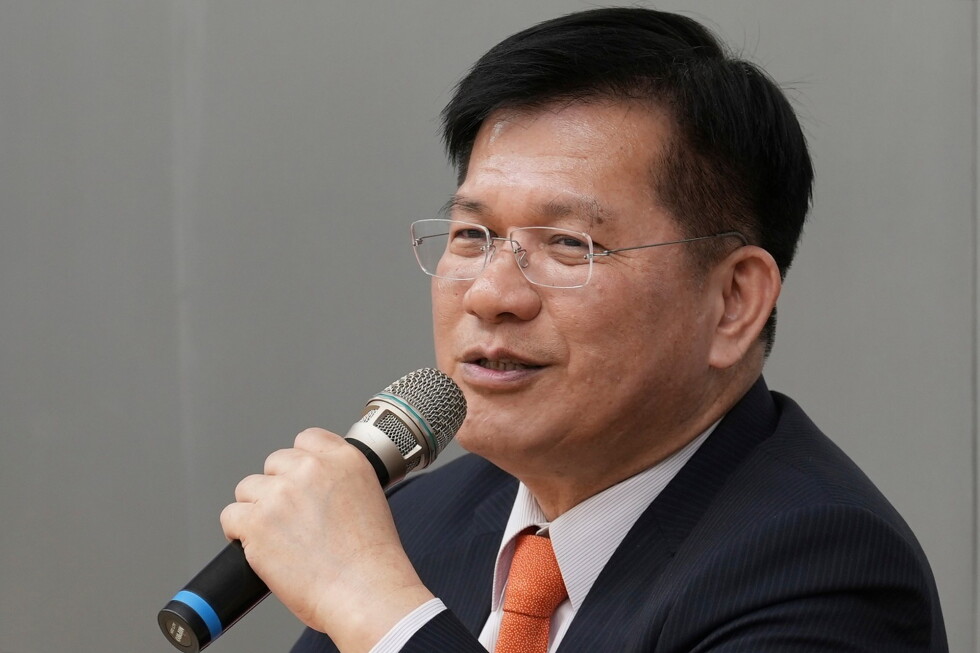
Lin pushed back sharply against Kenya’s justification, arguing that Nairobi had “unilaterally distorted and unwarrantedly expanded” its interpretation of the One China principle to exclude Taiwan’s delegates. “The obstruction of our delegates from attending the meeting is absolutely wrong, and we strongly condemn and protest against it,” Lin stated during an event hosted by the Taiwan Foreign Correspondents’ Club Wednesday.
The Mombasa incident is far from an isolated case, Lin emphasized: Beijing’s campaign to pressure third-party countries to restrict Taiwan’s access to international forums has become “the new normal” for cross-strait and global diplomatic engagement. The Chinese government has for decades pushed to limit Taiwan’s participation in multilateral bodies, barring the island from full membership in the World Health Organization and forcing it to compete under the altered name “Chinese Taipei” at the Olympic Games. In recent months, however, Lin said Beijing has ramped up these coercive efforts, particularly targeting developing and emerging economies in the Global South that are increasingly vulnerable to Chinese economic influence.
“Some Global South countries are manipulated by the Chinese government in every way,” Lin said, adding that “some democratic countries are trying to fight against it.”
A high-profile earlier incident this year laid bare the extent of Beijing’s pressure: In April, Taiwan’s president was forced to postpone a planned visit to Eswatini — one of the 13 countries that still officially recognize Taipei — after three neighboring nations reversed earlier approvals for his plane to fly through their airspace, a move widely attributed to Chinese coercion. The president eventually traveled to the African kingdom days later aboard a chartered plane provided by Eswatini’s monarch.
The 2024 Our Ocean Conference, hosted for the first time by an African nation, has been framed by organizers as a landmark moment for African leadership in global ocean stewardship. The event draws hundreds of delegates from across the African continent, the United States, the European Union, and small island developing states that are disproportionately impacted by rising ocean levels and climate change. China has not yet issued any public comment on the accusations of pressure related to the Kenya incident.
Cross-strait relations have been defined by separate governance since the end of the Chinese Civil War in 1949, when defeated Nationalist Party forces retreated to Taiwan after the Communist Party seized control of mainland China. The island has since transitioned from decades of martial law to a full multi-party democracy, but Beijing has never renounced its claim to Taiwan and has repeatedly stated it reserves the right to use military force to annex the island if it formally declares independence.