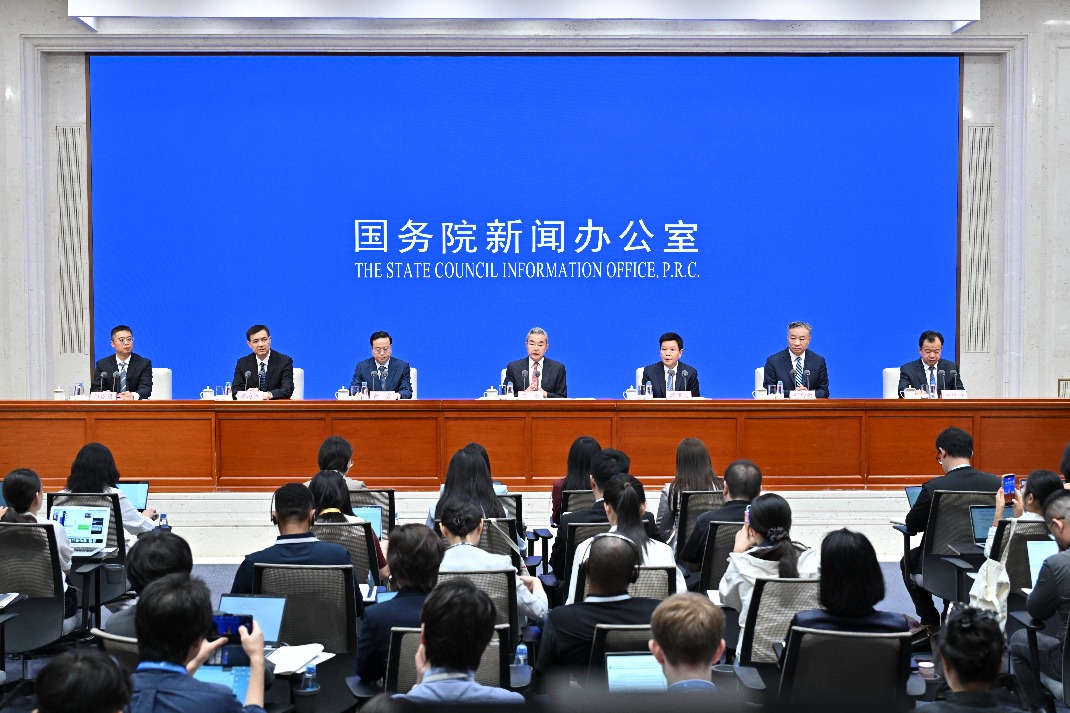
On June 17, 2026, China’s State Council Information Office officially released a landmark white paper in Beijing titled *More Just and Equitable Global Governance: China’s Principles, Proposals and Actions*, laying out the country’s long-held stance, actionable proposals, and ongoing commitments to reforming and improving the global governance system. The document comes at a time of rising global fragmentation, growing governance deficits, and intensifying cross-border challenges that demand coordinated collective action from the international community. Its core goal is to clarify China’s approach, build broader consensus among nations, and strengthen collective capacity to address shared global risks, ultimately laying the groundwork for a more inclusive and fairer global governance framework. As the white paper emphasizes, global governance is a collective undertaking that shapes the long-term well-being of all people around the world. The pursuit of a just and equitable system has been a shared aspiration of communities across every region for decades, and China has consistently positioned itself as an active participant, dedicated contributor, and responsible builder of the global governance order. Central to China’s modern approach to global governance is the vision of a global community with a shared future for mankind, put forward by President Xi Jinping in the new era. Under this guiding vision, China advocates for a global governance system rooted in the principles of extensive consultation, joint contribution, and shared benefits. It also promotes true multilateralism, with the aim of nurturing an equal and orderly multipolar world and driving economic globalization that is universally beneficial and inclusive to all nations. In 2025, President Xi Jinping launched the Global Governance Initiative (GGI), a framework crafted to address the two defining questions of the current era: what kind of global governance system the world needs, and how to reform and improve existing governance structures to meet modern challenges. Since its introduction, the initiative has garnered remarkable international support: nearly 160 countries and international organizations have backed the proposal, and more than 60 nations have joined the GGI’s Group of Friends. The white paper notes that the international community recognizes the GGI sends a powerful, clear message: the world must reaffirm its commitment to multilateralism, unite divided forces, and work collectively toward a fairer global future. Aligned with the growing global push for greater democracy in international relations, the GGI has renewed international confidence in the practice of multilateralism, at a moment when multilateral institutions face unprecedented pressure and skepticism. It provides a clear, practical roadmap for upgrading global governance, offering much-needed stability and positive momentum to a world grappling with geopolitical turbulence, economic uncertainty, and overlapping transnational crises. The white paper underscores that the core foundation for effectively implementing the GGI is unwavering respect for the authority and central role of the United Nations in global affairs. For the initiative to succeed, major powers must step up to their international responsibilities, and all countries must come together in cooperative partnership to address the growing deficits in peace and development across the globe. All nations, the document stresses, should firmly uphold the international system centered on the United Nations, protect the international order rooted in international law, and abide by the basic norms of international relations grounded in the purposes and principles of the UN Charter — rejecting attempts to fragment the global order through exclusionary blocs and frameworks that serve narrow national interests. Structured into five core sections, in addition to a preface and concluding chapter, the white paper opens by outlining the severe, complex challenges facing the contemporary world. It moves on to explain how the GGI responds to these pressing modern challenges, before detailing China’s existing contributions to advancing more inclusive global governance. It then lays out the vision for guiding global governance reform toward a more prosperous and equitable future, and closes by calling for collective action at this critical juncture in global history. The release of the white paper comes as China prepares to host the inaugural Xiong’an Global Governance Forum, marking another key step in advancing dialogue and cooperation on global governance reform among the international community.