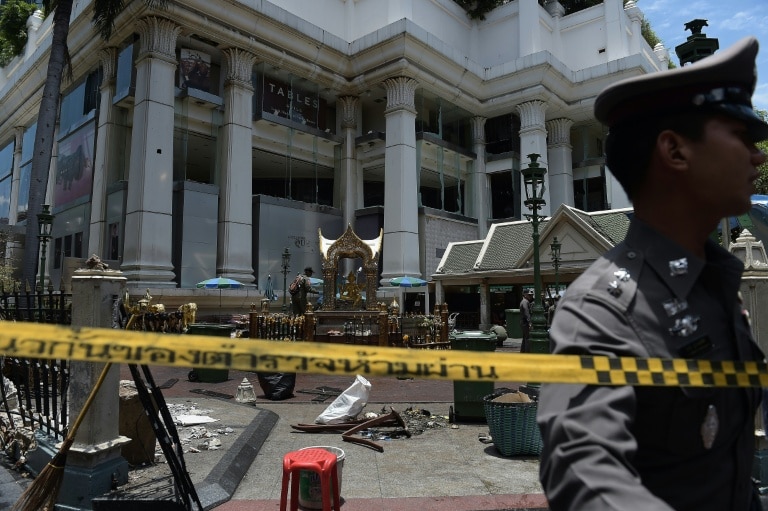
After nearly a decade of delayed proceedings and public scrutiny, a Thai court has handed down the long-awaited final verdict in the kingdom’s deadliest terrorist attack: two Chinese Uyghur men have been sentenced to death for carrying out the 2015 bombing at Bangkok’s iconic Erawan Shrine that left 20 people dead and more than 100 injured.
The 2015 attack ripped through the popular tourist and worship site located in the heart of Bangkok’s central commercial district on an August afternoon. The explosive device, hidden inside a backpack left at the shrine, detonated as crowds of worshippers and sightseers gathered, leaving the area scattered with charred debris and wreckage from nearby damaged motorbikes. Multiple Chinese tourists were among those killed in the blast, making it one of the most high-profile violent incidents to strike Thailand’s key tourism sector in modern history.
The guilty ruling delivered on Thursday convicts Yusufu Mieraili and Bilal Mohammed of premeditated murder and attempted murder for their role in planting the bomb. In a statement accompanying the verdict, a member of the four-judge panel explained the severity of the sentence, noting that “the defendants committed a single act that violated multiple laws. The court therefore imposed the harshest penalty available under the law, the death sentence.” The two men, who appeared in court in standard prison uniforms, were acquitted on separate charges connected to a second smaller bombing at a pier in Bangkok’s Charoen Nakhon district that occurred shortly after the shrine attack.
Immediately after the verdict was read, Mieraili rejected the court’s finding, telling reporters “RIP Thailand’s justice system. I don’t accept any of this. I didn’t do anything wrong.” The defendants’ lead legal counsel, Choochat Kanpai, confirmed that his clients will immediately file an appeal against the ruling, citing gaps in the court’s consideration of key evidence and allegations of improper treatment of the defendants during the extended trial proceedings.
The case has been marked by repeated delays and controversy since the attack took place 10 years ago. Within days of the bombing, Thai police issued warrants for 17 suspects, but only Mieraili and Mohammed were arrested in the immediate aftermath. The case went to trial in 2016, but hundreds of witness testimonies and repeated procedural disruptions pushed the final verdict back for years. Delays were caused by multiple factors, including widespread court shutdowns during the global COVID-19 pandemic, and a high-profile disruption when the court-appointed translator for the accused was arrested on drug charges. In 2017, a third suspect, Thai national Wanna Suansan, was apprehended upon her return to Bangkok and charged with terrorism-related counts connected to the blast, but she was acquitted of all charges earlier this year.
The timing of the 2015 attack, which came just weeks after Thailand’s ruling military junta forcibly repatriated 109 Uyghurs to China, sparked long-running international speculation over the attack’s potential motives. At the time, Thailand was a key transit point for Uyghurs seeking to leave China, and the junta had been moving to strengthen diplomatic and economic ties with Beijing. Rights groups have long documented what they describe as widespread cultural and religious repression of Uyghurs, a Turkic Muslim minority group from China’s far western Xinjiang region. China has repeatedly denied allegations of mass human rights abuses in Xinjiang, which include claims of mass internment of over one million Uyghurs and other Muslim minorities.
Most recently, in February 2025, Thailand drew sharp international condemnation from the United Nations and global human rights groups after it deported dozens more Uyghur detainees back to China, despite repeated warnings that the group would face systematic persecution on their return.
Today, the Erawan Shrine remains one of the most visited attractions for Chinese tourists traveling to Bangkok, but an Agence France-Presse survey of visitors ahead of the verdict found that almost none of the tourists questioned were aware of the 2015 bombing or the decade-long trial that followed. One Chinese tourist who said he visits the shrine annually declined to comment on the attack when approached, only saying “It’s nice to come here to pray” before ending the conversation.