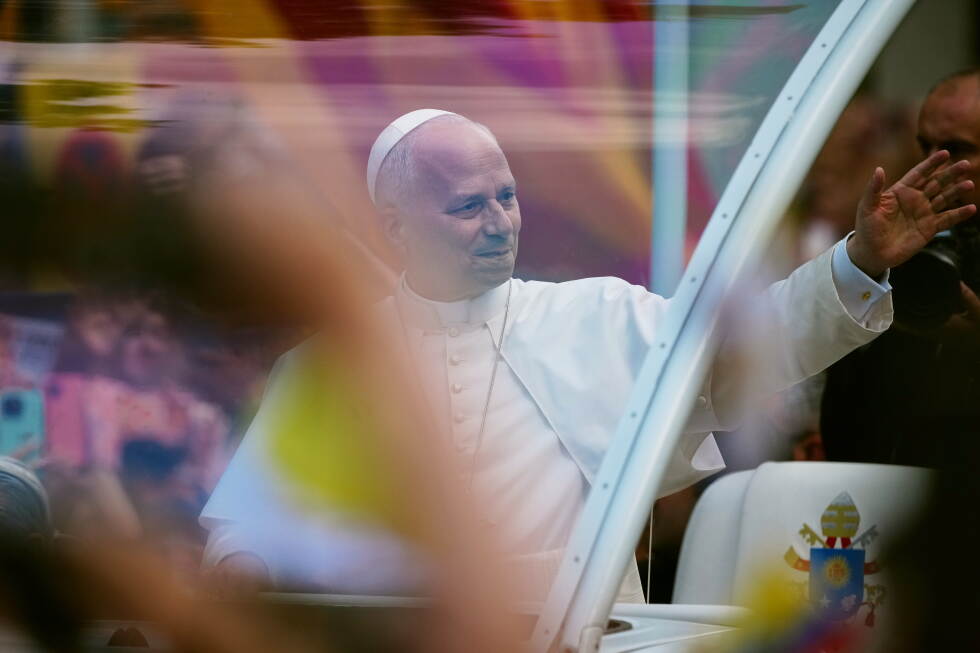
BARCELONA, Spain — On the final leg of his week-long official visit to Spain, Pope Leo XIV traveled Thursday to the Canary Islands, a Spanish archipelago off the northwest coast of Africa, to honor a long-held wish of his predecessor Pope Francis and shine a global spotlight on the dangerous journey that hundreds of thousands of migrants undertake each year to reach European shores. Positioned far closer to West Africa than to mainland Spain’s Iberian Peninsula, the Canaries have emerged as one of the most pivotal entry points for irregular migration to the European Union, making it a natural epicenter for debates over migration policy across the continent.
During his two-day visit, the pontiff scheduled a series of engagements: private meetings with migrants who have arrived in the archipelago in recent months, discussions with representatives of Catholic Church outreach groups and humanitarian organizations that provide life-saving aid and integration support for new arrivals, and a solemn commemoration at a site that has become a global symbol of the world’s failure to protect vulnerable migrants: Arguineguin Port, infamously dubbed the “dock of shame” after a 2020 crisis exposed inhumane conditions for displaced people.
In 2020, a sudden spike in migrant crossings to the Canary Islands overwhelmed local authorities, forcing thousands of new arrivals to camp in open-air makeshift facilities on the port’s dock. For weeks, migrants had access only to basic blankets, with no functioning shower facilities, limited access to food and medical care, and no proper legal support for people seeking international asylum. Many were detained far longer than the 3-day maximum detention period permitted under Spanish law, triggering national outcry. Spain’s national ombudsman eventually ordered the camp closed and all migrants relocated, leaving a permanent stain on the country’s immigration policy reputation.
Pope Francis, who centered much of his papacy on upholding the biblical call to “welcome the stranger” and made refugee rights a defining policy priority, had long planned to visit the Canary Islands to stand in solidarity with migrants after the 2020 crisis, but he never had the opportunity to make the trip before stepping down. Pope Leo, the first American pope, has carried forward this commitment, emerging as a vocal critic of hardline migration policies both in his home country, where he has pushed back against former President Donald Trump’s mass deportation crackdown, and across the globe.
Earlier in his Spanish trip, Pope Leo made history by becoming the first pope ever to address the Spanish Parliament, where he delivered a rousing defense of migrant dignity that earned him a seven-minute standing ovation from lawmakers. “The moral greatness of a nation is manifested, above all, in its capacity to accompany, protect and love those lives that are most fragile,” he told the chamber, extending his framing of inherent human dignity to unborn children, the elderly, and people living with terminal illness. Beyond his call for welcome, the pope has pushed for coordinated global action to dismantle human smuggling networks, establish safe, legal migration pathways, and invest in economic development in migrants’ countries of origin to give people the choice to build stable lives at home rather than undertaking dangerous cross-border journeys.
Spain’s current Socialist-led government has carved out a unique stance on migration relative to many other Western nations, bucking the hardline trend that has taken hold across much of Europe and the United States. Prime Minister Pedro Sánchez has openly defended liberal immigration policies on both humanitarian and economic grounds, pointing to Spain’s rapidly aging population and chronically low birth rate, which have left critical gaps in the national workforce that immigrant workers can fill. Earlier this year, the administration launched an ambitious regularization campaign that will grant legal status to hundreds of thousands of unauthorized migrants currently living and working in the country.
Migrant arrivals to the Canary Islands hit a peak of nearly 47,000 people in 2024, but numbers have dropped dramatically in recent years, with just over 2,000 arrivals recorded in the first four months of 2026. Following his visit to the Canaries, Pope Leo will continue his tour of key migration epicenters next month, when he plans to spend U.S. Independence Day on the Italian island of Lampedusa — another major entry point for migrants crossing from North Africa. The visit will echo Pope Francis’ first official trip outside Rome back in 2013, when he traveled to Lampedusa to toss a wreath into the Mediterranean Sea in honor of thousands of migrants who died attempting the crossing, and coined his iconic phrase decrying the “globalization of indifference” that allows the world to turn a blind eye to migrant suffering.
This coverage from the Associated Press is supported through a collaboration with The Conversation US, with funding provided by Lilly Endowment Inc. The AP retains sole editorial responsibility for all content.