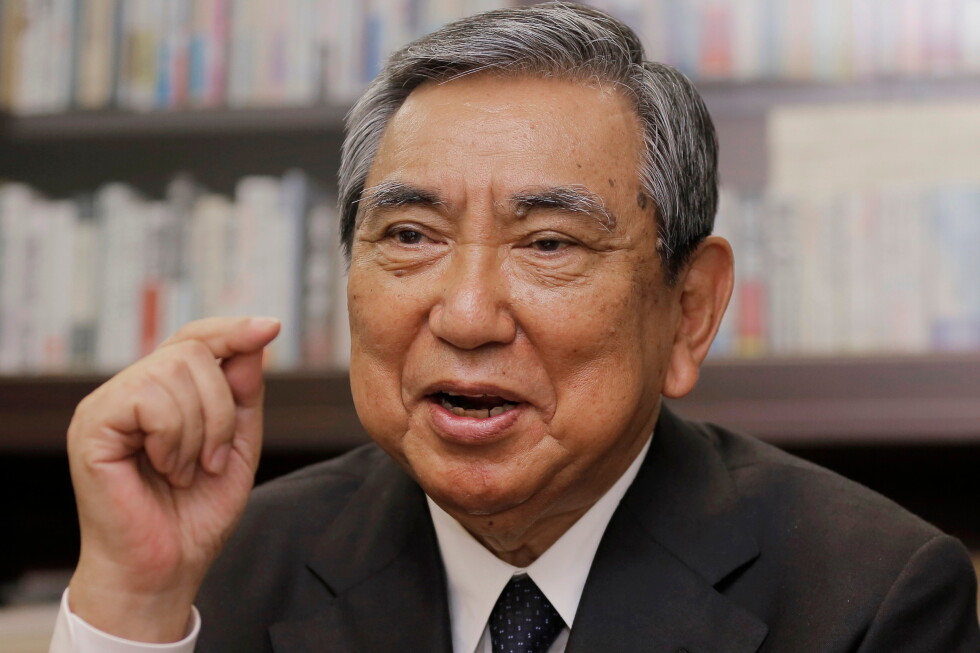
TOKYO — Yohei Kono, a towering figure in Japanese politics whose landmark 1993 apology to wartime sexual slavery victims cemented his legacy as a vocal advocate for reckoning with Japan’s 20th-century military history, has passed away at the age of 89. The office of Kono’s son, former Japanese Foreign Minister Taro Kono, confirmed the veteran statesman died of natural causes linked to old age on Monday.
Born in January 1937, Kono entered Japanese politics in 1967, following the death of his father Ichiro Kono, a prominent lawmaker within Japan’s long-governing Liberal Democratic Party (LDP). Over his 42-year political career before retiring in 2009, Kono held a string of the country’s most influential positions, including Chief Cabinet Secretary, President of the LDP, and Speaker of Japan’s lower house of parliament — the more powerful chamber of the country’s bicameral national legislature.
Kono’s most defining contribution to Japanese and regional history came in 1993, when as Chief Cabinet Secretary he delivered an unprecedented formal apology to the tens of thousands of “comfort women” forced into sexual slavery by Japan’s wartime military across occupied Asia. The apology followed an official Japanese government investigation that confirmed the military’s direct role in operating frontline brothels and coercing women into sexual servitude. This groundbreaking statement laid the groundwork for the broader 1995 apology for wartime atrocities issued by then-Prime Minister Tomiichi Murayama.
Internationally, both the Kono Statement and the Murayama Statement were widely seen as critical steps toward Japan acknowledging its wartime aggression and reconciling with neighboring countries that suffered under Japanese occupation. For decades, the statements served as a cornerstone for improved diplomatic relations between Japan and its Asian neighbors China and South Korea, which were among the nations most impacted by Japan’s pre-1945 imperial expansion.
However, the commitments made in the Kono Statement have faced persistent backlash from Japanese nationalist and conservative political factions, who argue Japan should abandon focus on what they frame as “negative history” to rebuild national pride. Pressure to water down or erase the apology grew significantly during the tenure of nationalist former Prime Minister Shinzo Abe, with multiple high-profile attempts to revise the original statement. Kono remained unflinching in his defense of his 1993 remarks, repeatedly warning that any effort to whitewash established historical facts would ultimately damage the international reputation of the Japanese people.
Beyond his work on historical reconciliation, Kono placed consistent priority on building and maintaining constructive, friendly relations with China, South Korea, and other Asian nations that endured Japanese wartime atrocities. Even long after his formal retirement from electoral politics in 2009, Kono remained active in diplomatic outreach, almost annually leading cross-party and business delegations to China to help stabilize bilateral relations during periods of tension. Earlier this year, he was still planning a new visit to Beijing, amid a sharp downturn in Tokyo-Beijing relations that followed a controversial statement from current Prime Minister Sanae Takaichi. In November, Takaichi claimed a hypothetical Chinese military operation against Taiwan would justify a deployment of Japanese troops, prompting fierce pushback from Beijing.