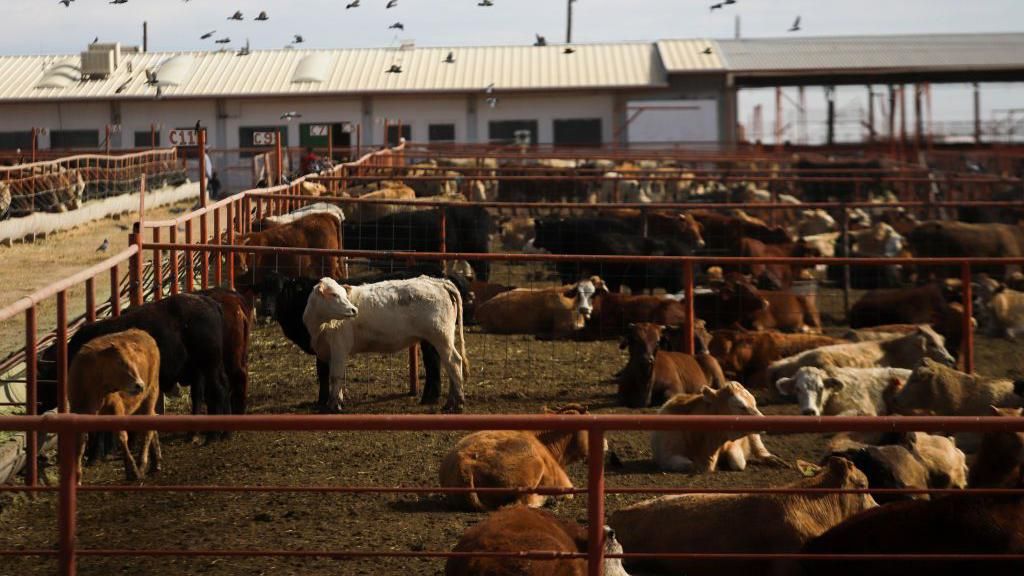
A major agricultural emergency is unfolding in the United States’ top cattle-producing state, prompting Canada to enact sweeping border restrictions to block the spread of a dangerous parasitic pest. The Canadian Food Inspection Agency (CFIA) announced a temporary ban this week, barring entry for any cows and horses that stayed in Texas within 21 days of attempting to cross the Canada-US border.
The emergency measure came shortly after the United States Department of Agriculture (USDA) confirmed a second case of New World Screwworm in a Texas calf, marking the first active outbreak of the parasite in the contiguous United States in 60 years. Texas Governor Greg Abbott quickly responded by declaring a state of disaster Friday, warning that the infestation poses an imminent public and agricultural threat that is likely to expand as summer temperatures rise.
New World Screwworm is a devastating parasitic fly that preys on living warm-blooded creatures, including humans. Female flies deposit their eggs in open wounds and moist mucous membranes; once hatched, hundreds of voracious larvae use sharp mouthparts to burrow through living host tissue, which is almost always fatal if the infestation is left untreated.
The first confirmed case was detected Wednesday in a three-week-old calf in La Pryor, a small Texas town located just 48 kilometers from the Mexican border. This marked the first endemic case of the parasite in the U.S. since it was declared eradicated from the country in 1966. Just two days later, a second infected one-month-old calf was identified in Zavala County, fewer than 10 kilometers from the site of the first discovery, within the 20-kilometer-wide control zone officials established after the initial case. The USDA confirmed the find during targeted testing of high-risk suspected cases, and has already implemented strict quarantines, movement restrictions, and expanded surveillance across the control zone.
These cases are the northernmost extension of an ongoing screwworm outbreak that has been spreading through Central America and Mexico for months, a threat U.S. agricultural and public health officials have monitored closely for weeks. Governor Abbott’s disaster declaration frees up additional emergency resources to respond to the outbreak, noting that the infestation poses an imminent risk of widespread harm to Texas’ $100-billion-plus agricultural industry, the backbone of the state’s rural economy.
While Canadian agricultural officials note that the country’s colder climate makes it unlikely that screwworm could establish a permanent population there — the parasite thrives exclusively in warm, humid environments — they are taking no chances. Canadian authorities have urged livestock producers to regularly inspect their herds for unusual wounds paired with abnormal discharge or foul odors, a classic sign of screwworm infestation, and have asked residents who travel to Texas to check their companion animals for signs of the parasite upon returning home.
The Canada-U.S. border is one of the most active cross-border livestock trade routes in the world, with cattle and other livestock moving regularly between the two countries for slaughter, breeding, dairy production, and wool farming. According to Canada’s agriculture department, imports of U.S. cattle have grown steadily in recent years, reaching more than 550,000 head in 2025 alone, making rapid border action critical to preventing spread into Canada.
While the U.S. declared screwworm eradicated in 1966, small isolated outbreaks have occurred since, including a larger incident in the 1970s. Adult screwworm flies can only travel short distances under their own power, meaning long-distance spread almost always occurs when infected livestock or animals are transported by humans. Regional officials across Latin America and North America have worked for six decades to control the parasite, with only inconsistent success in containing its spread.
To combat the current outbreak, U.S. agricultural and health officials have rolled out a multi-pronged response plan that includes releasing hundreds of millions of genetically modified sterile male flies to curb population growth, alongside deploying specially trained sniffer dogs to detect infestations in cattle herds before they spread. Despite these proactive measures, some agricultural experts have raised questions about whether these existing tactics will be sufficient to stop the outbreak from spreading beyond Texas this summer.