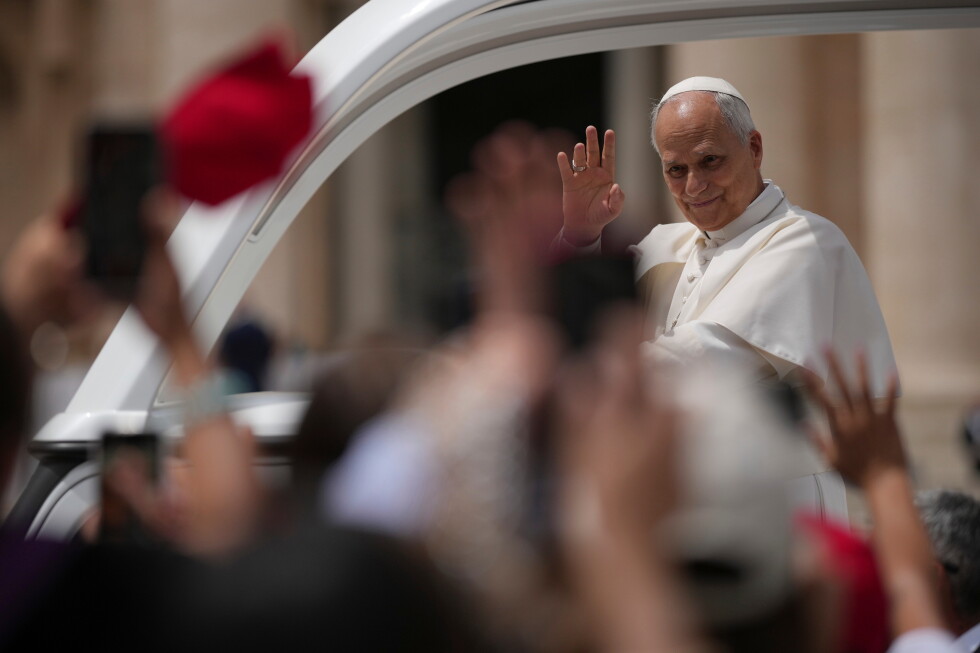
VATICAN CITY — When Pope Leo XIV embarks on his seven-day apostolic journey to Spain starting June 6, he will step into a nation once defined by its unwavering Catholic identity, now grappling with plummeting religious participation, deep political polarization, and ongoing reckoning with the Catholic Church’s decades-old clergy sexual abuse scandals. This marks the first papal visit to Spain in 15 years, the last coming from Pope Benedict XVI for 2011’s World Youth Day in Madrid, and it will unfold across three distinct stops, each with a targeted mission that intersects with Spain’s most pressing contemporary challenges.
Ahead of the trip, the Vatican confirmed late Friday that Leo will make space to meet with survivors of clergy sexual abuse during his visit, a mandatory inclusion for modern papal travel as the global Church continues to confront the fallout of abuse and institutional cover-up. Spain’s national Catholic hierarchy has only recently begun to acknowledge the full scope of abuse committed by clergy across the country over generations, a reckoning that has further eroded public trust in the institution amid already accelerating secularization.
The first leg of the journey, held in Madrid from June 6 to 8, will make history in its own right: Leo will become the first pope ever to address a joint session of Las Cortes Generales, Spain’s national parliament. Papal addresses to foreign legislatures are extremely rare; the last such occurrence came in 2015, when Pope Francis spoke to a joint meeting of the U.S. Congress, and such speeches often rank among the most high-profile addresses of a pontificate.
Leo will take the podium in a legislature deeply fractured along ideological lines. Spain’s ruling Socialist Party, led by Prime Minister Pedro Sánchez, is currently mired in a major political crisis driven by a string of high-profile corruption scandals, while the far-right party Vox has mounted fierce criticism of the government’s liberal migration policies. Beyond his parliamentary address, Leo will also meet with King Felipe VI and the Spanish royal family, and lead an ecumenical prayer vigil for young people in Madrid, a gathering that intentionally echoes the 2011 World Youth Day that brought Benedict XVI to the capital.
Notably, the pope’s visit to Madrid will overlap with a much-anticipated pair of concerts from global Puerto Rican superstar Bad Bunny, part of the artist’s 10-show European run. The dual high-profile visits have prompted major traffic disruptions and security closures across large swathes of the Spanish capital, drawing widespread media attention to the unlikely overlap of the world’s most prominent religious leader and one of pop music’s biggest stars.
From June 9 to 10, the papal trip shifts to Catalonia’s capital Barcelona, where the centerpiece of the visit will mark the 100th anniversary of the death of legendary Catalan architect Antoni Gaudí, a native son of the region whose work is already on the path to sainthood in the Catholic Church. Leo will celebrate open-air Mass at Gaudí’s iconic unfinished masterpiece, the Sagrada Familia basilica, and formally inaugurate the site’s new central spire, the Tower of Jesus Christ, a construction milestone that has earned Sagrada Familia the title of the world’s tallest church. While Gaudí’s sainthood cause will be a backdrop to the visit, the Vatican has confirmed no formal announcement on his canonization is scheduled. Leo will also make a pastoral stop at the Our Lady of Montserrat abbey, a site of deep spiritual and cultural significance for Catalonia, located on a sacred mountain outside the city.
The final leg of the visit, held on the Canary Islands from June 11 to 12, fulfills a long-held priority of Pope Francis, who had long desired to visit the archipelago to minister to migrants who cross dangerous Atlantic routes from North Africa to reach European soil. Located far closer to the African coast than mainland Spain, the Canary Islands have long been the primary arrival point for irregular migration to Spain. Migrant arrivals peaked at nearly 47,000 in 2024, though numbers have dropped sharply to just over 2,000 in the first four months of 2026.
Leo will visit two of the archipelago’s seven main islands over two days, meeting with recently arrived migrants and the humanitarian organizations that provide life-saving care and support to new arrivals. The stop comes as the Sánchez government has broken with the dominant policy trend across Europe and the United States, announcing plans to grant legal status to hundreds of thousands of undocumented migrants already living and working in Spain. Sánchez has framed the policy as an economic necessity, noting that legal migration will help offset Spain’s aging population and chronically low birth rate that have strained the country’s labor market.
During the visit, Pope Leo is widely expected to double down on core papal priorities that cut across each of his three stops: calls for unity in a deeply polarized political landscape, a push for global peace amid ongoing armed conflicts around the world, a message of radical welcome for migrants, and words of hope for young Spaniards navigating the rapid changes brought by the artificial intelligence revolution.
This Associated Press religion coverage is produced through a collaboration with The Conversation US, with funding from Lilly Endowment Inc. The AP retains sole editorial responsibility for all content.