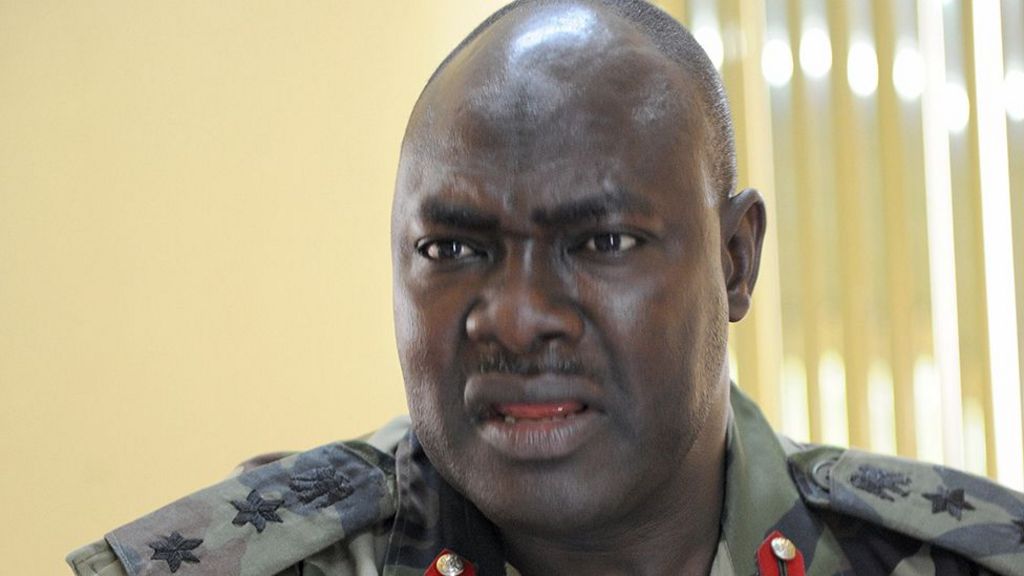
Nigeria’s military has officially confirmed that a retired senior army commander and his spouse have been taken hostage by armed assailants in the country’s restive northwest region.
Retired Major General Rabe Abubakar, who served as the Nigerian Army’s high-profile public spokesperson between 2015 and 2017, was pulled from his vehicle during an abduction that took place Saturday while he was traveling through Katsina State. Local media reports indicate the former senior officer was en route to a wedding celebration in the state capital when gunmen intercepted his car. His driver was struck by gunfire during the attack but managed to escape, while Abubakar and his wife were forcibly taken into a nearby heavily forested area, where criminal groups often hide after carrying out raids.
Current Nigerian Army spokesperson Major General Michael Onoja told the BBC that active search and rescue operations are currently ongoing to free the kidnapped couple and apprehend their captors. As of Sunday, no armed faction has claimed responsibility for the abduction, and military officials stated they are waiting for the perpetrators to reach out to Abubakar’s family, a common step in kidnappings for ransom in the region.
This latest high-profile kidnapping underscores the persistent, intractable security crisis that has plagued northwestern Nigeria for years. In this region, loosely organized criminal gangs locally referred to as “bandits” regularly carry out mass abductions for large ransom payments, steal cattle from rural herders, and launch coordinated attacks on isolated farming communities. The security challenge is compounded by the presence of small factions of militant jihadists that have also established operating bases in the area; last December 25, the United States carried out an airstrike targeting an alleged militant training camp in neighboring Sokoto State.
Katsina has consistently ranked among the Nigerian states hardest hit by this wave of violence. Just one day before Abubakar’s abduction, the state suffered another deadly mass attack: armed men raided Kiliya village, located in Dutsinma Local Government Area, killing no fewer than 16 residents. That attack unfolded shortly after Friday communal prayers, as local residents had gathered to mark the Eid al-Adha religious holiday. Security agencies across northern Nigeria had issued formal warnings of potential attack plots during the holiday celebrations, leading several state governments to implement restrictions on large public gatherings and boost patrols in high-risk areas. Nigerian police have not yet released any official comment on the reported village massacre.
Neighboring Zamfara State, which shares borders with both Katsina and Sokoto, has endured years of the same pattern of brutal violence. Some local communities in Zamfara have attempted to broker informal peace agreements with armed gangs in recent years, but nearly all of these efforts have failed to deliver long-term stability to the region.
Nigeria’s federal government has ramped up counter-insurgency and anti-crime operations in the northwest in an attempt to curb the epidemic of kidnapping. Policy measures have also been introduced to discourage families from paying ransom to kidnappers, which officials argue fuels the cycle of abductions by giving criminals incentive to carry out more attacks. Despite these interventions, however, large-scale attacks and abductions of both high-profile figures and ordinary civilians have continued unabated across the region.