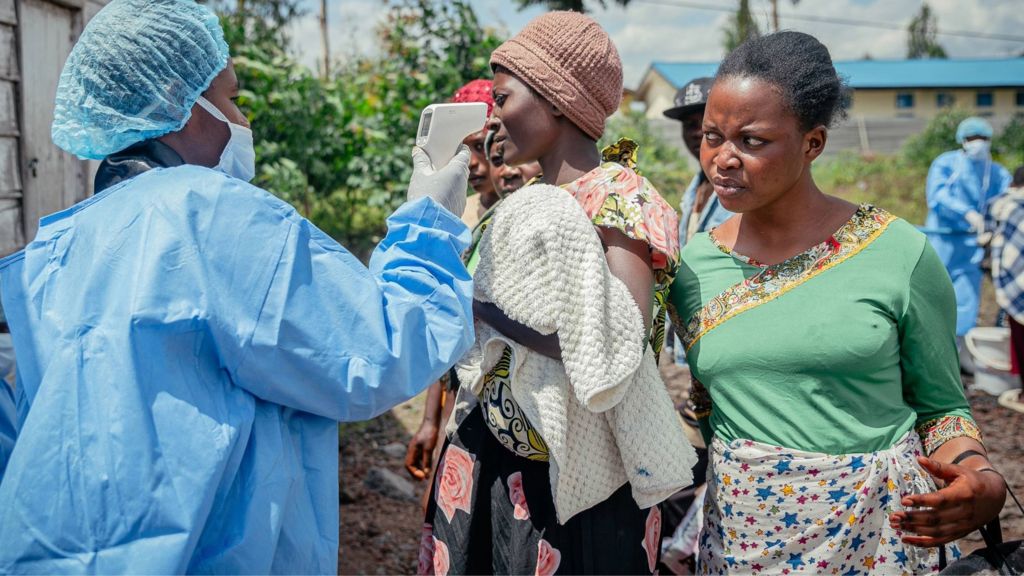
Two weeks after the Democratic Republic of Congo officially declared an Ebola outbreak, international medical and public health authorities are sounding the alarm over an unprecedented rate of spread that has outpaced current response efforts. The epicenter of the outbreak is the northeastern Congolese province of Ituri, where transmission has already outstripped every recorded early-stage Ebola event in modern history.
In a public statement released Saturday, Dr. Alan Gonzalez, deputy director of medical humanitarian organization Médecins Sans Frontières (MSF), described the unfolding situation as deeply alarming. “Never before has an Ebola outbreak recorded so many cases so soon after its declaration,” Gonzalez emphasized, adding that frontline MSF teams on the ground have observed that response operations have not yet matched the speed of the virus’s advance. He warned that the full extent of the crisis remains unclear: hundreds of test samples from suspected patients are still backlogged and unprocessed, even as new potential infections are reported every single day.
Gonzalez also outlined significant logistical barriers delaying critical containment work and aid delivery, pointing to widespread border and airport closures as major disruptive constraints. These challenges compound long-standing issues created by ongoing armed conflict in the region, which the World Health Organization (WHO) has repeatedly flagged as a major barrier to mounting an effective response.
As of the latest updates, more than 1,000 suspected Ebola cases have been recorded across DR Congo, with at least 246 confirmed deaths linked to the outbreak. The virus has also spilled over the country’s northern border into neighboring Uganda, where nine confirmed cases and one fatality have been reported to date.
Over the weekend, WHO Director-General Dr. Tedros Adhanom Ghebreyesus traveled personally to Ituri to oversee and assess local containment efforts. Speaking after his arrival, Tedros explained that the WHO delegation was in the province to evaluate response progress and address unmet needs that are slowing control work. He called for greater engagement of local communities in outbreak response, noting that residents have on-the-ground knowledge that is critical to successfully curbing transmission. “They understand the problems better and they know the solution as well,” he said of local populations.
One of Tedros’ first official stops during the visit was the National Institute for Biomedical Research laboratory in Bunia, Ituri’s provincial capital, where all samples from suspected Ebola patients are now processed. Local health authorities confirmed that the newly operational local testing facility can deliver confirmed results to care teams within 24 hours, a major improvement that allows clinicians to quickly isolate infected patients and initiate life-saving care. Prior to the opening of this lab, samples had to be transported more than 1,500 kilometers to Kinshasa, DR Congo’s capital, for testing — delays that put communities at greater risk of further spread and cost vulnerable patients critical care time.
The current outbreak is caused by Bundibugyo, a rare strain of Ebola for which no widely proven vaccine currently exists. The virus has an average case fatality rate of roughly one-third, meaning approximately one in every three infected people will die from the disease. Like all Ebola strains, Bundibugyo originally circulates in wild animal populations, most commonly fruit bats; human outbreaks typically begin when people come into contact with or consume meat from infected animals.