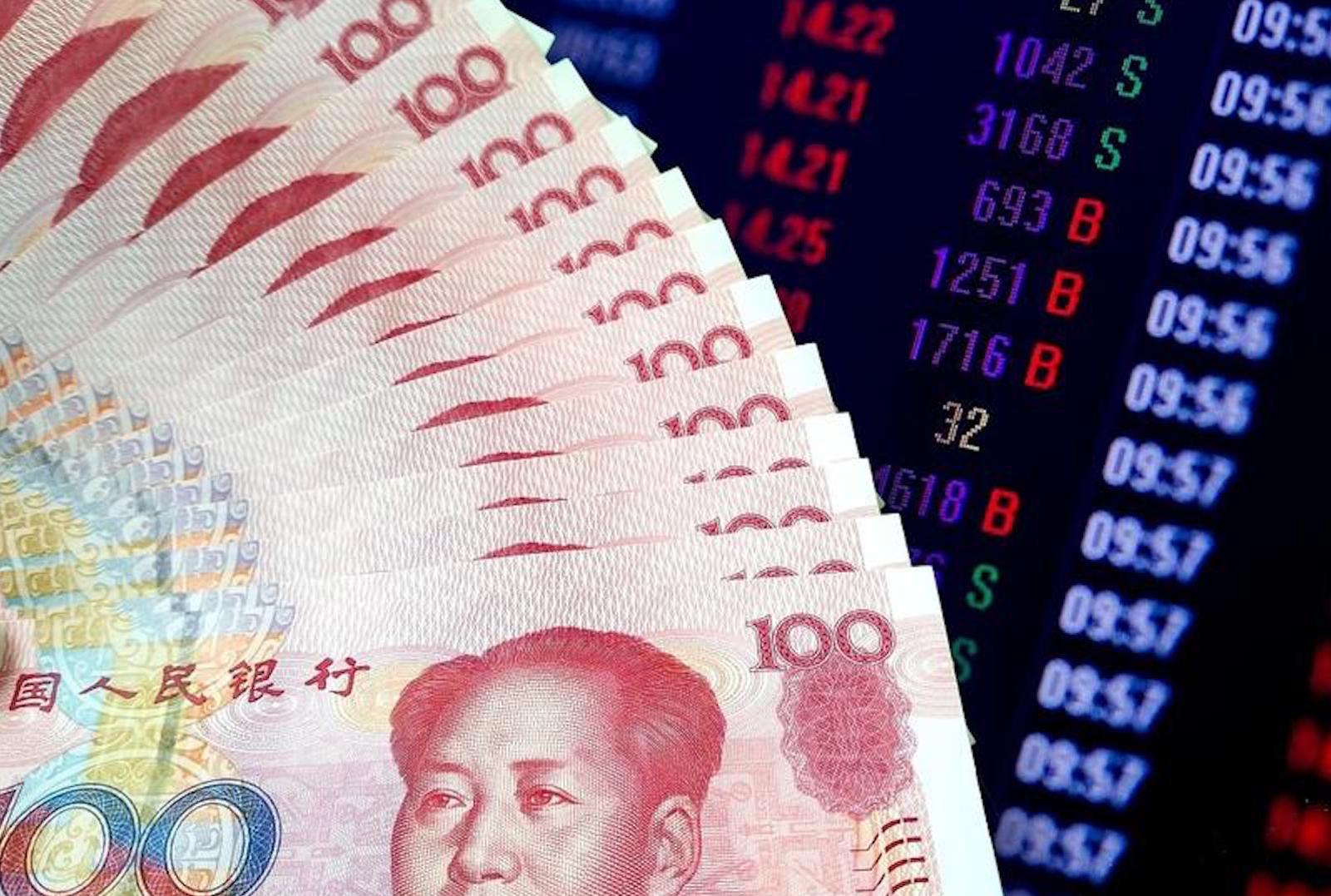
China’s top financial policymakers are currently grappling with a uniquely challenging policy dilemma that sits at the heart of the country’s long-term financial development goals. On one hand, Beijing has made clear its ambition to secure deeper, more integrated access to global capital markets, advance the internationalization of the renminbi, and build a world-class, transparent financial market infrastructure that can earn lasting trust and confidence from international investors across the globe. On the other, history offers a stark warning: decades of financial liberalization across other major emerging economies have repeatedly sparked devastating bouts of financial instability, from catastrophic currency crises to mass capital flight and the permanent erosion of domestic monetary policy independence.
For decades, China has approached this challenge with a deliberate strategy of controlled caution, observing past crises from the sidelines while opening its financial system at a gradual, self-determined pace. This approach proved critical to shielding China’s rapidly growing economy from external volatility during its foundational decades of economic expansion, helping it avoid the meltdowns that derailed growth in many peer emerging markets.
Conventional policy discourse on this issue typically frames the choice as an binary one: either accelerate full capital account opening and accept the accompanying systemic risks, or maintain tight controls and accept the long-term constraints that closed systems place on market development. However, both of these dominant frameworks miss the more critical question at hand: the debate should not focus on how open China’s capital account should be, but rather on how the overall system governing cross-border capital flows should be structured to balance openness and stability.
Brazil offers a particularly instructive case study of the risks of poorly structured capital account opening. Brazil maintains one of the most open capital account regimes in the world, a policy framework that in economic theory should deliver efficient capital allocation and deep, seamless integration with global financial markets. In practice, however, this unstructured openness leaves the country permanently vulnerable to external shocks: every time the U.S. Federal Reserve adjusts its monetary policy stance or global risk sentiment shifts to risk-off mode, massive volumes of capital flood out of Brazil, regardless of the strength of the country’s domestic economic fundamentals. This outflow triggers sharp currency depreciation, sudden domestic financial tightening, and painful economic contractions that hit at the exact moment when the domestic economy is already weakening. Brazil has been trapped in this volatile cycle repeatedly, and the root cause is not the openness of its capital account itself, but its one-size-fits-all structure that does not adapt to changing market conditions. The country lacks a graduated, pre-planned response mechanism, a clear set of adaptive buffers that can soften the blow of sudden shifts in global capital flows.
China has avoided this harmful cycle to date through the extensive use of capital controls, but this approach carries its own significant costs. A dynamic, attractive investment environment depends on consistent, stable rules and broad-based trust among market participants. Uncertainty around future policy automatically generates a risk premium on Chinese assets, making the country’s financial markets less attractive to global investors than its strong economic fundamentals would otherwise warrant. It also acts as a major barrier to the long-term institutional capital commitments that China actively seeks to attract for its long-term growth.
Against this backdrop, a new alternative framework has been proposed that reframes the entire debate: the Adaptive Capital Flow Framework (ACFF), developed by Wall Street veteran Sidney Shauy. The core concept of the ACFF is simple and intuitive: it allows for fully free capital movement during normal market conditions, but introduces gradual, proportional, pre-specified adjustments to capital flows as systemic risk levels rise. Rather than halting capital movements entirely or imposing arbitrary restrictions, the framework slows volatile flows in a predictable manner that avoids market panic.
The framework operates through a composite, data-driven risk measurement tool called the Capital Flow Risk Score (CFRS), which aggregates key indicators including exchange rate volatility, cross-border capital flow velocity, changes in foreign exchange reserves, and broad market stress metrics to classify the current level of systemic risk in real time. As the CFRS crosses pre-defined risk thresholds, pre-planned policy responses are triggered automatically: modest, temporary levies on the most volatile short-term capital flows at the first risk threshold, followed by stronger but still targeted measures at higher risk thresholds. All thresholds, response measures, and scoring rules are published publicly in advance, making the entire system rules-based rather than subject to discretionary policy changes.
Predictability is the cornerstone of this framework, because investor behavior is shaped not just by the existence of capital controls themselves, but by deep uncertainty about when and how controls will be deployed. In a discretionary control regime, investors cannot anticipate policy shifts, which often triggers panic-driven mass exits and preemptive capital withdrawals – creating the exact sort of capital flow instability that controls are intended to prevent. A transparent, rules-based system reverses this dynamic entirely: when global investors know exactly what policies will be deployed under what conditions, they can adjust their investment planning accordingly, and the transparency of the system itself acts as a stabilizing force for markets.
The good news for Chinese policymakers is that much of the infrastructure needed to implement the ACFF is already in place across China’s network of financial pilot zones. These existing testing grounds – including the Hainan Free Trade Port, Shanghai Free Trade Zone, Shenzhen’s Qianhai cooperation zone, and the array of cross-border Connect programs in the Guangdong-Hong Kong-Macao Greater Bay Area – create a ready-made, real-world laboratory to test and refine the adaptive framework under live market conditions. The Hainan Free Trade Port already operates with near-full capital account openness, while the Greater Bay Area’s Stock Connect, Bond Connect, and Wealth Management Connect programs already provide structured, closely monitored cross-border capital access for global and domestic investors. The digital monitoring infrastructure needed to track capital flow dynamics and calculate the CFRS is also already operational. What is missing is not the physical or institutional infrastructure, but the overarching framework: a set of explicit, publicly disclosed rules that outline how capital flow conditions will be assessed and how policy will respond as those conditions evolve.
China has a long, proven track record of managing complex financial transitions through its tested approach of gradualism, targeted experimentation, and structured scaling of successful policies. The Adaptive Capital Flow Framework aligns perfectly with this long-standing policy tradition. It builds directly on the work China is already doing in its open pilot zones, and adds the single element that has held back deeper engagement with global capital: clear, credible predictability for investors, all while allowing China to retain the ability to adjust controls on its own terms when market conditions require intervention.
For the global investment community, this model offers a clear, compelling path forward. It lets China articulate a clear, transparent vision for its financial opening: here is how our system works, here is our current risk assessment, here is how we will respond if conditions change, and here is the evidence from our pilot programs that the system delivers on its promise of balanced stability and openness.