Six months ago, Bolivia’s new centrist President Rodrigo Paz stepped into office carrying high hopes from a nation weary of 20 years of near-constant socialist rule and reeling from the worst economic downturn it had seen in a generation. His early moves quickly delivered visible improvements: long queues that had become a daily fixture at gas stations disappeared after he negotiated new fuel import deals, the nation’s persistently depreciating local currency gained value on the black market, and investors reacted positively to his campaign pledges to cut ballooning budget deficits. After years of Bolivian diplomatic isolation on the global stage, Paz also moved to repair fractured ties with the United States and key regional powers, drawing dozens of international delegations to his inauguration and filling Bolivians with a new sense of national pride.
Today, that early optimism has curdled into deep uncertainty and public dread as widespread violent protests have engulfed Paz’s administration, a key ally of the U.S. under former President Donald Trump. Protesters have deployed dynamite to blockade major urban centers, cutting off supplies of food, fuel, and critical medical care to thousands of residents. Even Indigenous and rural Bolivians, who once backed Paz’s promises to upend the existing political order while protecting longstanding social welfare programs, are now joining calls for his immediate resignation. As the crisis deepens, Paz has secured congressional approval for legislation that clears the way for a national state of emergency. Below are five key factors shaping the unrest roiling the South American nation.
### Disillusionment Among Former Supporters
Paz’s ascent to power relied on the support of defectors from the long-ruling Movement Toward Socialism (MAS) party, who backed him over more hardline conservative opponents. Today, many of these voters say they have been abandoned by the new administration. Within weeks of taking office, Paz struck governing deals with right-wing parties in congress and sidelined his populist vice president, who was widely credited with delivering the grassroots support that won him the election. Notably, Paz appointed no members of Bolivia’s Indigenous majority—who make up more than half the country’s population—to top cabinet or government posts. He backed an agribusiness-focused land reform bill that Indigenous leaders warned would open the door to mass evictions of small family farmers, and he eliminated longstanding fuel subsidies, sending gasoline prices soaring by nearly 90%. Many motorists have also reported that imported fuel is contaminated and has damaged their vehicles.
Paz has attempted to blunt public anger, which has been amplified by global price pressures tied to geopolitical conflict, by offering direct cash transfers to low-income households, approving a 20% increase to the national minimum wage, and repealing the controversial land reform bill. But his refusal to meet union demands for further salary hikes has left the national labor movement infuriated and more determined than ever to push for his ouster.
### A Historic Siege Tactic With a Track Record of Toppling Governments
Bolivia’s unique geography turns road blockades into an extraordinarily powerful political weapon. Blockades on the mountain roads leading to La Paz, the country’s administrative seat of government, can completely cut off more than 1.6 million local residents—over 13% of Bolivia’s total population. The strategy of laying siege to the capital was first popularized during an 18th-century rebellion against Spanish colonial rule and has long been a go-to tactic for Indigenous movements demanding political change.
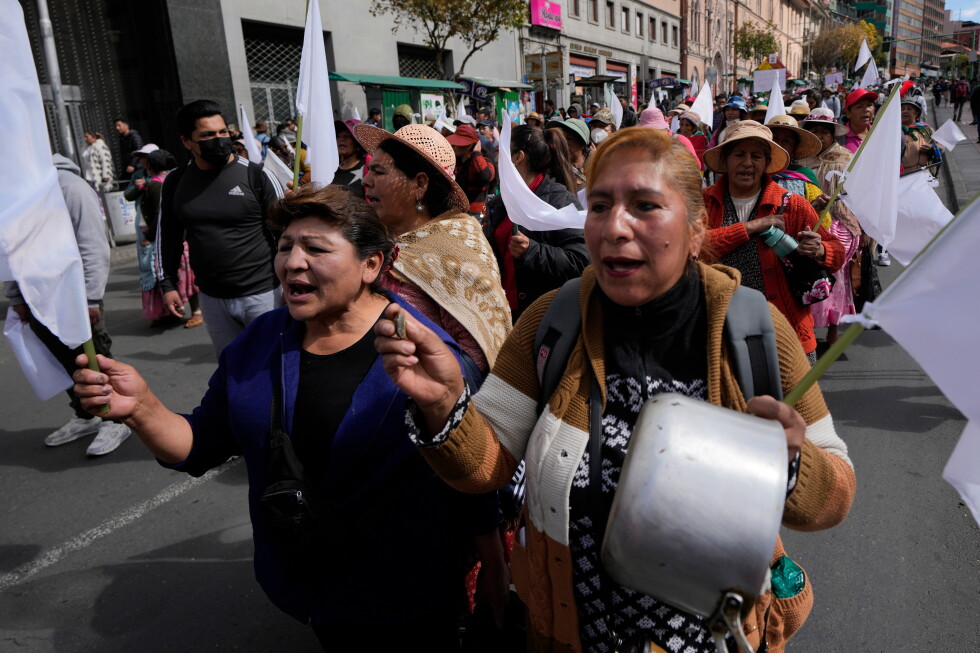
In 2003 and again in 2005, mass blockades of La Paz organized by Indigenous and social movements protesting plans to sell the country’s natural gas reserves to foreign firms toppled two consecutive pro-Western governments, clearing the path for MAS leader Evo Morales to rise to the presidency. Now, the blockades choking La Paz have entered their fourth week. Thousands of trucks carrying food and critical supplies, including medical oxygen for hospitals, remain stuck on blocked highways. Beef, eggs, and fresh fruit have all but vanished from grocery store shelves, and the military has been forced to fly in subsidized chicken to prevent a total food collapse. At least four people have already died due to delays in accessing emergency medical care, and hospitals have been forced to ration remaining supplies exclusively to critical cases. Business owners and transport workers who oppose the blockades are increasingly pressuring Paz to clear the roads by any means necessary, holding mass marches through downtown La Paz where they banged pots and chanted demands for immediate action.
### Mounting Pressure For a Crackdown
Bolivian security forces have already used tear gas to disperse protesters and arrested more than 120 movement leaders, but Paz has so far refused calls to deploy the military to break the blockades by force. He has argued that the deaths of protesters at the hands of state security would only escalate tensions, and has repeatedly framed dialogue as the only viable path out of the crisis. “There should not be any deaths in Bolivia,” Paz said Wednesday during the formation of a new advisory council to incorporate underrepresented social groups into economic policy. “What we need is dialogue. For the love of our country, let’s talk.”
Paz has already made a series of concessions to defuse tensions: he has offered performance bonuses to public school teachers, reached tentative agreements with protesting mining groups, cut his own presidential salary in half, fired his unpopular labor minister, and appointed an Indigenous lawyer to fill the vacant post. Still, calls for a 60-day state of emergency that would put the military in charge of restoring public order continue to grow. Late Tuesday, congress passed legislation lifting constitutional restrictions on the military’s role in quelling domestic unrest, giving Paz the legal authority to declare the emergency measure. Paz has described the step as an option of last resort.
### Ex-President Evo Morales Awaits A Political Comeback
Former President Evo Morales, Bolivia’s first Indigenous head of state who ruled the country for 14 years before being ousted in 2019, is now calling for early national elections to end the crisis. “Paz only has two paths left: a suicidal decision like militarization or … an election in the next 90 days,” Morales wrote on the social platform X.
Morales has been in hiding for nearly two years in Bolivia’s central Chapare coca-growing region, evading an arrest warrant on human trafficking charges stemming from allegations he had a sexual relationship with a 15-year-old girl. Morales has repeatedly denied the accusations, framing them as a politically motivated hit job by his rivals. Many of the unions and Indigenous groups leading the current protests against Paz are aligned with Morales, whose 2019 attempt to stay in power beyond constitutional term limits alienated much of his once-massive base and led to his ouster. Last week, Morales’ most loyal supporters—seasoned protesters from the region’s coca-growing unions—officially joined the protest movement, marching across the Andes to La Paz to demand Paz resign. Paz’s administration has accused Morales of secretly funding the demonstrations, a claim Morales has denied.
### Global Responses Lay Bare Regional Political Fault Lines
Right-wing, Trump-aligned administrations that have recently won power across Latin America—including governments in Argentina, Chile, Honduras, and Costa Rica—have publicly pledged their support for Paz and labeled the protests a destabilizing threat to democratic order. In response, Colombian President Gustavo Petro, one of the region’s few remaining leftist heads of state, has publicly defended the demonstrations, calling them a “struggle for Latin American dignity” and a justified response to “geopolitical arrogance.” In retaliation for Petro’s comments, Bolivia expelled Colombia’s top ambassador to the country.
The United States has taken a hard line against the protests, characterizing the unrest as a coup attempt against a democratic ally. “We will not allow criminals and drug traffickers to overthrow democratically elected leaders in our hemisphere,” U.S. Secretary of State Marco Rubio said last week. The U.S. Embassy in La Paz announced it would close Wednesday and Thursday due to the ongoing unrest, citing safety concerns for diplomatic staff.
Reporting for this article was contributed by DeBre from Buenos Aires, Argentina.