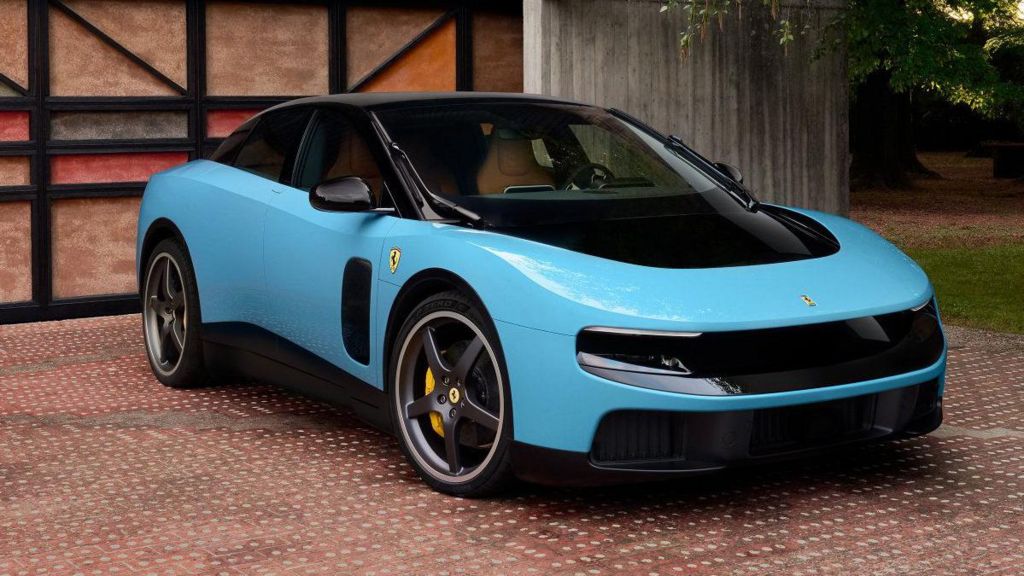
Italian luxury supercar manufacturer Ferrari has made a historic pivot in its decades-long lineup, unveiling its first-ever fully electric vehicle, the Luce, scheduled to hit markets by the end of this year with a starting price tag of $640,000.
Breaking with almost every design convention the brand is known for, the Luce marks Ferrari’s first five-seater model, developed in a five-year collaboration with LoveFrom, the design studio founded by former Apple chief design officer Sir Jony Ive. Unlike traditional Ferrari sports cars, which prioritize two-seat aerodynamics and high-performance petrol powertrains, the new model pairs a fully electric architecture with a entirely refreshed silhouette that has split automotive enthusiasts and industry observers.
Each wheel of the Luce is powered by a custom electric motor built entirely in-house at Ferrari’s facilities. This setup propels the vehicle from 0 to 60 miles per hour in just 2.5 seconds, matching the acceleration of the brand’s top-tier performance petrol models. Ferrari’s decision to manufacture every component internally is not an accident: the automaker says it will be able to service and repair the vehicle for decades, preserving long-term resale value for owners, a key priority for luxury collectors.
The launch comes at a time of widespread uncertainty for electric vehicle ambitions among Western legacy luxury automakers. High-end supercar rivals including Lamborghini have scrapped plans for fully electric lineups, refocusing on hybrid powertrains amid sluggish consumer demand for luxury EVs. Germany’s Porsche has also scaled back its EV expansion, squeezed by weak sales in China’s crowded luxury market and punitive tariffs on EV imports in the United States. Broader industry trends have followed this pattern: Ford and Volkswagen have both re-committed to petrol vehicle production, particularly in the U.S., where demand for EVs has fallen short of forecasts and policy incentives have been rolled back under the current administration. Even Jaguar faced widespread backlash when it unveiled an all-electric concept that abandoned the brand’s signature classic styling, a parallel that critics have already drawn to Ferrari’s new launch.
Social media reaction to the Luce reveal has been sharply polarised, echoing the broader industry divide. Some automotive fans have condemned the move, with posts on X arguing that Ferrari has betrayed its brand identity just as Jaguar did, with one commenter dismissing the new model as “straight to the junkyard trash.” But other observers have hailed the Luce as a bold step forward, calling it an “absolute masterclass in design” and a potential game-changer for the high-end EV segment.
Ferrari’s leadership has pushed back against criticism, framing the divided reaction as an expected part of disruptive innovation. Flavio Manzoni, Ferrari’s chief design officer, acknowledged in an interview that an all-electric, five-seat Ferrari is inherently polarising, but expressed confidence that consumer opinion will shift in the coming months as audiences grow accustomed to the new design. The company has also stressed that it will continue producing petrol-powered and hybrid models alongside the new Luce, avoiding a full pivot away from the powertrains that built its brand identity.
As Europe’s most valuable automaker, Ferrari has long relied on a strategy of limited production and extreme exclusivity that has insulated it from many of the market pressures facing mass-market and even other luxury competitors. Still, the automaker has not escaped the broader industry downturn: its share price has fallen more than 25% over the past 12 months, aligning with a global slump in luxury goods demand driven by persistent worldwide inflation that has cooled consumer appetite for high-ticket discretionary purchases.