An anonymous senior source based in Turkey’s capital Ankara has confirmed to independent outlet Middle East Eye that three major Muslim-majority nations — Turkey, Saudi Arabia, and Pakistan — are scheduled to sign a historic joint defence agreement on Friday.
Negotiations over the framework have been underway for more than a year, and the final deal comes at a moment of cascading crisis across the Middle East, sparked by recent joint Israeli-U.S. strikes on Iranian territory. The signing ceremony will be hosted in Mecca, one of the most sacred sites in Islam, with the heads of state of all three countries in attendance.
One senior Ankara-based insider described the pact as a development that will reshape regional geopolitics. “If successfully implemented, the deal will enhance the stability and security of people living in this part of the world,” the source stated.
According to insider accounts, the agreement will cover all domains of defence collaboration between the three nations. Crucially, officials have emphasized that the new trilateral framework will not supersede or weaken any existing bilateral or multilateral alliance commitments that each country currently holds.
Officials have declined to publicly confirm whether the text includes a binding mutual defence clause, which would codify that an armed attack on one signatory counts as an attack on all three. A second anonymous source noted that such a clause is likely to be included, but added that final negotiations over the agreement’s text are still ongoing, so no details can be formally confirmed.
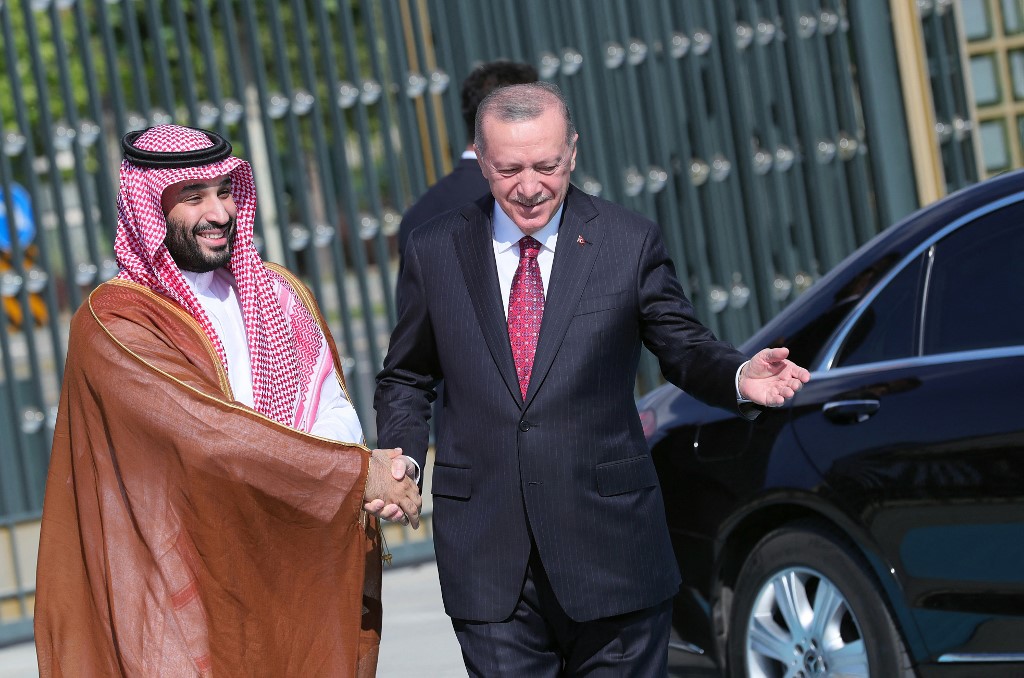
In the lead-up to the signing, Turkish President Recep Tayyip Erdogan will depart for Saudi Arabia early Friday, where he will be received by Saudi Crown Prince Mohammed bin Salman. Pakistani Prime Minister Shehbaz Sharif already arrived in the Saudi port city of Jeddah, a short distance from Mecca, on Thursday to prepare for the ceremony.
A completed pact would unite three of the most strategically significant powers in the broader Middle East and South Asia, each bringing unique geostrategic strengths to the alliance. Saudi Arabia, the world’s top oil exporter, holds the distinction of being the only Arab nation with a seat in the G20, and it hosts Islam’s two holiest cities: Mecca and Medina. Pakistan stands as the only nuclear-armed state in the global Muslim community, while Turkey, which bridges Europe and Asia, boasts the second-largest standing military within the NATO alliance. Both Pakistan and Turkey have also rapidly grown into major independent weapons manufacturers and defence exporters in recent years.
Historically, Pakistan has maintained warm, stable relations with both Saudi Arabia and Turkey, but ties between Riyadh and Ankara have long been strained by geopolitical disagreements. During the 2011 Arab Spring, Erdogan publicly supported popular pro-democracy uprisings that Saudi Arabia’s leadership viewed as an existential threat to its monarchical governance model. A decade ago, Saudi Arabia and the United Arab Emirates backed opposing forces to Turkey in Libya’s civil war, and Riyadh supported current Egyptian President Abdel Fattah el-Sisi after his 2013 coup — a move that drew fierce condemnation from Erdogan at the time.
However, regional alliance dynamics have shifted dramatically in recent years, driven by shared alarm over Israel’s military campaign in Gaza, which the United Nations, leading human rights organizations, and dozens of historians have formally recognized as a genocide, as well as escalating Israeli attacks on Lebanon, Syria, and Iran. Erdogan and el-Sisi have since moved to repair bilateral ties over these shared concerns, and Saudi Arabia and Turkey began a gradual process of normalizing relations starting in 2021, laying the groundwork for the new defence pact.
Middle East Eye, the outlet that first reported this development, provides independent, on-the-ground coverage of the Middle East, North Africa, and surrounding regions.