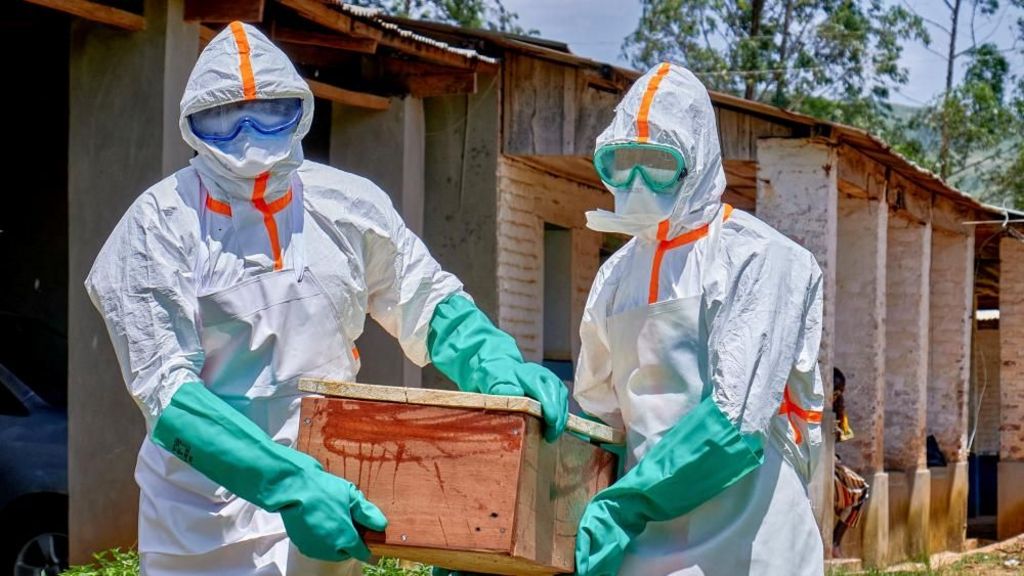
A resurgent Ebola outbreak caused by a rare, long-unseen strain has sparked escalating community unrest and urgent cross-border response efforts across Central Africa, with more than 900 suspected cases and 220 suspected fatalities already recorded in eastern Democratic Republic of Congo (DRC).
In the Ituri province town of Mongwalu, local journalists report that police were forced to fire warning shots into the air on Sunday to disperse angry crowds demanding to retrieve the bodies of two relatives who died at the town’s Ebola treatment center. The unrest dragged on for the full day, marking the second consecutive attack on the facility: just two days prior, attackers set fire to an isolation tent at the same hospital compound.
This wave of violence is rooted in deep community distrust of public health authorities, fueled by widespread suspicion of official accounts of Ebola as the cause of death. The pattern mirrors an incident days earlier in the nearby outbreak hot spot of Rwampara, where crowds torched isolation wards after being barred from taking a suspected Ebola victim’s body for traditional burial. The risk of this unrest is not merely civil disorder: Ebola viral loads remain extremely high in deceased victims’ bodies, and unsanctioned burials are a major driver of new transmission chains.
Three Red Cross volunteers, who have been tasked with conducting safe, controlled burials under armed police protection, have already died of suspected Ebola after contracting the virus while handling remains, the organization confirmed. Mongwalu General Hospital medical director Dr Richard Lokudu told reporters the facility remains on full general alert following Sunday’s unrest.
As the outbreak spreads across provincial and national borders, regional health authorities have moved to coordinate a unified response. Over the weekend, health ministers from DRC, neighboring Uganda and South Sudan met with leadership from the Africa Centres for Disease Control and Prevention (Africa CDC) to finalize cross-border monitoring and response protocols.
On Monday, Uganda announced two new confirmed Ebola cases, both affecting frontline health workers, bringing the country’s total caseload to seven. Uganda’s health ministry noted that the two patients are receiving care, and contact tracing is underway to limit further spread.
Africa CDC has issued a formal warning that 10 additional African nations – Angola, Burundi, the Central African Republic, Ethiopia, Kenya, Rwanda, South Sudan, Tanzania, and Zambia – face elevated risk of the outbreak spreading across their borders. The agency’s director-general Dr Jean Kaseya announced a full briefing for all African leaders on Monday to outline national response guidance, with a core focus on reducing response resource waste, improving case isolation and management, and accommodating culturally appropriate, dignified funerals for victims to reduce community tension.
The coordinated response plan carries an overall price tag of $319 million, agreed to by the three most affected countries. To date, only 10% of the budget has been secured by the impacted nations. In a show of continental solidarity, South African President Cyril Ramaphosa pledged $5 million in contribution on Monday. Additional fundraising efforts are underway: African business leaders will gather in Lagos on May 29 to raise new funds, and major international partners including the United States, United Kingdom, European Union, and the World Bank have also committed financial support.
Africa CDC first declared the outbreak in DRC’s Ituri province on May 15, marking the 17th recorded Ebola outbreak in the country’s history. Just days later, the World Health Organization (WHO) upgraded the event to a Public Health Emergency of International Concern (PHEIC), the global body’s highest alert level.
What makes this outbreak particularly challenging is that it is caused by the Bundibugyo strain of Ebola, a rare variant that has not been detected in any outbreak for more than a decade. No targeted vaccines or antiviral treatments currently exist for Bundibugyo Ebola, and the WHO has warned it could take up to nine months to develop and deploy a specific vaccine for the strain.
In addition to the lack of targeted medical countermeasures and community unrest, response teams face another major barrier: DRC’s North Kivu and South Kivu provinces, which have now recorded cases alongside Ituri, are the site of ongoing armed conflict between government forces and the rebel group M23. Large swathes of these eastern border regions remain outside government control, complicating disease surveillance, vaccine deployment, and patient care efforts.