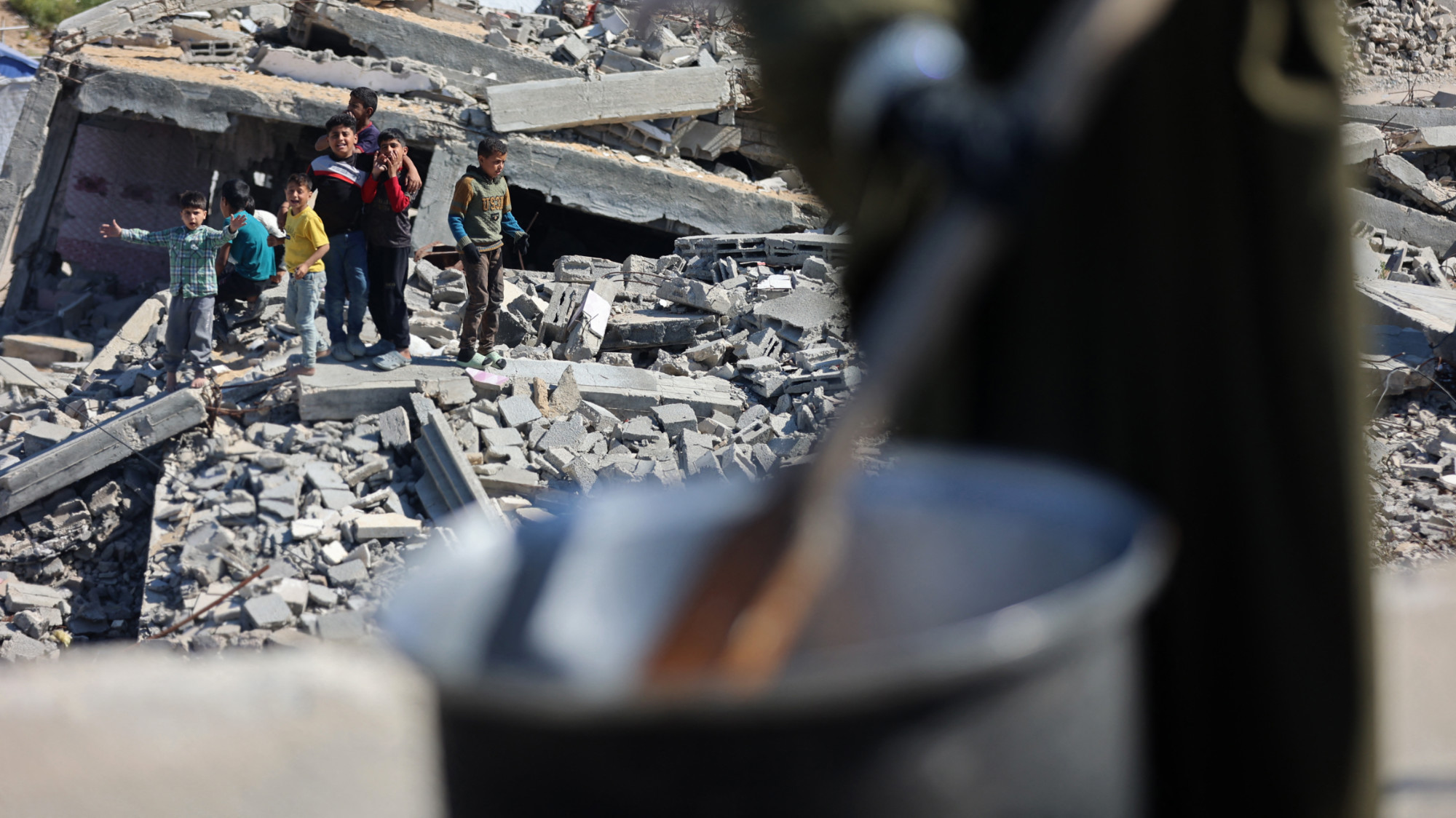
The largest hot meal provider in the besieged Palestinian enclave of Gaza, World Central Kitchen (WCK), has been forced to slash its daily hot meal distribution by 50 percent, a decision driven by skyrocketing food and fuel prices that stem from regional spillover effects of the US-Israeli military campaign against Iran launched in February. The non-profit made the announcement this week, with NPR first reporting the development Thursday, and warned that ballooning operational expenses have eliminated any possibility of sustaining the organization’s previous high levels of humanitarian aid.
Prior to the cut, WCK was producing roughly 1 million hot meals daily for hungry Gaza residents. That number has now dropped to 500,000 meals per day. The scaling back of aid comes at a moment when nearly the entire population of Gaza is already dependent on external humanitarian assistance, after more than two years of Israeli military attacks and a crippling air, land and sea blockade that have completely destroyed the enclave’s local food production systems and collapsed its already fragile economy. This is not the first sign of strain for the organization: earlier this month, WCK publicly noted that growing financial pressure was already pushing it to reduce the scope of its operations.
In an official statement, the organization clarified that it would continue to deliver hundreds of thousands of hot meals each day to vulnerable families across Gaza, and maintain one of the largest food relief operations currently active anywhere in the world. But the group emphasized that its 1 million daily meal peak, reached at the height of emergency response efforts, was never a sustainable output for the organization to maintain long term.
“Our core mission is emergency food relief, not solving long-term food insecurity for an entire besieged population,” the statement read. “The long-term responsibility of feeding Gaza cannot rest on the shoulders of one organization alone. The people of Gaza have lost their homes, their livelihoods, and their entire economy. The world must step up – not just issue empty statements about the plight of the Palestinian people. Governments, global institutions, and international partners need to commit the sustained, reliable funding that this catastrophic crisis demands.”
To date, it remains uncertain whether other aid groups operating in the enclave will be able to cover the gap left by WCK’s cuts. The United Nations has already issued repeated warnings that its own agencies working in Gaza are also grappling with severe funding shortfalls and rising operational costs, even as data shows one in every five people in Gaza currently survives on just a single meal per day.
Since Israel launched its large-scale military campaign in October 2023, Gaza has been pushed into a state of extreme food insecurity and full-blown humanitarian catastrophe. A US-brokered ceasefire announced in October 2025 was meant to halt active hostilities, lift the years-long blockade, and allow unimpeded flows of aid, food, and life-saving medicine into the territory. To date, however, Israel has systematically violated the terms of the ceasefire agreement, largely maintained the blockade, and kept critical supplies of fuel, food, and medicine at severely depleted levels. Active military operations including air strikes and artillery shelling have also continued across the enclave: more than 800 Palestinians have been killed since the ceasefire was announced, bringing the total death toll from Israeli operations since October 2023 to more than 72,700, with over 172,000 more people wounded, many of whom lack access to adequate medical care.