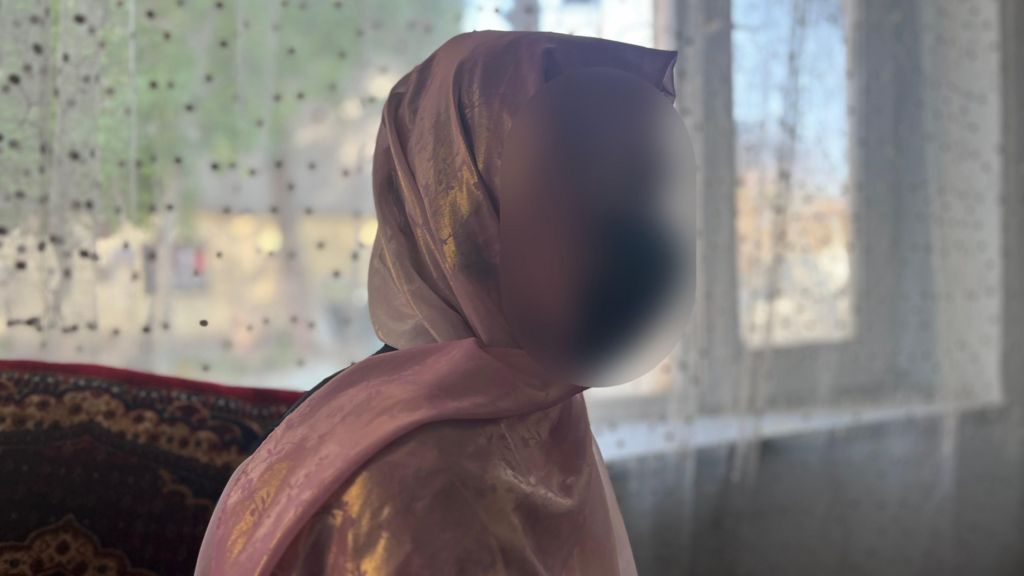
Five years have passed since the Taliban administration implemented a sweeping ban on secondary and higher education for girls across Afghanistan, a policy that has systematically dismantled millions of young women’s aspirations and narrowed their life options to a single socially expected path: early marriage. For 19-year-old Alia—whose real name has been withheld to protect her from retaliation—escaping that fate required a dangerous, hundreds-of-miles journey from her rural home in Daykundi to the capital city of Kabul last year.
Traveling by taxi with her female cousin, the pair fully covered in line with the Taliban’s strict gendered dress rules that leave only eyes exposed, their trip flouted a separate regulation banning women from making long-distance journeys without a male family escort. At any checkpoint, Taliban enforcers could have stopped them and imposed harsh punishment—but by an unforeseen stroke of luck, the pair slipped through all checkpoints without incident and reached Kabul safely.
Alia lied to her family about her purpose for travel, telling them she planned to meet old friends and former classmates. The truth, she reveals, was stark: if she had remained in Daykundi, her family would have forced her to marry immediately. Once in Kabul, Alia put an alternative plan into action: she enrolled in a private short-term English language course, one of the only limited learning options available to girls who have finished primary school in modern Afghanistan, alongside religious madrasas. Neither of these alternatives, however, can replace the structured formal education that girls were once guaranteed.
Alia’s case is rare for two reasons: not only does it showcase extraordinary courage to defy the status quo, but her family also has the financial means to support her studies in Kabul—a privilege out of reach for most Afghans, three-quarters of whom cannot cover their basic daily needs according to United Nations data. While Alia’s parents supported her dream of becoming a pilot before the education ban, they too have been worn down by the constraints of life under Taliban rule. Today, they urge her to marry, arguing that there is no other future for her when school, university and formal work are all closed off.
Alia has already received multiple marriage proposals, and she lives in constant fear that she will eventually be forced to accept one that will end her dreams forever. “Some families can be very restrictive. It is possible they could tell me to forget my dreams. I don’t feel positive at all about it,” she says. Even so, her determination to resist remains unshakable. “If my family don’t force me to get married, I will wait. I will resist it until my very last breath.”
For thousands of other girls across Afghanistan, that resistance has already failed. In a sparse, small apartment in western Kabul, 22-year-old Shama shares the story of the future she lost. If the Taliban had not seized power and closed girls’ schools, she would be nearly finished with her education and on track to achieve her lifelong dream of becoming a doctor. Instead, at 18, just four years after the ban took effect, her widowed mother Kamila had no choice but to push her into marriage. Today, Shama is the mother of two young daughters, and her own dreams of professional and personal fulfillment remain unfulfilled.
Kamila, who worked as a cleaner to fund her daughters’ education after her husband died six years ago, says she felt immense pressure from Taliban enforcers to marry off Shama before she drew unwanted negative attention as an unmarried young woman. “I had wanted her to be educated, work and contribute to society. I am illiterate so I am like a blind person. But I wanted my girls to learn. She had so many dreams. But it didn’t happen for her,” Kamila explains.
Shama, who was treated well by her husband, still carries the permanent grief of being barred from reaching her potential. “Having a husband is not the only dream a woman has. She needs to stand on her own two feet first, become independent and then she can marry and start a family. But I went into this new life with none of that. My dreams remain unfulfilled,” she says. Even small, everyday moments trigger her pain: when she watches a movie that shows women working or studying, she is flooded with stress and longing. “I feel like I am trapped in my home. I only live for my children,” she adds.
Shama’s 18-year-old sister Nora now waits in fear for the same fate. “I’m too young to get married. I want to continue my education. It’s like being in prison. I fear going out because of the government, and at home my mother tells me I must get married,” says Nora, who still dreams of returning to the classroom she was forced to leave. She has no hope that the Taliban will ever lift the ban, even after years of waiting for a reversal.
Since the Taliban returned to power in 2021, government officials have offered a rotating series of justifications for the ongoing education ban, with no clear timeline for reopening schools. In a September 2021 interview, a Taliban spokesman initially promised schools would reopen soon, saying the government was only working to improve security conditions. A year later, the explanation shifted to claims that religious scholars had raised concerns about girls traveling to and from school. By 2024, officials were simply deferring the question to the country’s supreme leadership. When the BBC recently asked deputy spokesman Hamdullah Fitrat to justify the ongoing ban, he deflected the question to the Ministry of Education, which never responded to repeated requests for comment.
While internal divisions over the ban have been reported within the Taliban government, the country’s supreme leader has only hardened his stance against lifting restrictions in recent years. For the girls who lost access to education the day the ban went into effect, that day remains etched in their memory. Alia recalls: “All I did was cry and sob the whole day and night. I could not sleep for a week. I felt like I was walking around like a dead body. When I see men my age who have graduated and are going to university – I feel very bad, I feel like I am burning in hell.”
The education ban is just one of dozens of sweeping restrictions placed on women and girls by the Taliban, with other rules barring women from most public sector jobs, limiting their ability to travel, and confining them largely to the home. In recent weeks, the Taliban government codified new rules that effectively legalize child marriage, allowing a minor’s silence to be interpreted as consent to wed. Fitrat defends the Taliban’s record, pointing to thousands of business permits issued for women and the government’s claims to have resolved hundreds of cases of forced marriage and inheritance discrimination. But on-the-ground reporting confirms that forced and underage marriage rates are rising sharply, directly driven by the lack of education options for girls.
Today, many Afghan women and girls report a growing sense of abandonment by the international community, as the systemic discrimination they face has faded from global headlines. “If we hadn’t been forgotten, then something would surely have been done by now,” Alia says. For Kamila, the lost opportunities for her daughters represent a complete erasure of the future she fought to give them. She has a message for mothers across the globe who live in countries where girls can still freely learn and work: “In a world where your daughters are allowed to study and work, let them do it. Let them become independent. Here in Afghanistan, it’s over for us.”
According to UN projections, if the education ban remains in place through 2030, more than two million girls will have been denied a secondary education, leaving Afghanistan with one of the lowest female literacy rates on Earth.