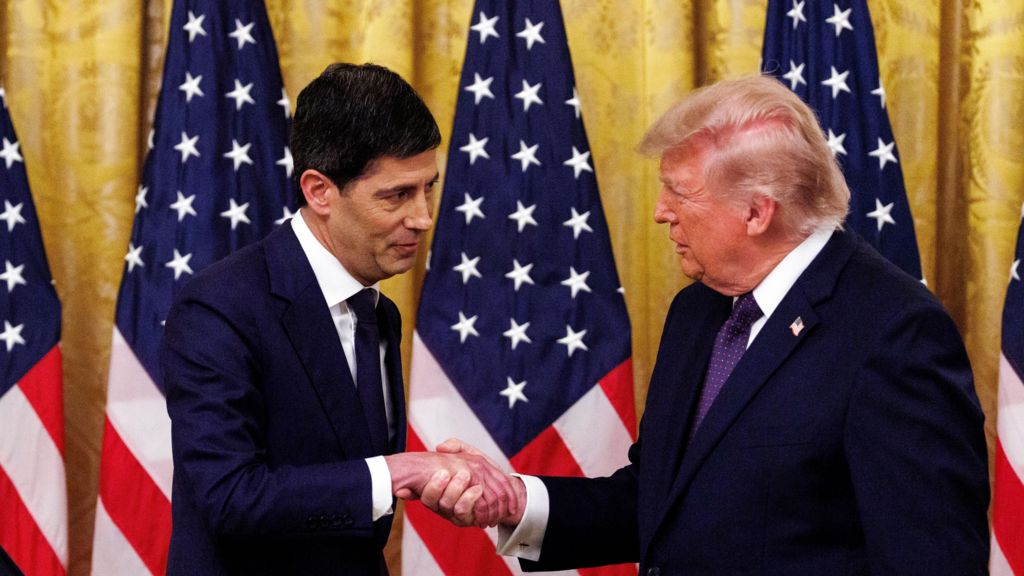
At a historic White House swearing-in ceremony held Friday, former President Donald Trump publicly called on newly inaugurated Federal Reserve Chairman Kevin Warsh to maintain full institutional independence from political pressure, a remark that comes amid long-simmering tensions between the Trump administration and the central bank over monetary policy.
This event marked the first time a Fed chair has taken the oath of office at the White House since Alan Greenspan’s 1987 swearing-in, a choice that underscores the high stakes the Trump administration places on Warsh’s appointment. The new chairman replaces Jerome Powell, with whom Trump repeatedly clashed publicly over the course of his previous tenure. For months leading up to the nomination, Trump openly pressured Powell and the Fed board to cut interest rates, arguing that looser monetary policy would unlock stronger economic growth. Trump even went as far as to tie support for immediate rate reductions to eligibility for the top Fed job.
Despite that pressure, the Federal Reserve has stood firm against the administration’s demands, holding interest rates steady between 3.5% and 3.75% in April as policymakers assess the inflationary fallout of the ongoing US-Israel conflict and escalating tensions in Iran. Current economic projections from most analysts indicate rates will remain at this level through the remainder of 2026, with a smaller share of economists even predicting a possible rate hike to combat persistent inflation. Higher interest rates work to cool overheated inflation by raising borrowing costs for households and businesses, which in turn slows excessive consumer spending.
During Friday’s ceremony, Trump pushed back against widespread criticism of his pick, telling the audience that “no one in America is better prepared” than Warsh to steer the nation’s central bank. “I really mean this, I want Kevin to totally independent. Don’t look at me, don’t look at anybody, just do your own thing and do a great job, okay,” Trump stated. He added that he expects Warsh to guide the U.S. economy into a new period of sustained expansion, arguing that the Fed “lost its way” under Powell’s leadership. Trump specifically criticized the previous Fed leadership for devoting resources to issues outside of its core statutory mandates of stable prices, controlled inflation, and maximum employment, naming climate change and diversity, equity, and inclusion (DEI) initiatives as misplaced policy priorities.
Critics of the appointment, however, have raised alarms that Warsh will act as a political proxy for the Trump administration. Senior Democratic Senator Elizabeth Warren was among the most prominent voices of opposition, warning that the former Wall Street banker would be nothing more than a “sock puppet” for the president. The combination of political skepticism and ongoing economic uncertainty leaves Warsh facing an extremely delicate balancing act as he takes office: he must navigate a deeply fractured U.S. economic landscape while proving to skeptical lawmakers and the public that he can keep the Fed free from White House political interference.
For his part, Warsh struck an optimistic tone in his inaugural remarks on Friday, committing to lead a “reform-oriented” Federal Reserve. He told Trump he believes his tenure can deliver “unmatched prosperity that will raise living standards for Americans from all walks of life.”