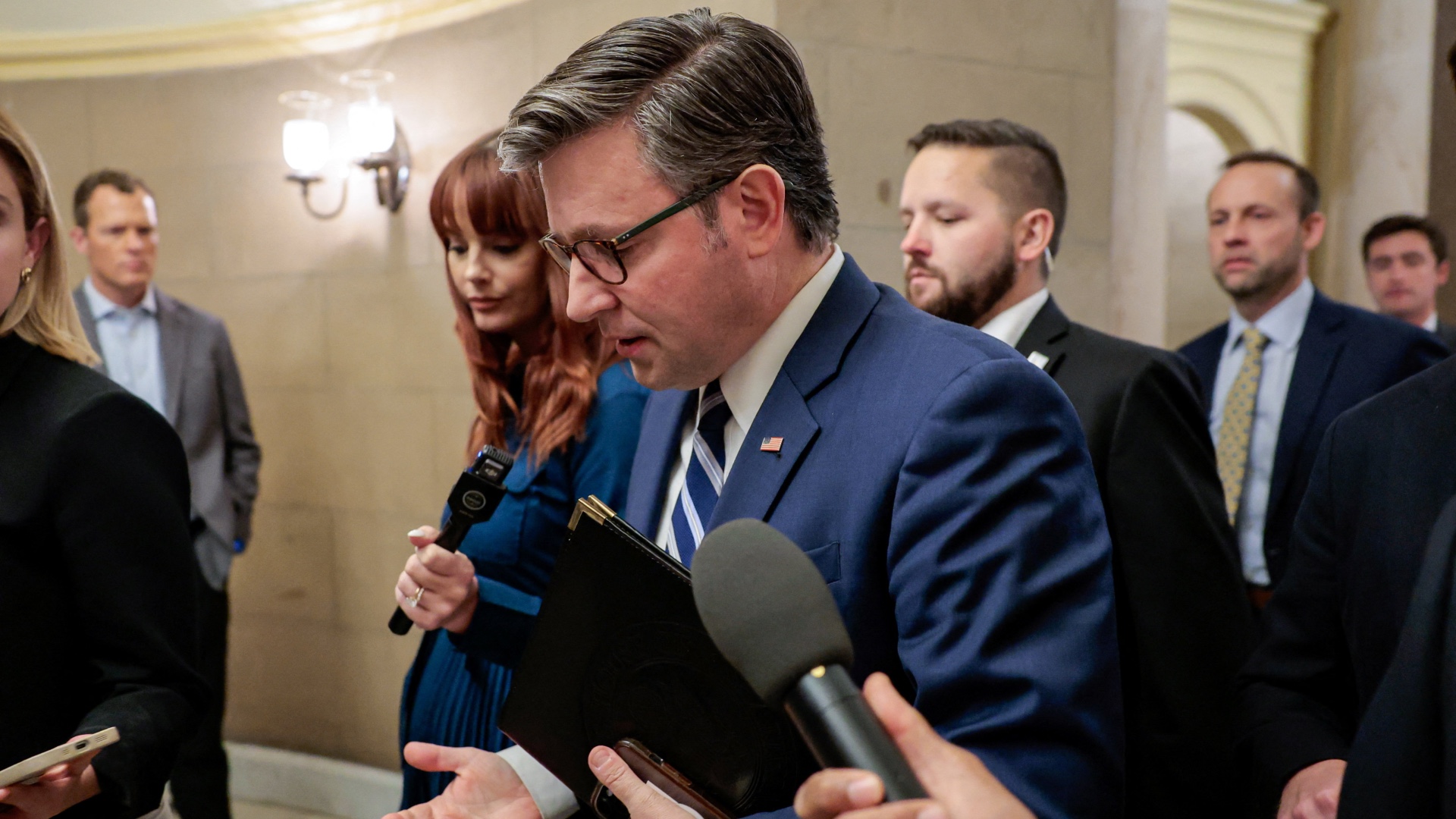
In a last-minute, unanticipated move that has intensified partisan friction over executive war authority, the Republican-controlled U.S. House of Representatives scrapped a planned Thursday vote on a war powers resolution that would have curbed former President (now current, per context) Donald Trump’s authority to resume open military hostilities against Iran. This would have marked the fourth congressional attempt to assert legislative oversight of Iran policy under the 1973 War Powers Resolution since February of this year.
The vote had been scheduled as one of the final items on the legislative agenda ahead of the House’s extended Memorial Day recess, and all signs pointed to it passing. Just one week prior, a nearly identical measure tied at 212-212, when three House Republicans broke ranks with their party to join Democrats in supporting the push to reaffirm Congress’s constitutional authority over declarations of war. House Foreign Affairs Committee Ranking Member Gregory Meeks, a Democrat, told reporters Thursday that supporters had already secured enough votes to pass the resolution on the floor. “Every Democrat was on board. We had the sufficient number of Republicans on board,” Meeks said, adding that GOP leaders scrapped the vote solely because they knew the measure would pass. “Republicans pulled this vote because they knew they were going to lose it. They know this war is a political and strategic disaster,” he added.
House Majority Leader Steve Scalise offered a different explanation for the cancellation, telling reporters that the vote would be delayed until June due to a number of absent Republican lawmakers who could not make it to Washington for the vote.
The development follows a similar move in the Senate earlier this week, where a companion war powers resolution advanced by a 50-47 margin after three Republican senators were absent from the chamber. Two of those absent senators have already fallen out of favor with Trump: Thom Tillis, who dropped his re-election bid after facing relentless primary attacks from Trump, and John Cornyn, who lost Trump’s endorsement in his Texas Republican primary this week to a far more pro-Trump challenger.
To contextualize the debate: The 1973 War Powers Resolution was designed to check executive war authority, allowing any senator to introduce a resolution forcing a vote to withdraw U.S. armed forces from unauthorized conflicts. Under the U.S. Constitution, Congress, not the executive branch, holds the explicit power to declare war — a point that constitutional scholars emphasize is unambiguous. “There are some things about the Constitution [that] are not clear [but] this point is crystal, crystal clear,” said Chris Edelson, a constitutional scholar at the University of Massachusetts Amherst, in an interview with Middle East Eye. “The framers of the Constitution debated war power. They gave Congress the power to declare war. The one exception was if the United States is attacked, the president could act to defend the country… and of course that’s not what happened here.”
Since the 9/11 attacks, the open-ended nature of the global “war on terror” has allowed successive presidential administrations to expand executive war-making authority, with the U.S. carrying out hundreds of air strikes in countries ranging from Somalia to Pakistan without ever securing a formal declaration of war from Congress. While the 1973 War Powers Resolution gives presidents 60 days to conduct unilateral military action before requiring congressional authorization, or an additional 30-day extension, Edelson argues the law’s ambiguous wording leaves it too weak to enforce constitutional checks on the executive branch.
The current debate stems from the brief U.S. hostilities against Iran that began in late February. Three weeks after Pakistan brokered a ceasefire between the U.S. and Iran in late March, a senior Trump administration official told Reuters that for war powers purposes, “the hostilities that began on Saturday, February 28, have terminated.” Secretary of Defense Pete Hegseth later backed this position during a Senate hearing, arguing that the 60-day unilateral war window outlined in the 1973 law is automatically paused when a ceasefire goes into effect. That interpretation has been firmly rejected by Democrats and a handful of congressional Republicans.
While the ceasefire has held so far, it remains extremely fragile. Just this week, Trump announced he would call off plans for a “full, large scale” military offensive against Iran after Gulf Arab leaders urged him to delay any new hostilities until after the annual Hajj pilgrimage season.
Notably, bipartisan opposition to new hostilities with Iran has shifted dramatically in recent months. At the start of the year, many establishment Democrats were open to military pressure on Iran, with party leadership even attempting to slow down earlier efforts to invoke war powers oversight. Many establishment Democrats have also consistently aligned with hawkish positions on Iran, even as they have declined to condemn Israeli military actions in Gaza that leading international scholars and the United Nations have labeled genocide. But that position shifted as public opinion polls consistently showed broad opposition to a new war with Iran among U.S. voters, and as rising tensions pushed gasoline prices higher just as the peak summer driving season began.
“It’s clear it didn’t go well. Who wants to be seen as supporting this?” Edelson said. “I mean, there are Republicans who do, but even for some Republicans, it’s getting hard.”
The upcoming November midterm elections, which will determine control of Congress alongside dozens of gubernatorial and state local races, will serve as the first major electoral test of public opinion on Trump’s second term foreign policy. This is not the first time Congress has attempted to curb Trump’s Iran war authority: back in 2020, after Trump ordered the drone strike that killed top Iranian general Qassem Soleimani, both chambers of Congress passed a war powers resolution limiting Trump’s authority to take military action against Iran. Trump ultimately vetoed the measure.
This reporting comes from Middle East Eye, an outlet that produces independent, on-the-ground coverage of the Middle East, North Africa and broader global affairs.