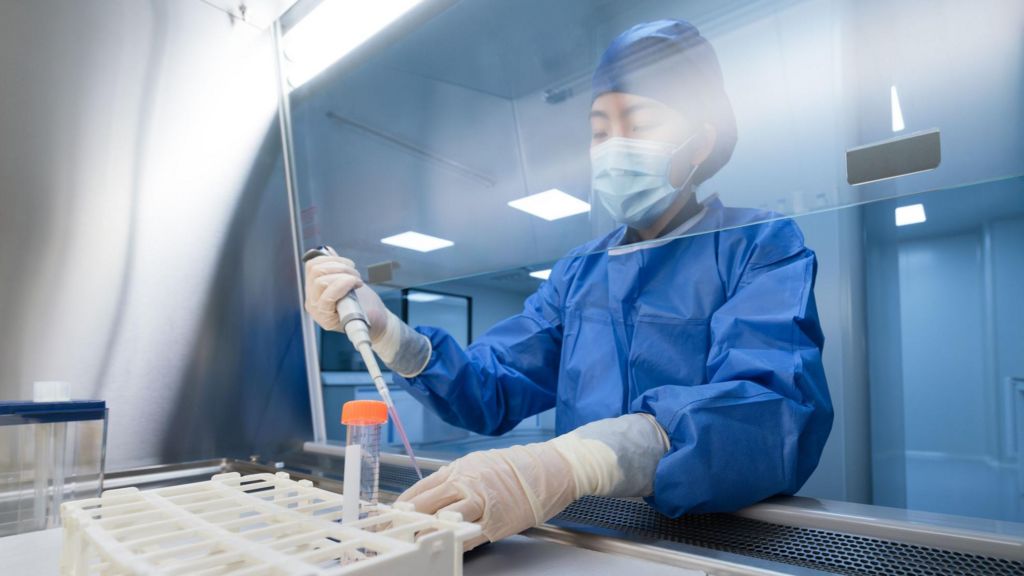
A rapidly escalating Ebola outbreak in the Democratic Republic of Congo (DRC), driven by a rare, untreatable strain of the virus, has spurred urgent vaccine development work from a team of researchers at the University of Oxford, with the candidate potentially ready for field deployment within months.
The ongoing outbreak, centered in northeastern DRC, has already been linked to 750 suspected cases and 175 confirmed deaths, according to latest outbreak tracking data. The pathogen at the center of the crisis is Bundibugyo, an understudied Ebola species that has only caused two recorded outbreaks in the last 20 years and has no licensed, proven vaccine currently available. The virus kills roughly one-third of all people it infects, making swift containment a top global health priority.
In response to the crisis, the World Health Organization (WHO) has upgraded the risk level of the outbreak from “high” to “very high” within DRC, with regional risk across central Africa also elevated to “high.” International risk remains low, however, and the WHO declared a Public Health Emergency of International Concern (PHEIC) over the outbreak over the weekend, explicitly noting that the event does not rise to the level of a pandemic.
Oxford’s vaccine candidate leverages the same ChAdOx1 platform the university’s vaccine group refined during the global COVID-19 pandemic – a flexible, easily adaptable genetic vaccine technology that can be rapidly modified to target new pathogens. During the COVID response, the platform was loaded with coronavirus genetic material; for this Ebola candidate, it has been reconfigured to carry genetic code from the Bundibugyo strain.
The platform relies on a modified chimpanzee common cold virus, genetically edited to be safe for human use, that delivers Bundibugyo genetic material to human cells. This trains the immune system to recognize and neutralize the actual Ebola virus if exposure occurs, without causing Ebola infection or symptomatic disease. Preclinical animal testing for the new candidate is already underway at Oxford’s facilities, and the Serum Institute of India has been pre-positioned to scale up mass manufacturing as soon as the university provides clinical-grade vaccine material.
Professor Sarah Lambe, head of vaccine immunology at the Oxford Vaccine Group, emphasized that speed is the top priority for the project. “People are worried about this outbreak, generally, you prepare for the worst case scenario – hopefully contact tracing and quarantine is all that’s needed, but we can’t take our foot off the gas,” Lambe told BBC News. Once the research team delivers initial starting material to the Serum Institute, Lambe noted that the manufacturer can ramp up production both quickly and at large scale. The WHO projects that the candidate could be ready for human clinical trials in affected regions within two to three months.
This outbreak poses unique challenges to global health responders because of the rarity of the Bundibugyo strain. Of the six known Ebola species, only three are known to cause large human outbreaks, and Bundibugyo had not been detected in more than a decade prior to this event – its last outbreak occurred in DRC in 2012, following an initial 2007 outbreak in Uganda. While existing effective vaccines are available for the more common Zaire Ebola strain, none have been approved for Bundibugyo. A separate experimental Bundibugyo candidate is also in development, but that effort is not expected to produce testable doses for another six to nine months, making Oxford’s accelerated timeline a critical asset for outbreak response.
If authorized, the vaccine will not be deployed in mass public vaccination campaigns like COVID-19 vaccines. Instead, it will be used in the targeted ring vaccination strategy standard for Ebola outbreaks, which prioritizes immunization for people at highest exposure risk: close contacts of confirmed cases, and frontline healthcare workers treating infected patients. The Oxford team had already been working on related vaccine candidates for other dangerous filoviruses, including Sudan ebolavirus and Marburg virus, prior to this outbreak, allowing them to adapt their work rapidly to address the new Bundibugyo emergency.