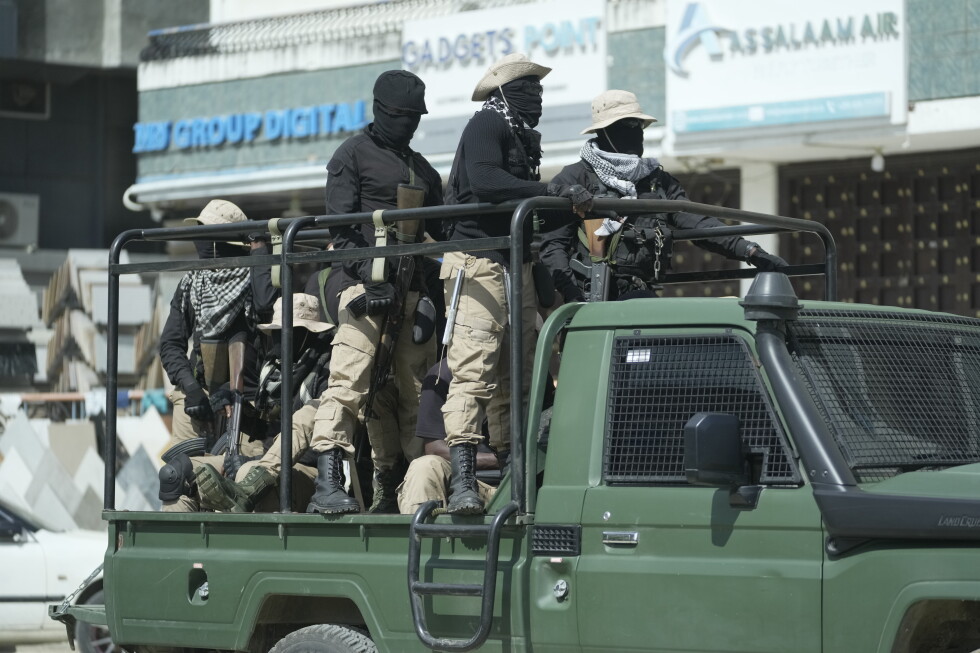
NAIROBI, KENYA – The United States has implemented targeted economic sanctions and a permanent entry ban against Faustine Jackson Mafwele, a senior assistant commissioner of Tanzania’s national police force, over well-documented allegations of human rights violations tied to his leadership, U.S. officials announced Thursday.
The new punitive measures come nearly six months after Tanzania’s October general election, a contest that saw incumbent President Samia Suluhu Hassan secure a full five-year term with a landslide 97% of the popular vote. The election was marred by widespread accusations of electoral misconduct, a widespread government crackdown on opposition politicians and independent activists, and multiple outbreaks of election-related violence that shook the East African nation.
Back in December, U.S. Secretary of State Marco Rubio announced that the U.S. government was launching a full review of its bilateral diplomatic and economic ties with Tanzania over the regime’s reported repression and post-election violence. This week’s sanctions mark the first concrete policy action to come out of that review process.
Rubio confirmed Thursday that the sanctioning of Mafwele was grounded in credible, verified intelligence linking the senior police official directly to serious human rights violations against civil society activists. “One year ago, members of the Tanzanian police detained, tortured, and sexually assaulted Ugandan activist Agather Atuhaire and Kenyan activist Boniface Mwangi, who had traveled to Dar es Salaam to observe the high-profile trial of opposition leader Tundu Lissu,” Rubio explained in an official statement released following the announcement.
The two cross-border activists were taken into custody by Tanzanian authorities in May 2023. Following their arrest, both Atuhaire and Mwangi have repeatedly stated that Mafwele personally oversaw their abuse while they were in detention. After the mistreatment, the pair were abandoned by police in a remote, unpopulated area near the Tanzania-Kenya border, according to their official accounts.
The scope of post-election violence in Tanzania has been brought into sharp focus by an independent inquiry commission appointed by President Hassan herself to probe unrest following the October vote. The commission’s final report, published to the public in April, confirmed that at least 518 people were killed and thousands more suffered injuries during widespread protests and crackdowns in the weeks after the election. These fatalities mark the deadliest period of political unrest in Tanzania in several decades. Opposition leaders have pushed back against the official count, arguing that the actual number of casualties is far higher than the commission’s estimate.
Among the key findings of the inquiry was a formal recommendation that law enforcement officials, including senior commanders, face further criminal investigation over their actions during the protests. Eyewitness accounts and verified social media content have documented multiple cases of uniformed police shooting unarmed civilian civilians inside their private homes during the unrest. The national government also shut down internet access across the entire country for multiple days in the immediate aftermath of voting. Once connectivity was restored, police issued formal public warnings ordering citizens not to share video footage of the violence on social media platforms, though hundreds of clips still circulated widely online.