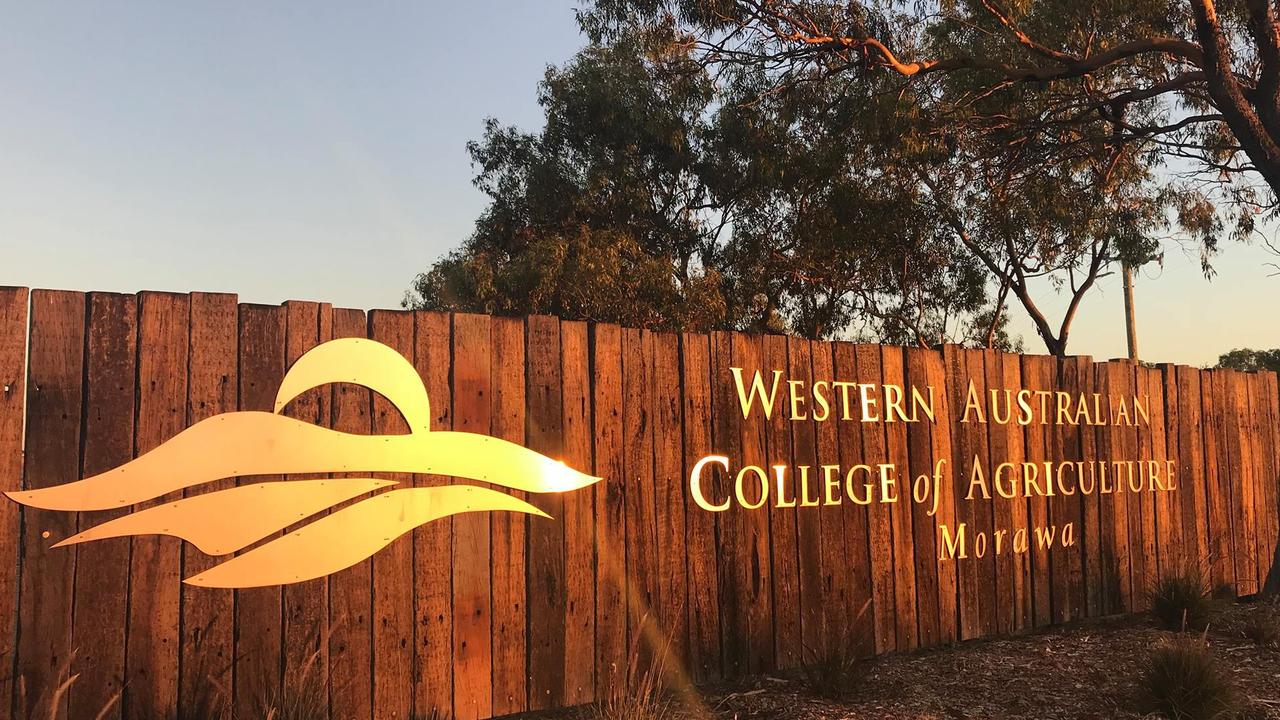
A devastating mouse plague that has swept through farming regions of Western Australia’s Mid West has forced an agricultural college to shut its doors for urgent deep cleaning, after pest control contractors incorrectly deployed a highly toxic commercial-grade bait that poses serious risks to human health.
The Western Australia College of Agriculture Morawa, located roughly 360 kilometers north of Perth, sits at the epicenter of the current rodent outbreak. After the incorrect poison was applied to tackle the infestation, all students and staff were immediately ordered to evacuate the campus while remediation works are carried out, with local authorities confirming the poison in question was MouseOff — a product containing both zinc phosphide, classified as a dangerous Schedule 7 poison that can cause harm even at low exposure levels, and bromadiolone, an extremely toxic substance that can be absorbed through skin contact or ingestion.
This is not the first time the product has caused public health concerns. Back in 2021, Australian agricultural safety body AgSafe issued urgent warnings following a spike in hospitalizations across New South Wales, linked to improper use of zinc phosphide-based baits including MouseOff in residential spaces near ventilation systems.
Western Australia’s Department of Education confirmed the closure was implemented as a strict precautionary measure to protect the wellbeing of the college community. “To ensure the health and wellbeing of all students and staff, the Department is undertaking a thorough deep clean of all affected areas,” explained Lisa Criddle, the Department’s Midwest Director. “Arrangements were made for students remaining in Morawa to attend Morawa District High School during the closure. The Department is working with relevant authorities to ensure a safe environment at the College and welcome students back as soon as possible.”
A spokesperson for WA Health said the department is providing ongoing guidance to education officials, noting that “based on information so far, the risk to staff and students at the school is low and we are continuing to work with education staff to provide support.” The closure comes just weeks after WA Health issued a widespread public health alert amid the explosion of the mouse plague across regional parts of the state, urging residents to take strict precautions when handling dead rodents to avoid disease exposure.
The current outbreak has been described as one of the worst in recent decades for Western Australia’s agricultural heartland. Farmers across the Mid-West, Wheatbelt and Goldfields-Esperance regions have reported finding thousands of rodent burrows per hectare of cropland, with scientific estimates putting peak mouse populations at up to 8,000 mice per hectare in the worst-affected paddocks. For local communities, the crisis has upended daily life: Morawa Shire President Karen Chappell said residents and business owners are forced to collect dozens of mouse carcasses every single day, with rodents infiltrating every part of domestic and commercial life.
“There’s always that terrible smell of dead mice,” Chappell said earlier this week. “It’s a bit like going back to Covid again, washing your hands constantly, using hand sanitiser, and being really, really careful because it is risky from a disease perspective. I’ve heard of people that had mice in their beds, the other day someone opened their oven and 14 mice jumped out, I live with it as well. You open draws and mice have been in, they chew your books, they get into cars, they eat wiring, they get into the back of dryers or washing machines and into air conditioners.”
In response to the growing crisis, the Australian Pesticides and Veterinary Medicines Authority (APVMA) this week approved an emergency application from Grain Producers Australia for limited use of a higher-strength ZP50 mouse bait, a product that was last approved for emergency use between 2021 and 2023 during the record mouse plague that devastated New South Wales’ grain belt. APVMA Chief Executive Officer Scott Hansen stressed that the approval followed a rigorous, evidence-based assessment required by law to protect public health, wildlife and the environment.
“The APVMA prioritises emergency permits to support farmers and communities when they need us most,” Hansen said. “This prioritisation does not mean taking shortcuts in examination of the product and the way in which it is proposed to be used, including its potential impacts on human health, wildlife and the environment.”
As the deep cleaning operation continues at Morawa’s agricultural college, local officials have stressed that student safety remains the top priority, with no set timeline for reopening pending clearance from public health authorities.