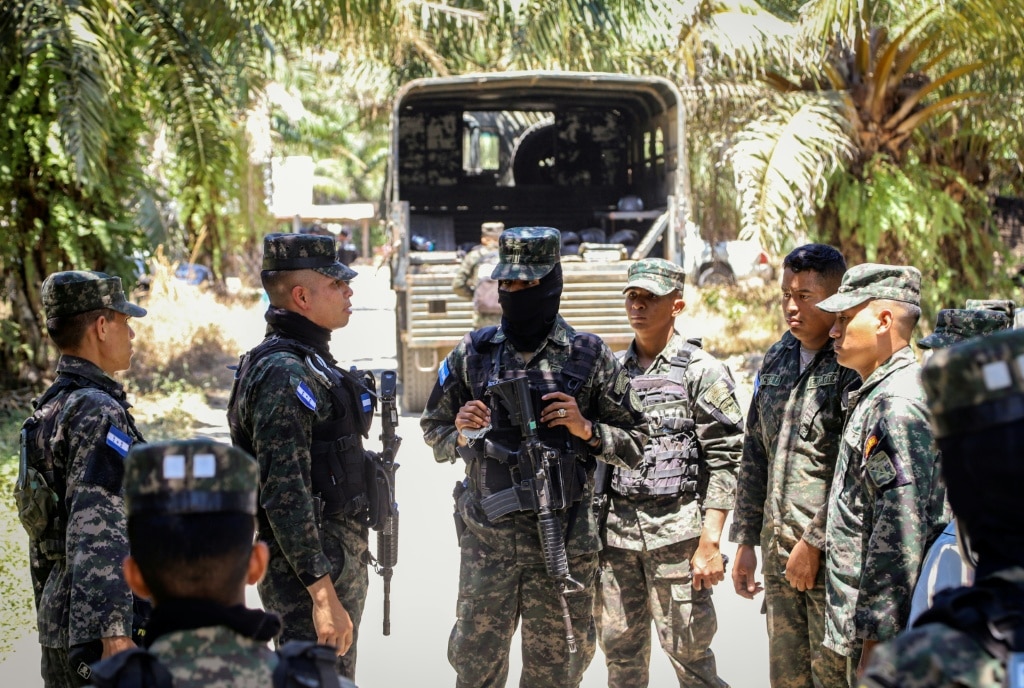
In a brutal pair of coordinated attacks that underscores the depth of Honduras’s simmering gang violence crisis, organized criminal groups have left at least 25 people dead — including civilians and police officers — just as the Central American nation moves forward with sweeping new security reforms targeting rampant criminal activity.
The deadliest of the two assaults unfolded at dawn Thursday in Trujillo, a municipality in Honduras’s northern Colon department, where long-running turf battles between rival gangs over control of lucrative palm oil plantations and key drug trafficking corridors have destabilized local communities for years. Officials confirmed that 19 people were gunned down with high-powered long guns in the attack. According to a local rural community leader who spoke to AFP on condition of anonymity for their own safety, all of the victims were members of an armed faction that already controlled the contested plantation. The leader described a climate of constant fear for local residents, noting that “one sleeps with one eye open and another closed” amid repeated threats from violent armed groups.
Local media shared graphic footage of the aftermath showing at least nine bloodied bodies strewn across the sprawling palm plantation grounds. Security Minister Gerzon Velasquez described the scene as “Dante-esque”, adding that the victims appeared to have been executed with high-caliber firearms, most likely rifles and shotguns. Yuri Mora, a spokesperson for Honduras’s public prosecutor’s office, told local broadcasters that forensic teams recovered 13 bodies in one section of the plantation and six more in a separate area. Velasquez confirmed the region has been mired in conflict for decades, driven by armed groups involved in both illegal narcotrafficking and the exploitative extraction of palm oil. Trujillo’s police chief Carlos Rojas added that these criminal groups seize control of large African palm plantations through illegal occupation, then siphon profits from crop sales to fund weapons acquisitions. While local farmer organizations have accused transnational agribusiness firms of funding these criminal groups to seize disputed land and block local residents from reclaiming property, a senior anonymous government investigator told AFP the massacre was not rooted in land conflict, but instead linked directly to drug trafficking rivalries.
In a separate incident near the Guatemala border in Omoa, a town in Cortes department, five police officers and one civilian were killed during a clash between a Honduran anti-narcotics squad and alleged drug traffickers, national police confirmed.
The back-to-back attacks come shortly after Honduras’s national legislature passed a package of sweeping reforms designed to counter the country’s persistent criminal violence. Honduras currently holds a national homicide rate of 24 killings per 100,000 inhabitants, a statistic that places it among the most violent countries in the Western Hemisphere. The new reforms authorize the Honduran military to take on direct public security roles, create a dedicated new anti-organized crime task force, and open the door to officially designating street gangs and drug cartels as terrorist organizations. The reforms are a central policy priority for Honduras’s new conservative president Nasry Asfura, who has already pledged to collaborate with former U.S. President Donald Trump to dismantle transnational organized crime networks across Latin America.