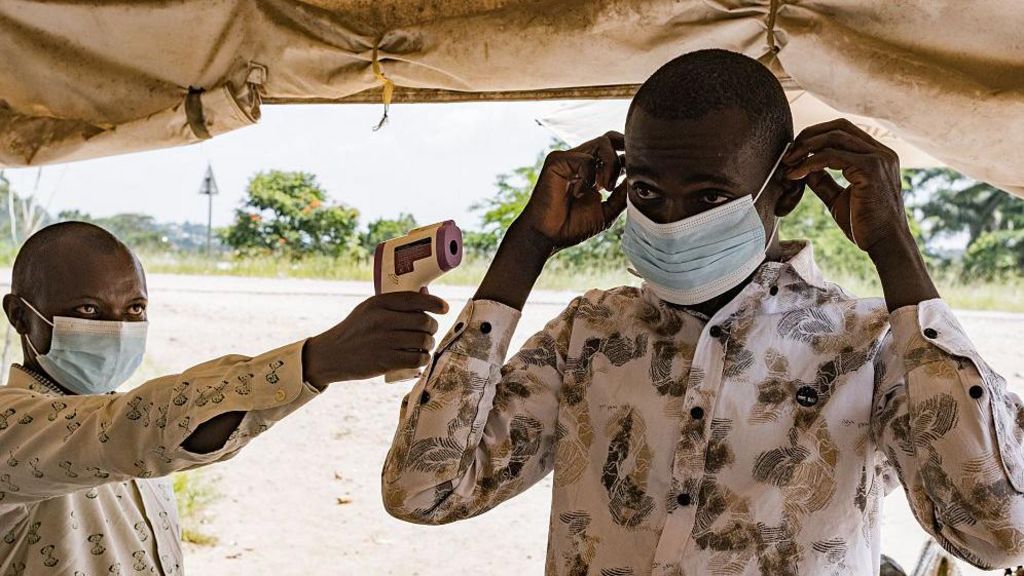
The World Health Organization has formally categorized the ongoing Ebola outbreak centered in the eastern Democratic Republic of Congo as a Public Health Emergency of International Concern (PHEIC), though it stopped short of classifying the event as a pandemic, the organization’s director-general Dr. Tedros Adhanom Ghebreyesus announced Wednesday.
As of the latest update, global health officials have confirmed 51 Ebola cases across DR Congo, with an additional two confirmed infections recorded in neighboring Uganda – both of which are linked to travelers who entered the country from the outbreak zone in DR Congo. In total, the WHO is tracking more than 600 suspected cases and 139 suspected deaths across the region, with Dr. Ghebreyesus confirming that official case counts are projected to climb in the coming weeks, due to inherent lags in laboratory testing and viral detection.
Genetic sequencing has identified the outbreak as caused by the rare Bundibugyo strain of Ebola, a variant that has not circulated widely for more than 10 years. Speaking to reporters at the WHO’s Geneva headquarters, Dr. Ghebreyesus noted that epidemiological tracing suggests the outbreak likely began circulating undetected for roughly two months before it was officially detected. The first documented case was a nurse who developed Ebola symptoms and died in late April in Bunia, the capital of Ituri province – the current epicenter of the outbreak. The nurse’s remains were later transported to Mongwalu, one of two hard-hit gold-mining communities where the majority of confirmed cases have been documented.
Confirmed cases in DR Congo are concentrated in two eastern provinces: Ituri, where four local administrative areas (Mongwalu, Bunia, Rwampara and Nyakunde) have reported transmissions, and North Kivu, where cases have been recorded in Butembo and Goma, eastern DR Congo’s largest urban center that is partially controlled by armed rebel groups. The two Ugandan confirmed cases, both detected in the capital Kampala, have direct travel history to the outbreak zone in DR Congo.
“We know the actual scale of the epidemic in DRC is much larger than the current confirmed case count,” Dr. Ghebreyesus told reporters. Following a Tuesday meeting of the WHO’s independent emergency committee, the global body reaffirmed its assessment that the outbreak carries high risk at national and regional levels, but remains low risk at the global stage, and does not qualify as a pandemic emergency.
This marks the 17th Ebola outbreak that DR Congo has responded to since the virus was first identified, but the Bundibugyo variant presents unique public health challenges. The strain has only caused two previous recorded outbreaks globally, with a historical mortality rate of roughly 33 percent among confirmed infected patients. Unlike the more common Zaire Ebola strain that DR Congo has repeatedly responded to, there is no widely approved vaccine or targeted antiviral treatment for Bundibugyo Ebola. Health officials note that experimental vaccines for the variant are still in development, though existing vaccines approved for the Zaire strain may offer some cross-protection for exposed individuals.
Compounding response efforts, the eastern region of DR Congo has been plagued by decades of armed conflict and political instability, which limits access for international response teams and makes contact tracing and patient care far more difficult to implement effectively.