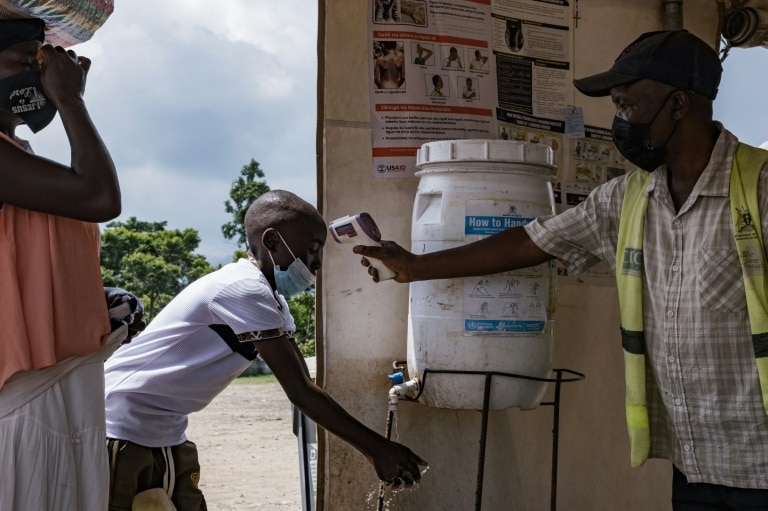
A rapidly worsening outbreak of a little-known Ebola strain in the Democratic Republic of the Congo (DRC) has triggered an urgent global push among scientists to develop and deploy effective countermeasures that can curb the death toll and bring the crisis under control. As of this week, the World Health Organization (WHO) confirmed that more than 130 people have already lost their lives to the outbreak, prompting the United States to issue a level 4 travel advisory warning all American citizens against visiting the affected regions.
This marks the 17th Ebola outbreak recorded in the DRC, but only the third caused by the Bundibugyo strain – a variant for which no vaccines or therapeutic treatments have yet won formal regulatory approval. While no licensed options currently exist, researchers have spent years developing a number of candidate products that have yet to undergo human testing, creating a pipeline of potential solutions that could be accelerated if sufficient support is secured.
The WHO has already begun reviewing all available candidates, including Ervebo, a widely deployed vaccine that targets the more common Zaire Ebola strain, which has been used successfully in multiple previous outbreaks. Thomas Geisbert, a virologist at the University of Texas Medical Branch at Galveston who contributed to the development of Ervebo, has already designed a single-dose vaccine modeled on Ervebo that targets Bundibugyo. Preclinical research in non-human primates has shown the candidate provides robust protection against the strain. However, Geisbert explained that moving from preclinical research to mass manufacturing of doses for human use is a time-consuming and costly process, and major pharmaceutical companies have long had little financial incentive to invest in the product.
“ There hasn’t been an incentive for big pharma to jump in, because it’s not a money-maker, ” Geisbert told Agence France-Presse (AFP). He added that his research on the Bundibugyo candidate was first published back in 2013, and the project has sat dormant ever since – a pattern that mirrors his earlier work on what eventually became Ervebo. First published in 2005, Ervebo only garnered serious attention and investment during the 2014 West Africa Ebola outbreak, which killed more than 11,300 people and became the largest Ebola outbreak in recorded history. After that outbreak began, U.S. pharmaceutical firm MSD (known as Merck in North America) was able to produce the first clinical doses in roughly nine months, and trials later confirmed the vaccine is 84% effective against the Zaire strain. Geisbert said he is optimistic that a similar accelerated timeline could produce usable doses of the Bundibugyo candidate in as little as six to seven months, if a pharmaceutical partner steps forward quickly. A spokesperson for MSD told AFP that independent data on Ervebo’s effectiveness against non-Zaire strains such as Bundibugyo remains limited, with no human data collected to date.
As the DRC outbreak expanded this week, a new potential candidate entered the conversation: a multi-strain mRNA vaccine developed by a team of Chinese researchers, whose findings were published in the *Proceedings of the National Academy of Sciences* (PNAS) on Monday. The candidate leverages the mRNA platform that was widely refined and scaled during the COVID-19 pandemic, and is designed to target the three most common Ebola strains, including Bundibugyo. While Connor Bamford, a virologist at Queen’s University Belfast, praised the research effort, he noted that mRNA vaccines remain costly to produce and require strict cold-chain storage – two factors that could severely limit their deployment in low-resource regions like rural DRC. Geisbert added that the new mRNA candidate has only been tested in mice so far, and positive results in mouse models frequently fail to translate to larger animals, let alone human populations.
Another team of researchers at the University of Oxford is also working to advance a candidate, partnering with the Serum Institute of India, the world’s largest vaccine manufacturer by volume, to ready a viral vector vaccine named ChAdOx1 BDBV for deployment as quickly as possible. “ We are working through the logistics at pace, ” Teresa Lambe, head of vaccine immunology at the Oxford Vaccine Group, told AFP, though she noted that no precise timeline for rollout is available yet.
Beyond vaccines, researchers are also moving quickly to launch clinical trials for two experimental therapeutic treatments for Bundibugyo, under a trial sponsored by the WHO. Amanda Rojek, an Oxford researcher working on the trial, told *Nature* this week that the team is working around the clock to launch the trials as soon as possible, adding that the infrastructure and planning needed are already in place. One of the treatments being considered is remdesivir, a broad-spectrum antiviral developed by U.S. firm Gilead Sciences that has already undergone human testing for the Zaire Ebola strain, though it has never been tested for Bundibugyo. Even so, Geisbert said that in vitro lab testing his team conducted found remdesivir is actually more effective against Bundibugyo than it is against Zaire. The second candidate is MBP134, a monoclonal antibody developed by Mapp Biopharmaceutical that is specifically designed to target multiple Ebola species, including Bundibugyo. Geisbert, who has also tested MBP134 in preclinical research, called the drug “ fantastic, ” noting that it effectively protected non-human primates from death even when administered after infection had already set in. Any clinical trials in affected regions will require formal approval from both the DRC and Ugandan governments before they can begin.