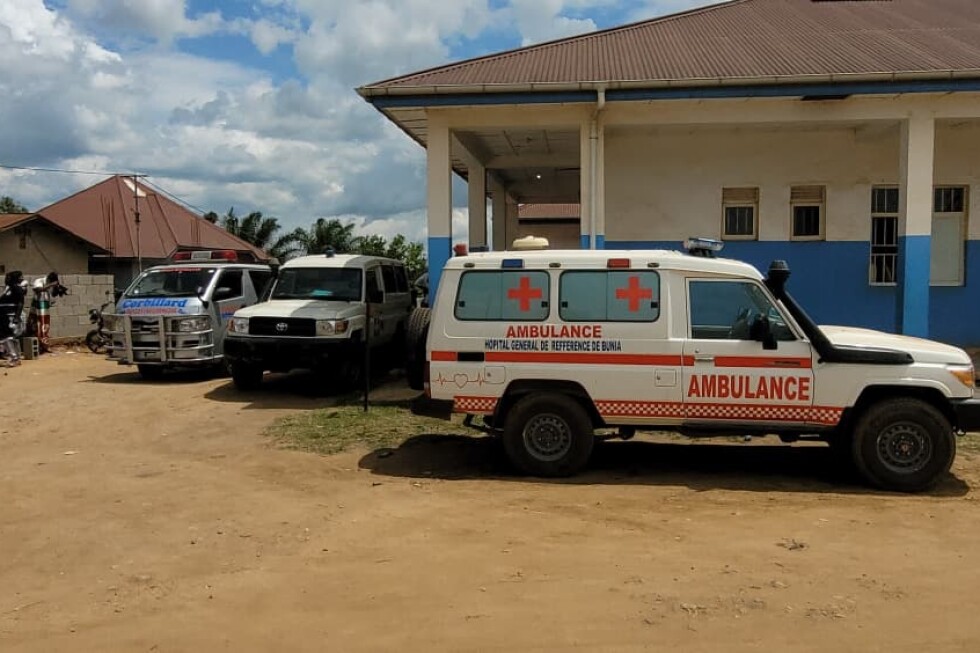
On Sunday, World Health Organization Director-General Tedros Adhanom Ghebreyesus issued the highest global alert level for an ongoing Ebola outbreak spanning the Democratic Republic of the Congo and neighboring Uganda, following a surge in suspected infections that has already claimed 88 lives. As of the latest official count, more than 300 suspected cases have been documented across the two East-Central African nations.
In a public update posted to the social platform X, the WHO moved quickly to clarify that the outbreak does not qualify for a pandemic-level classification on par with the COVID-19 crisis, and explicitly recommended against nations closing international borders to contain the spread.
Ebola is a severe, highly contagious viral disease that spreads through direct contact with infected bodily fluids, including blood, vomit and semen. While outbreaks of the disease remain relatively rare, infections frequently result in death for affected patients. What makes the current crisis particularly challenging for global health authorities is that it is driven by the Bundibugyo variant — a rare strain of Ebola for which no approved vaccines or targeted treatments currently exist.
According to WHO data, the overwhelming majority of cases are concentrated in the Democratic Republic of the Congo, with only two confirmed cases detected across the border in Uganda. The outbreak was first officially reported last Friday, originating in the DRC’s eastern Ituri Province, a border region adjacent to both Uganda and South Sudan. By the following day, the Africa Centres for Disease Control and Prevention had logged 336 suspected cases and 87 confirmed deaths.
Ugandan health authorities confirmed their first imported case from the DRC on Saturday; that patient later died in a Kampala hospital, and a second case was shortly after confirmed in the capital. WHO officials noted that the two Ugandan cases have no known epidemiological links to one another, and both patients had recently traveled from the DRC.
Tedros acknowledged deep uncertainties surrounding the full scope of the crisis, telling reporters: “There are significant uncertainties to the true number of infected persons and geographic spread associated with this event at the present time. In addition, there is limited understanding of the epidemiological links with known or suspected cases.”
This is only the third documented outbreak of the Bundibugyo variant in recorded history. The strain was first identified during a 2007-2008 outbreak in Uganda’s Bundibugyo District, which infected 149 people and killed 37. The second outbreak occurred in 2012 in Isiro, DRC, where 57 cases were reported and 29 people died from the infection. More than 20 Ebola outbreaks of various strains have occurred across the DRC and Uganda in modern history.
The WHO’s declaration of a Public Health Emergency of International Concern, or PHEIC, is formally intended to accelerate international action and mobilize funding, supplies and coordination from donor nations and global aid agencies. But the move has drawn scrutiny amid a mixed track record for past emergency declarations. When the organization declared mpox outbreaks across the DRC and other African nations a global PHEIC in 2024, public health experts criticized the global response for failing to rapidly deliver critical supplies including diagnostic tests, therapeutics and vaccines to affected regions.