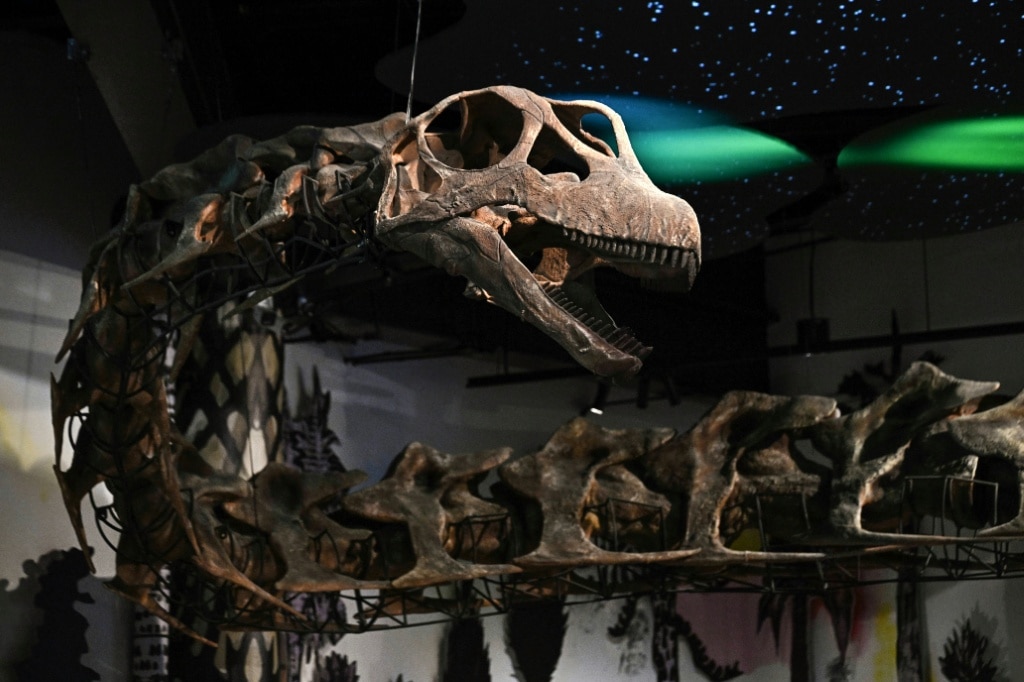
A decades-long paleontological effort has yielded a groundbreaking discovery in Thailand, where scientists have formally classified a massive new sauropod species as the largest dinosaur ever uncovered in Southeast Asia. The newly named *Nagatitan chaiyaphumensis*, a long-necked herbivore that walked the Earth between 100 and 120 million years ago, measures a staggering 27 meters long and weighs approximately 27 tonnes — equal to the combined mass of nine full-grown Asian elephants.
Lead researcher Thitiwoot Sethapanichsakul, a Thai PhD student affiliated with University College London, noted that the specimen far outpaces one of the world’s most famous dinosaur displays. “Our dinosaur is big by most people’s standards — it likely weighed at least 10 tonnes more than Dippy the Diplodocus,” he explained, referencing the iconic composite cast that drew millions of visitors at London’s Natural History Museum.
The first fragments of the dinosaur were uncovered 10 years ago by local residents in Chaiyaphum, a rural province in northeast Thailand. However, full excavation and detailed analysis of the fossil remains only wrapped up earlier this year, with the formal findings published Thursday in the peer-reviewed journal *Scientific Reports*.
While the recovered bones share some characteristics with previously documented sauropod species, researchers identified a suite of unique anatomical features that warrant classification as an entirely new species. The species’ name draws from multiple cultural and geographic references: “Naga” references the legendary serpent prominent in Southeast Asian folklore, “Titan” pays homage to the giant deities of Greek mythology, and “chaiyaphumensis” honors the province where the remains were found.
Sethapanichsakul dubbed the giant “the last titan” for a key geological reason: the fossil was recovered from one of the youngest known dinosaur-bearing rock formations in Thailand. After the period when *Nagatitan chaiyaphumensis* lived, the region was gradually submerged by a shallow sea, eliminating the terrestrial conditions needed for large dinosaur fossils to form and be preserved. That means this find is very likely the most recent large sauropod that paleontologists will ever uncover in the Southeast Asian region.
Today, a full-size reconstructed skeleton of the giant herbivore is on public display at Bangkok’s Thainosaur Museum, giving visitors the chance to see Southeast Asia’s largest confirmed dinosaur up close.