For decades, paleoanthropologists have struggled to pin down the exact evolutionary connections between our modern species and the ancient hominin groups that walked the Earth hundreds of thousands of years ago. Now, a breakthrough analysis of ancient tooth enamel is opening an unprecedented window into these early relationships, revealing genetic traces that still linger in the DNA of people living today.
The focus of the new research, published by an international team led by researcher Qiaomei Fu from the Chinese Institute of Vertebrate Paleontology and Paleoanthropology, is *Homo erectus* — one of the earliest widespread hominin species to emerge out of Africa. First appearing roughly 2 million years ago on the African continent, *H. erectus* migrated outward across much of the Old World, establishing populations in Asia, parts of Europe, and beyond. Today, fossil remains of the species have been uncovered from sites spanning Indonesia, Georgia, Spain, China, and other regions, but recovering intact genetic material from these ancient specimens has long been nearly impossible. Heat, humidity, and the passage of hundreds of millennia break down DNA and large proteins, leaving researchers with gaping holes in their understanding of how *H. erectus* is related to later hominin groups, including modern humans.
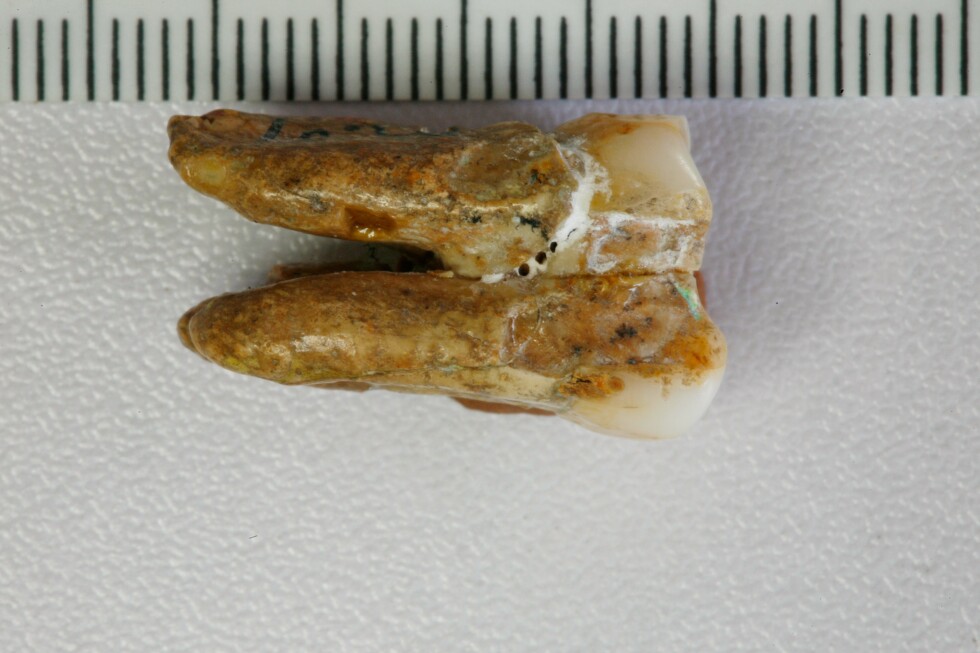
To overcome this barrier, the research team turned to a new approach: isolating and sequencing ancient proteins preserved in the hard enamel of 400,000-year-old *H. erectus* teeth recovered from multiple sites across China. The sample included teeth from six individuals: five males and one female. When the team analyzed the protein sequences, they made two striking genetic discoveries.
The first was a previously undocumented mutation in an enamel-forming protein that the team says may serve as a unique genetic marker for East Asian *Homo erectus* populations. The second finding, however, holds far broader implications for understanding human evolution: the team identified a genetic variant that also appears in a small share of modern humans, as well as in Denisovans, the mysterious extinct hominin group that interbred with early modern humans as our species expanded across Eurasia.
This shared genetic variant leads researchers to a groundbreaking conclusion: ancient *Homo erectus* populations likely interbred with the ancestors of Denisovans, passing the genetic variant down to that lineage long before modern humans entered the region. The presence of the same variant in modern humans, the team hypothesizes, came later, when early modern humans intermingled with Denisovan populations already carrying the *H. erectus* DNA.
Outside experts say the research represents an important step forward in untangling the messy, complex web of human evolution. “This traces who we are now back to our ancestors in a really cool and exciting way, using new methods,” said Ryan McRae, a paleoanthropologist at the Smithsonian National Museum of Natural History who was not part of the research team.
McRae noted that the exact relationship between these ancient groups remains far from settled. It is equally possible, he explained, that *Homo erectus* is actually a direct ancestral population that gave rise to Denisovans directly, with the genetic variant passing down through unbroken lineages rather than through interbreeding between separate groups. With only a small set of protein sequences from *H. erectus* to work with, resolving this debate remains a major challenge.
Study lead author Qiaomei Fu echoed that uncertainty, emphasizing that more fossil evidence and genetic data is critical to mapping the full story of human evolution. “We really need to get more DNA and bits of *H. erectus* to figure out how this predecessor is exactly related to other humans,” Fu said. The research team hopes that the protein extraction method used in this study will open the door to similar analyses of other ancient hominin fossils from warm, tropical regions where DNA preservation has long been impossible, slowly filling in the missing pieces of our evolutionary history.