A coordinated international public health response is underway after a potential hantavirus exposure on a cruise ship docked in Spain’s Canary Islands, with 17 American passengers and one British resident of the U.S. being repatriated via government charter jet for specialized screening and quarantine at a leading U.S. medical facility.
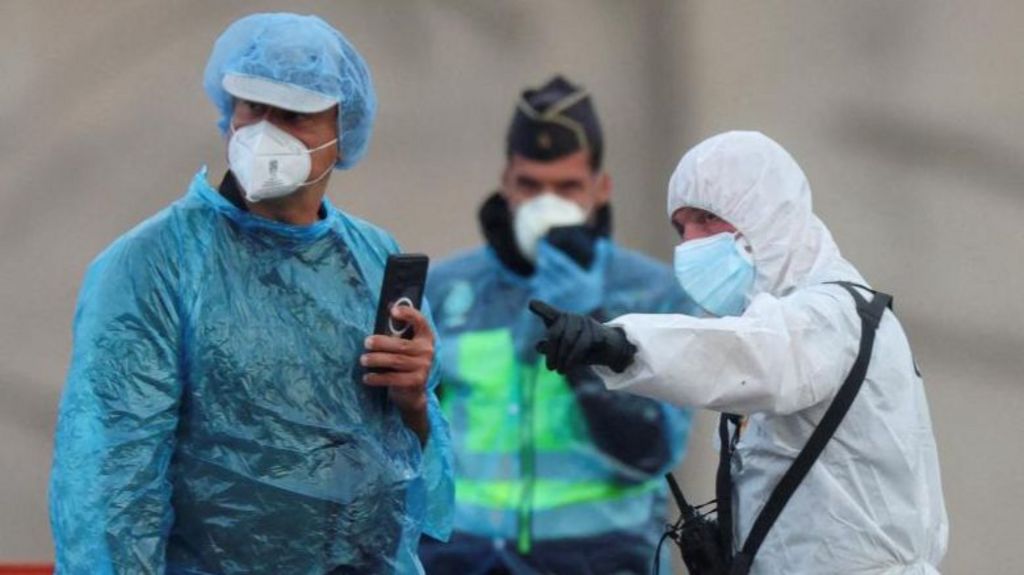
The passengers were part of the more than 90 people evacuated from the MV Hondius on Sunday at the Port of Grandilla de Abona on the island of Tenerife. Photographs captured the group disembarking the vessel wearing full personal protective equipment, including disposable blue gowns, bouffant caps, and medical-grade face masks. Seven other U.S.-based passengers had returned to the country earlier and are already undergoing routine monitoring in their home states across the nation.
Upon arrival early Monday morning at the University of Nebraska Medical Center (UNMC) in Omaha, the newly repatriated group will undergo formal risk assessment by public health officials to determine if they require treatment or can safely complete monitoring protocols, acting Centers for Disease Control and Prevention (CDC) Director Jay Bhattacharya confirmed to CNN.
Officials stress that the overall risk of a large-scale hantavirus outbreak remains extremely low, and the public should not confuse this event with the rapid spread of COVID-19. Hantavirus only spreads between people through close, prolonged contact with an infected individual who is already showing active symptoms, meaning most exposed passengers face minimal public health risk.
“ If they weren’t in close contact with someone who was symptomatic, then we’re going to deem them a low risk. If they were in close contact, we’re going to deem them a medium or high risk,” Bhattacharya explained. Tailored protocols will apply for each risk tier, he noted: low-risk passengers may be allowed to return home via controlled, isolated transportation to avoid exposing other members of the public, while higher-risk individuals will be offered the option to complete their quarantine period at the Nebraska facility. All passengers, regardless of risk classification, will complete a 42-day self-isolation period and ongoing monitoring by local health departments, with full CDC support throughout the process.
Notably, none of the evacuated passengers are currently showing active symptoms of hantavirus infection, so broad testing is not being conducted at this time per CDC guidance.
UNMC was selected for this operation because it houses the United States’ only federally funded national quarantine facility: a 20-bed National Quarantine Unit that opened in November 2019, just months before the onset of the COVID-19 pandemic. The facility is purpose-built for infection control, with all rooms fitted with negative air pressure systems designed to prevent the airborne spread of communicable pathogens. If any passenger does develop symptomatic hantavirus infection during their stay, they will be transferred to UNMC’s on-site Nebraska Biocontainment Unit, a specialized facility purpose-built to treat patients with high-consequence infectious diseases.
UNMC leadership emphasized that the incoming passengers are not expected to be severely ill. “We don’t expect to see any of these passengers transported off on a gurney,” said Professor John Lowe, the center’s director. “They’re going to walk off a plane and walk into a vehicle and get driven over here and head into their quarantine room.”
Dr. Michael Wadman, director of the National Quarantine Unit, added that the experience of quarantine for most passengers will be far from restrictive. “It’s pretty much like living in a hotel room with delivery of food. They can use their exercise devices in the room, we do daily symptom and monitoring as well as vital sign checks,” he explained, noting that passengers retain significant personal freedom during their stay.
The seven U.S. passengers who returned earlier are currently being monitored by state health departments across the country: two are in Georgia, two in Texas, one in Virginia, one in Arizona, and an additional group is being monitored in California, with no reported symptomatic cases to date. Public health officials have repeatedly stressed that they are following decades-old, proven hantavirus containment protocols that have successfully limited past outbreaks, and there is no cause for widespread public panic. “This is not Covid. And we don’t want to treat it like Covid. We don’t want to cause a public panic over this. We want to treat it with the hantavirus protocols that were successful in containing outbreaks in the past,” Bhattacharya said.