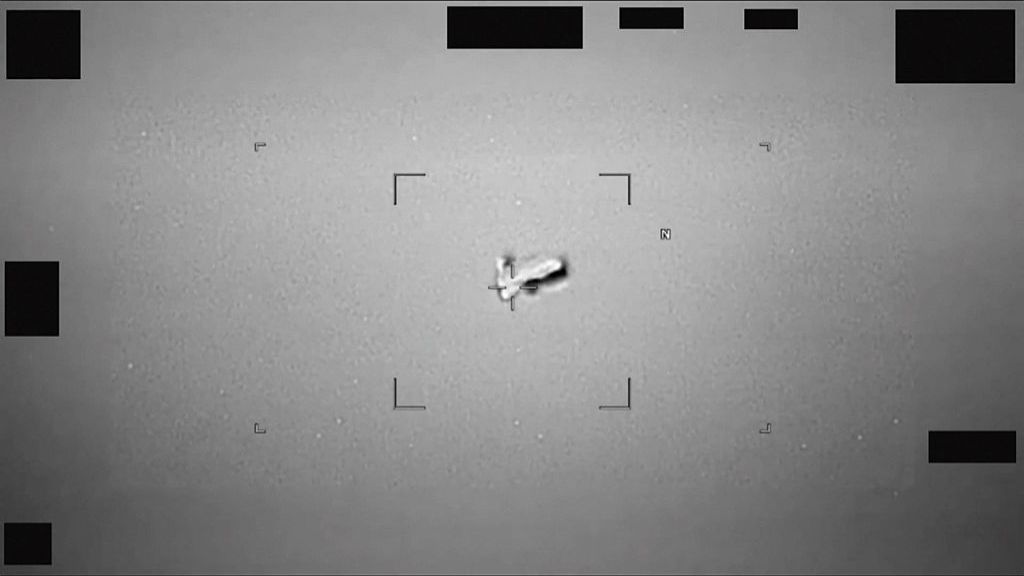
On a historic Friday marked by decades of speculation and demand for transparency, the U.S. government made its first public release of a collection of previously classified documents centered on unidentified anomalous phenomena (UAP), commonly known as UFOs. The 162-document trove, which includes firsthand witness reports, declassified military memos dating back decades, and documentation from the Apollo Moon missions, drew intense attention from long-time UFO enthusiasts and casual observers alike, all waiting for answers about what may lie beyond Earth’s atmosphere.
The release was quickly celebrated by former President Donald J. Trump, who framed the move as a break from decades of government secrecy. Writing on his Truth Social platform following the public launch of the document portal, Trump noted that prior administrations had failed to deliver transparency on the topic, adding, “the people can decide for themselves, ‘WHAT THE HELL IS GOING ON?’ Have Fun and Enjoy!”
The U.S. Department of War launched a dedicated public website to host the declassified files, taking an unusual approach that offers raw material without official analysis or conclusions. In a statement posted alongside the archive, the department acknowledged the massive scope of the declassification effort, announcing that additional materials would be released in periodic tranches every few weeks as they are processed and cleared for public release. The website explicitly notes that all documents posted are unresolved cases, meaning the government has not reached a definitive conclusion on the origin or nature of the reported phenomena. It also called on private sector researchers and experts to contribute their own analysis and information to help unpack the materials.
For people across the U.S. who have spent decades following UAP research and chasing answers to personal and family connections to sightings, the release marked a long-awaited milestone, even if it delivered no earth-shattering revelations. Elaine Loperena, a 69-year-old grandmother from Clovis, California, has waited for answers since she was a child, when her mother spotted a UFO hovering above while hanging laundry to dry. As an administrator of a large UAP-focused Facebook group, Loperena has seen public interest surge dramatically in recent years: when she joined the group three years ago, it had roughly 40,000 members, and it has now grown to nearly 100,000, with most of the growth coming in just the last few months.
Loperena called the release a major step forward in the push for full disclosure, crediting Trump for moving the process forward after years of inaction from previous White House administrations. She noted that growing numbers of former military personnel and insiders have come forward with firsthand accounts, even on their deathbeds, making it impossible for the government to continue hiding information indefinitely. “The snowball is getting bigger,” she said, expressing hope that Friday’s release is just the first of many. She also emphasized that any full final disclosure should be bipartisan to overcome U.S. political divides and build public trust in the information released.
Similar cautious optimism was shared by figures in Texas’s active UFO research community. John Erik Ege, a Texas-based therapist who has been a UAP “experiencer” since childhood and serves as regional director for the Texas chapter of the Mutual UFO Network (MUFON), called the release “a move in the right direction.” While he noted that most of the material released has been widely known among UFO enthusiasts for years, with no new bombshells or concrete evidence of extraterrestrial bodies or contact, he remains hopeful that future releases will bring more clarity. “I don’t think they’re trying to hide anything,” Ege said, adding that he believes Trump is unique among modern presidents in being willing to push forward with disclosure despite potential pushback.
Daniel Jones, a 36-year-old Texas musician and fellow administrator of the Texas UFO Network’s 25,000-member Facebook page, who got engaged last year at a UFO festival, echoed that sentiment. He said he never expected the first batch of files to contain major revelations, but welcomed the release as a step toward greater government accountability and transparency for the general public, not just the existing UAP research community. “This first batch of files wasn’t, more than likely, going to contain anything extremely substantial,” Jones said, “but I’m hopeful to see more definition on the part of the government” in upcoming releases.
Not all reactions to the release were positive, however. A small but vocal segment of the UAP community remains skeptical of the government’s motives. Ege noted that roughly 20 percent of active community members believe the release is a false flag effort designed to distract from other issues, stemming from a deep lack of trust in official institutions. Some skeptics within the community went further, criticizing the quality of the materials released. One prominent contributor to a major UAP discussion group noted that many of the released images are heavily compressed, distorted, or lack critical context or scale to identify what is being shown, with some images being reconstructed overlays based on witness testimony rather than original raw imagery of unknown objects. “That is not the same thing as releasing compelling evidence,” the contributor wrote, adding that the release “feels more like theater than disclosure.”
Even with the mixed reactions, Loperena and other long-time enthusiasts remain optimistic that full disclosure is coming, and that more definitive evidence of extraterrestrial life will eventually be made public. They acknowledge that even with full official disclosure, there will always be naysayers who demand direct, personal proof. “You’re always going to have the naysayers,” Loperena said. “Some of those, it’s going to take an ET to show up and, you know, ask for dinner.” For now, the UAP community is waiting eagerly for the next tranche of declassified files, expected in the coming weeks.