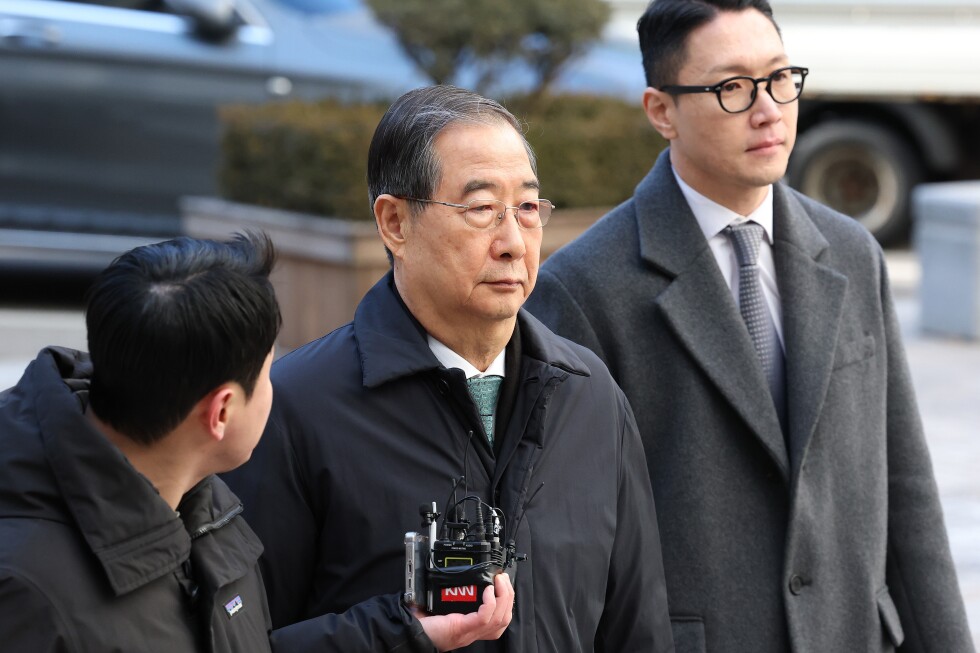
In a high-stakes legal ruling that caps another chapter of South Korea’s post-2024 political upheaval, the Seoul High Court has slashed the prison sentence of former prime minister Han Duck-soo, a key figure in ex-President Yoon Suk Yeol’s failed December 2024 martial law declaration that ultimately toppled Yoon’s administration.
Han, a 76-year-old veteran career bureaucrat hand-picked by Yoon, originally received a 23-year prison term from a lower Seoul district court in January over his conviction on rebellion charges tied to the unconstitutional power grab. Yoon himself was sentenced to life in prison on the same rebellion charges just one month after Han’s initial conviction.
Handing down its decision Thursday, the appellate court upheld nearly all of the guilty verdicts against Han, but adjusted his total sentence to 15 years behind bars. The ruling reaffirmed all core charges against the former prime minister, including that he took intentional steps to lend an air of legitimacy to Yoon’s illegal martial law decree by securing the measure’s endorsement at a formal Cabinet meeting. The court also upheld findings that Han participated in discussions to cut water and electricity access to major South Korean media outlets, falsified official documents related to the martial proclamation, ordered the original document destroyed, and committed perjury during investigation proceedings.
In its ruling statement, the Seoul High Court emphasized the extreme severity of Han’s offenses, noting that as the second-highest ranking official in the Yoon administration, he betrayed the enormous public trust placed in his position and actively collaborated in the rebellion against South Korea’s constitutional order.
Park SungBae, a prominent South Korean criminal law specialist, noted that both the lower district court and the appellate court have consistently framed Han’s crimes as exceptionally serious. Park explained that the revised 15-year sentence aligns with the broader sentencing pattern for other senior officials convicted in connection with the martial law plot: for example, Yoon’s former Interior Minister Lee Sang-min received a seven-year prison term for his role, a benchmark the appellate court likely considered when adjusting Han’s sentence.
Park added that the special prosecutor handling the case actually requested a 15-year sentence for Han during the original trial at Seoul Central District Court. While the 23-year initial sentence handed down by the lower court was harsher than many legal observers anticipated, it still fell within the standard sentencing range for the gravity of Han’s crimes, Park noted.
Both legal teams for Han and the office of the special prosecutor now have a seven-day window to file a further appeal to South Korea’s Supreme Court, the nation’s highest judicial body.
A seasoned public servant with a four-decade career in government, Han has held the post of prime minister twice: first under liberal President Roh Moo-hyun from 2007 to 2008, and again under conservative Yoon starting in 2022. After Yoon was suspended from office following his martial law attempt, Han served as one of three interim caretaker leaders before the formal impeachment process concluded.
The chain of events triggered by Yoon’s martial law declaration ultimately ended in his removal from power: South Korea’s National Assembly impeached Yoon, and the Constitutional Court formally ordered his permanent removal from office in April 2025. Liberal opposition leader Lee Jae Myung won a subsequent snap presidential election to succeed Yoon as the country’s head of state.